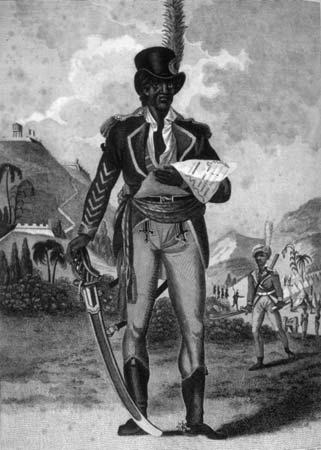
Crate Diggers: Jean Jacques Dessalines
Showing posts with label Jean Jacques Dessalines. Show all posts

Saturday, May 20, 2017

Happy Birthday Toussaint Louverture

“I was born a slave, but nature gave me a soul of a free man” - Toussaint Louverture
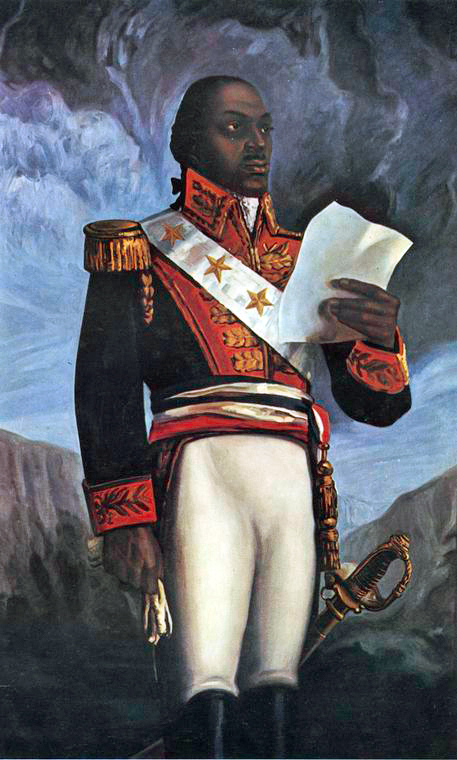
(Toussaint Louverture)
Toussaint Louverture was born on May 20th, 1743 in  Haut de Cap, Haiti. He was born into slavery. He was also well educated. In 1776 Louverture was freed from his slave masters. As a free man, Louverture began to accumulate wealth and property. In 1782 Louverture married  Suzanne Simone Baptiste Louverture. In 1792 Louverture became the leader of the Haitian revolution. He gained a reputation for running an orderly camp, trained his men in guerrilla tactics and "the European style of war", and began to attract soldiers who would play an important role throughout the revolution. In 1793 was the first time he publicly used the moniker "Louverture". On February 4th, 1794, the French revolutionary government proclaimed the abolition of slavery in Haiti. In May 1794, when the decision of the French government became known in Saint Domingue, Louverture switched allegiance from the Spanish to the French and rallied his troops to Lavaux.
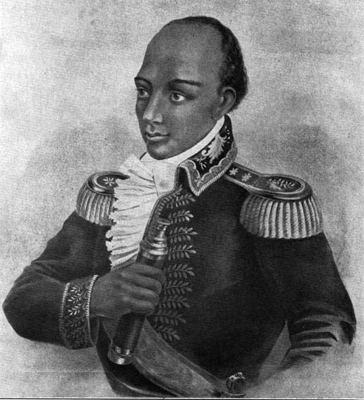
(A drawing of Louverture)
In the first weeks, he eradicated all Spanish supporters from the Cordon de l'Ouest, which he had held on their behalf. Louverture faced attack from multiple sides. His former colleagues in the black rebellion were now fighting against him for the Spanish. By now his officers included men who were important throughout the revolution: his brother Paul, his nephew Moïse, Jean-Jacques Dessalines and Henri Christophe. In 1795 the Treaty of Basel stopped the fighting between the French and Spanish on the island of Hispaniola. The black leaders, Jean-François and Biassou, continued to fight against Louverture until November of 1795. Throughout 1795 and 1796, Louverture was concerned with reestablishing agriculture and keeping the peace in areas under his control. On March 20th, 1796, he succeeded in capturing the French Governor Lavaux, and appointed himself Governor.
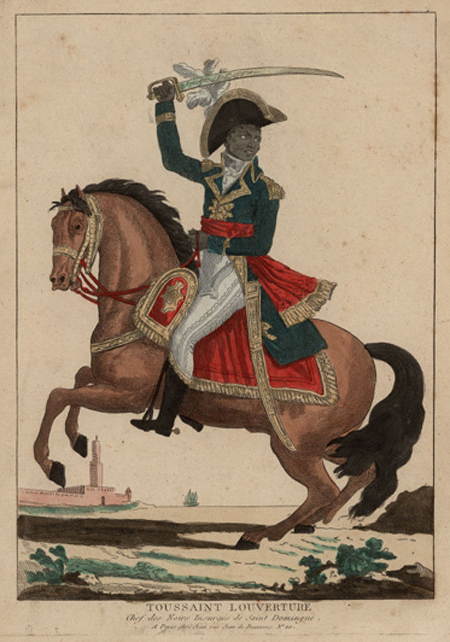
(A drawing of Louverture in battle)
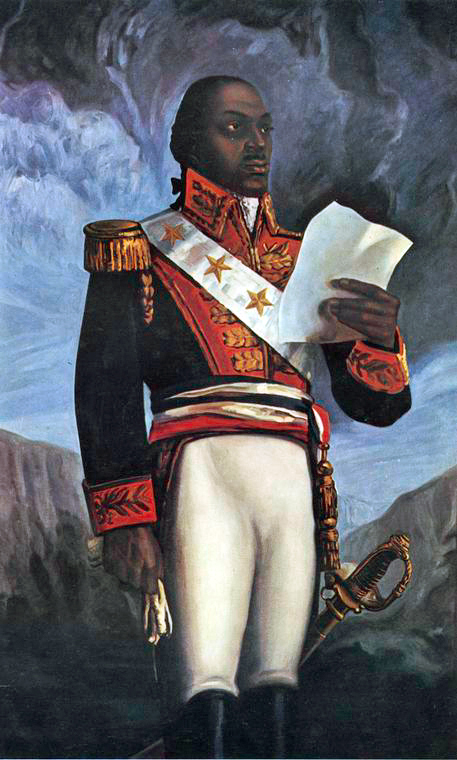
Louverture wanted White planters to return to Haiti because he believed they were bearers of useful skills and knowledge. On April 30th, 1798, Louverture signed a treaty with the British general, Thomas Maitland, exchanging the withdrawal of British troops from western Saint Domingue. In 1799 a civil war between Louverture and Andre Rigaud began and ended in 1800 with Louverture winning the war.  In January of 1801, Louverture and Hyacinthe Moïse invaded the Spanish territory, taking possession from the Governor, Don Garcia. Toussaint brought it under French law which abolished slavery, and embarked on a program of modernization. Louverture promulgated the Constitution on July 7th, 1801, officially establishing his authority over the entire island of Hispaniola.
(A drawing of Louverture with the Constitution)
After sending a copy of the new constitution to France, Napoleon sent 20,000 troops to the island to restore French control and slavery. Louverture prepared for the invasion. After several months of fighting the French felt their position was weak. Louverture was arrested by the French and on on 25 August, Toussaint Louverture was sent to the jail in Fort-de-Joux in the Doubs, France. On April 7th, 1803 Louverture died of exhaustion, malnutrition, apoplexy, pneumonia and possibly tuberculosis while in prison in France. He was 59 years old.
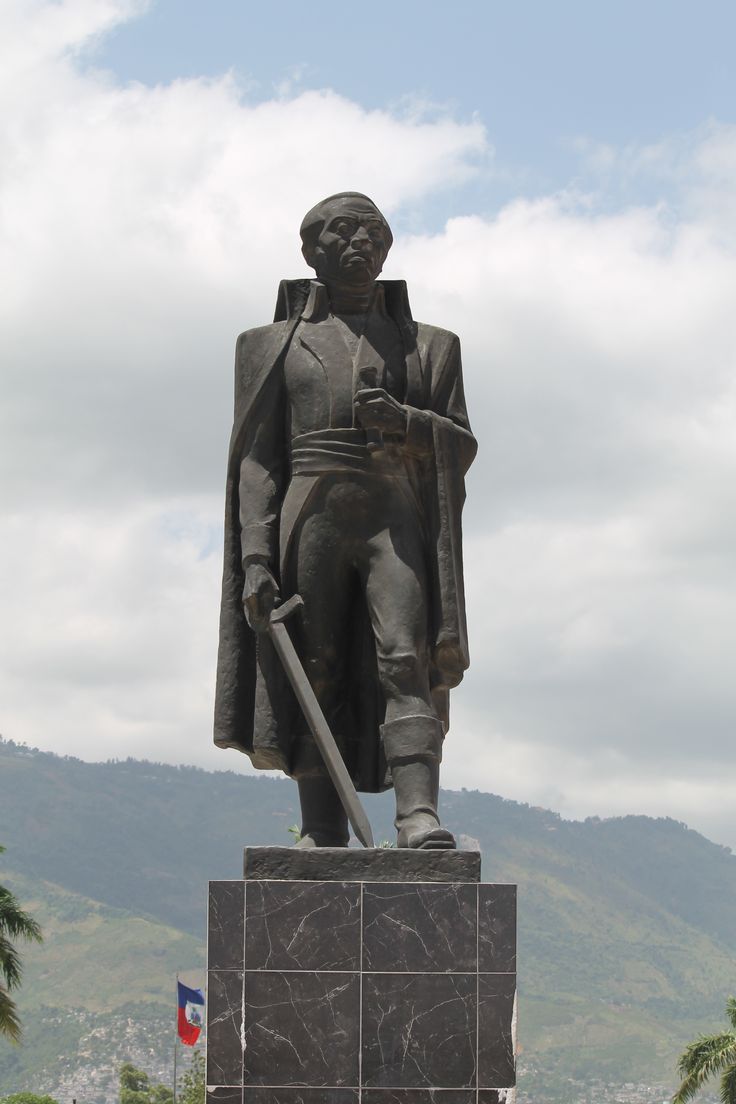
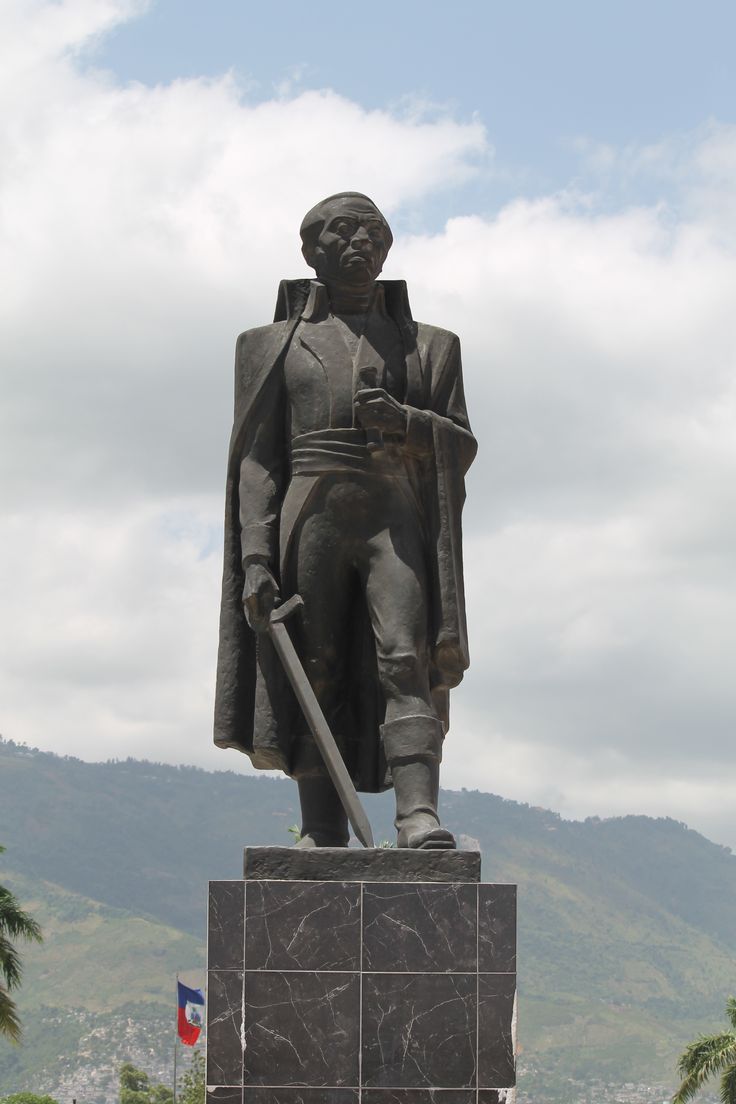
(A statue of Louverture)

Today is his 274th birthday and we would all like to say happy birthday and rest in peace Toussaint Louverture.

Saturday, April 8, 2017

Anniversary of Toussaint Louverture's Death

“I was born a slave, but nature gave me a soul of a free man” - Toussaint Louverture
(Toussaint Louverture)
Toussaint Louverture was born on May 20th, 1743 in Haut de Cap, Haiti. He was born into slavery. He was also well educated. In 1776 Louverture was freed from his slave masters. As a free man, Louverture began to accumulate wealth and property. In 1782 Louverture married  Suzanne Simone Baptiste Louverture. In 1792 Louverture became the leader of the Haitian revolution. He gained a reputation for running an orderly camp, trained his men in guerrilla tactics and "the European style of war", and began to attract soldiers who would play an important role throughout the revolution. In 1793 was the first time he publicly used the moniker "Louverture". On February 4th, 1794, the French revolutionary government proclaimed the abolition of slavery in Haiti. In May 1794, when the decision of the French government became known in Saint Domingue, Louverture switched allegiance from the Spanish to the French and rallied his troops to Lavaux.
(A drawing of Louverture)
In the first weeks, he eradicated all Spanish supporters from the Cordon de l'Ouest, which he had held on their behalf. Louverture faced attack from multiple sides. His former colleagues in the black rebellion were now fighting against him for the Spanish. By now his officers included men who were important throughout the revolution: his brother Paul, his nephew Moïse, Jean-Jacques Dessalines and Henri Christophe. In 1795 the Treaty of Basel stopped the fighting between the French and Spanish on the island of Hispaniola. The black leaders, Jean-François and Biassou, continued to fight against Louverture until November of 1795. Throughout 1795 and 1796, Louverture was concerned with reestablishing agriculture and keeping the peace in areas under his control. On March 20th, 1796, he succeeded in capturing the French Governor Lavaux, and appointed himself Governor.
(A drawing of Louverture in battle)
Louverture wanted White planters to return to Haiti because he believed they were bearers of useful skills and knowledge. On April 30th, 1798, Louverture signed a treaty with the British general, Thomas Maitland, exchanging the withdrawal of British troops from western Saint Domingue. In 1799 a civil war between Louverture and Andre Rigaud began and ended in 1800 with Louverture winning the war.  In January of 1801, Louverture and Hyacinthe Moïse invaded the Spanish territory, taking possession from the Governor, Don Garcia. Toussaint brought it under French law which abolished slavery, and embarked on a program of modernization. Louverture promulgated the Constitution on July 7th, 1801, officially establishing his authority over the entire island of Hispaniola.
(A drawing of Louverture with the Constitution)
After sending a copy of the new constitution to France, Napoleon sent 20,000 troops to the island to restore French control and slavery. Louverture prepared for the invasion. After several months of fighting the French felt their position was weak. Louverture was arrested by the French and on on 25 August, Toussaint Louverture was sent to the jail in Fort-de-Joux in the Doubs, France. On April 7th, 1803 Louverture died of exhaustion, malnutrition, apoplexy, pneumonia and possibly tuberculosis while in prison in France. He was 59 years old.
(A statue of Louverture)
Today is the 214th anniversary of his death. Take time to remember this great revolutionary today.


(P.S. sorry for the late post)

Monday, October 17, 2016

Anniversary of Jean Jaques Dessalines' Death

“We have dared to be free. Let us dare to be so by ourselves and for ourselves” - Jean Jacques Dessalines
Image result for jean jacques dessalines(Jean Jacques Dessalines)
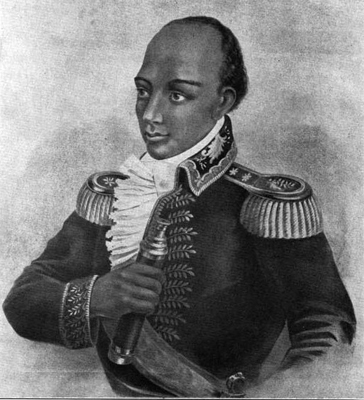
Jean Jacques Dessalines was born as Jean Jacques Duclos on September 20th, 1758 in Grande Riviere du Nord, Haiti. He was born as a slave. He rose to the rank of foreman in the sugarcane fields. When he was 30 years old he was bought by a free Black man and had his last name changed to “Dessalines”. In 1791 he was freed due to the slave uprising. He then joined the slave rebellion of the northern plains led by Jean François Papillon and Georges Biassou. He then became a lieutenant of the revolution. He then joined Spain's military forces against the French colony of Saint Domingue. He then met Toussaint Louverture. In 1794 he became chief lieutenant of Louverture.
Image result for jean jacques dessalines(A portrait of Dessalines)
In 1799 he became brigadier general. During the Haitian Revolution Dessalines ordered the killing of all royalists in Saint Domingue to ensure that Haiti would become a nation. In 1801 Dessalines quickly ended an insurrection in the north led by Louverture's own nephew, General Moyse. He gained a reputation of taking no prisoners. When the French tried to retake Haiti in 1802 Dessalines and Louverture defeated them in the battle of Crete a Pierrot. After Louverture was captured Dessalines became the leader of the revolution.
Image result for jean jacques dessalines(A portrait of Dessalines)
In 1804 he declared himself Governor of Haiti for life and declared the independence of Haiti. He then claimed himself as Emperor of Haiti. He then ordered the massacre of all Whites in the country and forbade Whites to have land in Haiti. The Haitian army followed the Whites into the Dominican Republic and occupied the country. In 1805 he released the Imperial constitution.
Image result for jean jacques dessalines(A portrait of Dessalines)
He demanded that all Black men be either soldiers or laborers. He believed in strict regulation of foreign trade. On October 17th, 1806 Jean Jacques Dessalines was assassinated in Port Rouge, Haiti. He was 48 years old.
Image result for jean jacques dessalines statue(A statue of Dessalines)

Today is the 210th anniversary of his death. Take time to remember this great emperor today.

Sunday, October 9, 2016

Anniversary of Henri Christophe's Death

“The donkey sweats so the horse can be decorated with lace” - Haitian Proverb
Image result for henri christophe(Henri Christophe)
Henri Christophe was born as Christopher Henry on October 6th, 1767 in an unknown place in Grenada. He was born a slave. After being born he was brought to the northern part of Saint Domingue. In 1779 he served with French forces as a drummer boy. His regiment went to assist the United States during the U.S. Revolutionary War.
Image result for henri christophe young(A statue of Christophe)
As an adult he worked as a mason, sailor, stable hand, waiter, and billiard maker. He worked at and managed a hotel in Cap-Français. As a young man he gained his freedom. In 1791 he became a soldier in the Haitian Revolution. He fought with Toussaint Louverture against the French.
Image result for henri christophe 1791(A drawing of Christophe)
In 1802 he was promoted to general. In 1805 Christophe and Jean Jacques Dessalines mobilized troops to kick out the remaining French troops in the Dominican Republic. They set fire to the town of Santo Domingo. In 1806 he learned of an assassination attempt against Jean Jacques Dessalines but did not tell him. In 1807 he became the president of Haiti in the North.
Image result for henri christophe(A drawing of Christophe)
In 1811 he declared the northern part of Haiti a kingdom. Christophe built 6 châteaux, 8 palaces and the massive Citadelle Laferrière, on a mountain near Milot. For agricultural production he chose to enforce corvée plantation work. He was unpopular during his reign.
Image result for henri christophe(A drawing of Christophe)
On October 8th, 1820 Henri Christophe committed suicide due to risk of a possible coup in Cap-Haitien, Haiti. He was 53 years old.
Image result for henri christophe 1820(A statue of Christophe)
Today is the 196th anniversary of his death. Take time to remember this great leader today.


(P.S. sorry for the late post)

Thursday, October 6, 2016

Happy Birthday Henri Christophe

“The donkey sweats so the horse can be decorated with lace” - Haitian Proverb
Image result for henri christophe(Henri Christophe)
Henri Christophe was born as Christopher Henry on October 6th, 1767 in an unknown place in Grenada. He was born a slave. After being born he was brought to the northern part of Saint Domingue. In 1779 he served with French forces as a drummer boy. His regiment went to assist the United States during the U.S. Revolutionary War.
Image result for henri christophe young(A statue of Christophe)
As an adult he worked as a mason, sailor, stable hand, waiter, and billiard maker. He worked at and managed a hotel in Cap-Français. As a young man he gained his freedom. In 1791 he became a soldier in the Haitian Revolution. He fought with Toussaint Louverture against the French.
Image result for henri christophe 1791(A drawing of Christophe)
In 1802 he was promoted to general. In 1805 Christophe and Jean Jacques Dessalines mobilized troops to kick out the remaining French troops in the Dominican Republic. They set fire to the town of Santo Domingo. In 1806 he learned of an assassination attempt against Jean Jacques Dessalines but did not tell him. In 1807 he became the president of Haiti in the North.
Image result for henri christophe(A drawing of Christophe)
In 1811 he declared the northern part of Haiti a kingdom. Christophe built 6 châteaux, 8 palaces and the massive Citadelle Laferrière, on a mountain near Milot. For agricultural production he chose to enforce corvée plantation work. He was unpopular during his reign.
Image result for henri christophe(A drawing of Christophe)
On October 8th, 1820 Henri Christophe committed suicide due to risk of a possible coup in Cap-Haitien, Haiti. He was 53 years old.
Image result for henri christophe 1820(A statue of Christophe)
Today is his 249th birthday and we would all like to say happy birthday and rest in peace Henri Christophe.

Tuesday, September 20, 2016

Happy Birthday Jean Jacques Dessalines

“We have dared to be free. Let us dare to be so by ourselves and for ourselves” - Jean Jacques Dessalines
Image result for jean jacques dessalines(Jean Jacques Dessalines)
Jean Jacques Dessalines was born as Jean Jacques Duclos on September 20th, 1758 in Grande Riviere du Nord, Haiti. He was born as a slave. He rose to the rank of foreman in the sugarcane fields. When he was 30 years old he was bought by a free Black man and had his last name changed to “Dessalines”. In 1791 he was freed due to the slave uprising. He then joined the slave rebellion of the northern plains led by Jean François Papillon and Georges Biassou. He then became a lieutenant of the revolution. He then joined Spain's military forces against the French colony of Saint Domingue. He then met Toussaint Louverture. In 1794 he became chief lieutenant of Louverture.
Image result for jean jacques dessalines(A portrait of Dessalines)
In 1799 he became brigadier general. During the Haitian Revolution Dessalines ordered the killing of all royalists in Saint Domingue to ensure that Haiti would become a nation. In 1801 Dessalines quickly ended an insurrection in the north led by Louverture's own nephew, General Moyse. He gained a reputation of taking no prisoners. When the French tried to retake Haiti in 1802 Dessalines and Louverture defeated them in the battle of Crete a Pierrot. After Louverture was captured Dessalines became the leader of the revolution.
Image result for jean jacques dessalines(A portrait of Dessalines)
In 1804 he declared himself Governor of Haiti for life and declared the independence of Haiti. He then claimed himself as Emperor of Haiti. He then ordered the massacre of all Whites in the country and forbade Whites to have land in Haiti. The Haitian army followed the Whites into the Dominican Republic and occupied the country. In 1805 he released the Imperial constitution.
Image result for jean jacques dessalines(A portrait of Dessalines)
He demanded that all Black men be either soldiers or laborers. He believed in strict regulation of foreign trade. On October 17th, 1806 Jean Jacques Dessalines was assassinated in Port Rouge, Haiti. He was 48 years old.
Image result for jean jacques dessalines statue(A statue of Dessalines)

Today is his 258th birthday and we would all like to say happy birthday and rest in peace Jean Jacques Dessalines.  

Friday, May 20, 2016

Happy Birthday Toussaint Louverture

“I was born a slave, but nature gave me a soul of a free man” - Toussaint Louverture
(Toussaint Louverture)
Toussaint Louverture was born on May 20th, 1743 in  Haut de Cap, Haiti. He was born into slavery. He was also well educated. In 1776 Louverture was freed from his slave masters. As a free man, Louverture began to accumulate wealth and property. In 1782 Louverture married  Suzanne Simone Baptiste Louverture. In 1792 Louverture became the leader of the Haitian revolution. He gained a reputation for running an orderly camp, trained his men in guerrilla tactics and "the European style of war", and began to attract soldiers who would play an important role throughout the revolution. In 1793 was the first time he publicly used the moniker "Louverture". On February 4th, 1794, the French revolutionary government proclaimed the abolition of slavery in Haiti. In May 1794, when the decision of the French government became known in Saint Domingue, Louverture switched allegiance from the Spanish to the French and rallied his troops to Lavaux.
(A drawing of Louverture)
In the first weeks, he eradicated all Spanish supporters from the Cordon de l'Ouest, which he had held on their behalf. Louverture faced attack from multiple sides. His former colleagues in the black rebellion were now fighting against him for the Spanish. By now his officers included men who were important throughout the revolution: his brother Paul, his nephew Moïse, Jean-Jacques Dessalines and Henri Christophe. In 1795 the Treaty of Basel stopped the fighting between the French and Spanish on the island of Hispaniola. The black leaders, Jean-François and Biassou, continued to fight against Louverture until November of 1795. Throughout 1795 and 1796, Louverture was concerned with reestablishing agriculture and keeping the peace in areas under his control. On March 20th, 1796, he succeeded in capturing the French Governor Lavaux, and appointed himself Governor.
(A drawing of Louverture in battle)
Louverture wanted White planters to return to Haiti because he believed they were bearers of useful skills and knowledge. On April 30th, 1798, Louverture signed a treaty with the British general, Thomas Maitland, exchanging the withdrawal of British troops from western Saint Domingue. In 1799 a civil war between Louverture and Andre Rigaud began and ended in 1800 with Louverture winning the war.  In January of 1801, Louverture and Hyacinthe Moïse invaded the Spanish territory, taking possession from the Governor, Don Garcia. Toussaint brought it under French law which abolished slavery, and embarked on a program of modernization. Louverture promulgated the Constitution on July 7th, 1801, officially establishing his authority over the entire island of Hispaniola.
(A drawing of Louverture with the Constitution)
After sending a copy of the new constitution to France, Napoleon sent 20,000 troops to the island to restore French control and slavery. Louverture prepared for the invasion. After several months of fighting the French felt their position was weak. Louverture was arrested by the French and on on 25 August, Toussaint Louverture was sent to the jail in Fort-de-Joux in the Doubs, France. On April 7th, 1803 Louverture died of exhaustion, malnutrition, apoplexy, pneumonia and possibly tuberculosis while in prison in France. He was 59 years old.
(A statue of Louverture)
Today is his 273rd birthday and we would all like to say happy birthday and rest in peace Toussaint Louverture.     

Saturday, April 9, 2016

Anniversary of Toussaint Louverture's Death

“I was born a slave, but nature gave me a soul of a free man” - Toussaint Louverture
(Toussaint Louverture)
Toussaint Louverture was born on May 20th, 1743 in  Haut de Cap, Haiti. He was born into slavery. He was also well educated. In 1776 Louverture was freed from his slave masters. As a free man, Louverture began to accumulate wealth and property. In 1782 Louverture married  Suzanne Simone Baptiste Louverture. In 1792 Louverture became the leader of the Haitian revolution. He gained a reputation for running an orderly camp, trained his men in guerrilla tactics and "the European style of war", and began to attract soldiers who would play an important role throughout the revolution. In 1793 was the first time he publicly used the moniker "Louverture". On February 4th, 1794, the French revolutionary government proclaimed the abolition of slavery in Haiti. In May 1794, when the decision of the French government became known in Saint Domingue, Louverture switched allegiance from the Spanish to the French and rallied his troops to Lavaux.
(A drawing of Louverture)
In the first weeks, he eradicated all Spanish supporters from the Cordon de l'Ouest, which he had held on their behalf. Louverture faced attack from multiple sides. His former colleagues in the black rebellion were now fighting against him for the Spanish. By now his officers included men who were important throughout the revolution: his brother Paul, his nephew Moïse, Jean-Jacques Dessalines and Henri Christophe. In 1795 the Treaty of Basel stopped the fighting between the French and Spanish on the island of Hispaniola. The black leaders, Jean-François and Biassou, continued to fight against Louverture until November of 1795. Throughout 1795 and 1796, Louverture was concerned with reestablishing agriculture and keeping the peace in areas under his control. On March 20th, 1796, he succeeded in capturing the French Governor Lavaux, and appointed himself Governor.
(A drawing of Louverture in battle)
Louverture wanted White planters to return to Haiti because he believed they were bearers of useful skills and knowledge. On April 30th, 1798, Louverture signed a treaty with the British general, Thomas Maitland, exchanging the withdrawal of British troops from western Saint Domingue. In 1799 a civil war between Louverture and Andre Rigaud began and ended in 1800 with Louverture winning the war.  In January of 1801, Louverture and Hyacinthe Moïse invaded the Spanish territory, taking possession from the Governor, Don Garcia. Toussaint brought it under French law which abolished slavery, and embarked on a program of modernization. Louverture promulgated the Constitution on July 7th, 1801, officially establishing his authority over the entire island of Hispaniola.
(A drawing of Louverture with the Constitution)
After sending a copy of the new constitution to France, Napoleon sent 20,000 troops to the island to restore French control and slavery. Louverture prepared for the invasion. After several months of fighting the French felt their position was weak. Louverture was arrested by the French and on on 25 August, Toussaint Louverture was sent to the jail in Fort-de-Joux in the Doubs, France. On April 7th, 1803 Louverture died of exhaustion, malnutrition, apoplexy, pneumonia and possibly tuberculosis while in prison in France. He was 59 years old.
(A statue of Louverture)
Today is the 213th anniversary of his death. Take time to remember this great revolutionary today.       


(P.S. sorry for the late post)