Crate Diggers: 1961
Showing posts with label 1961. Show all posts

Tuesday, August 8, 2017

Happy Birthday Barack Obama

“Change will not come if we wait for some other person or some other time. We are the ones we've been waiting for. We are the change that we seek” - Barack Obama
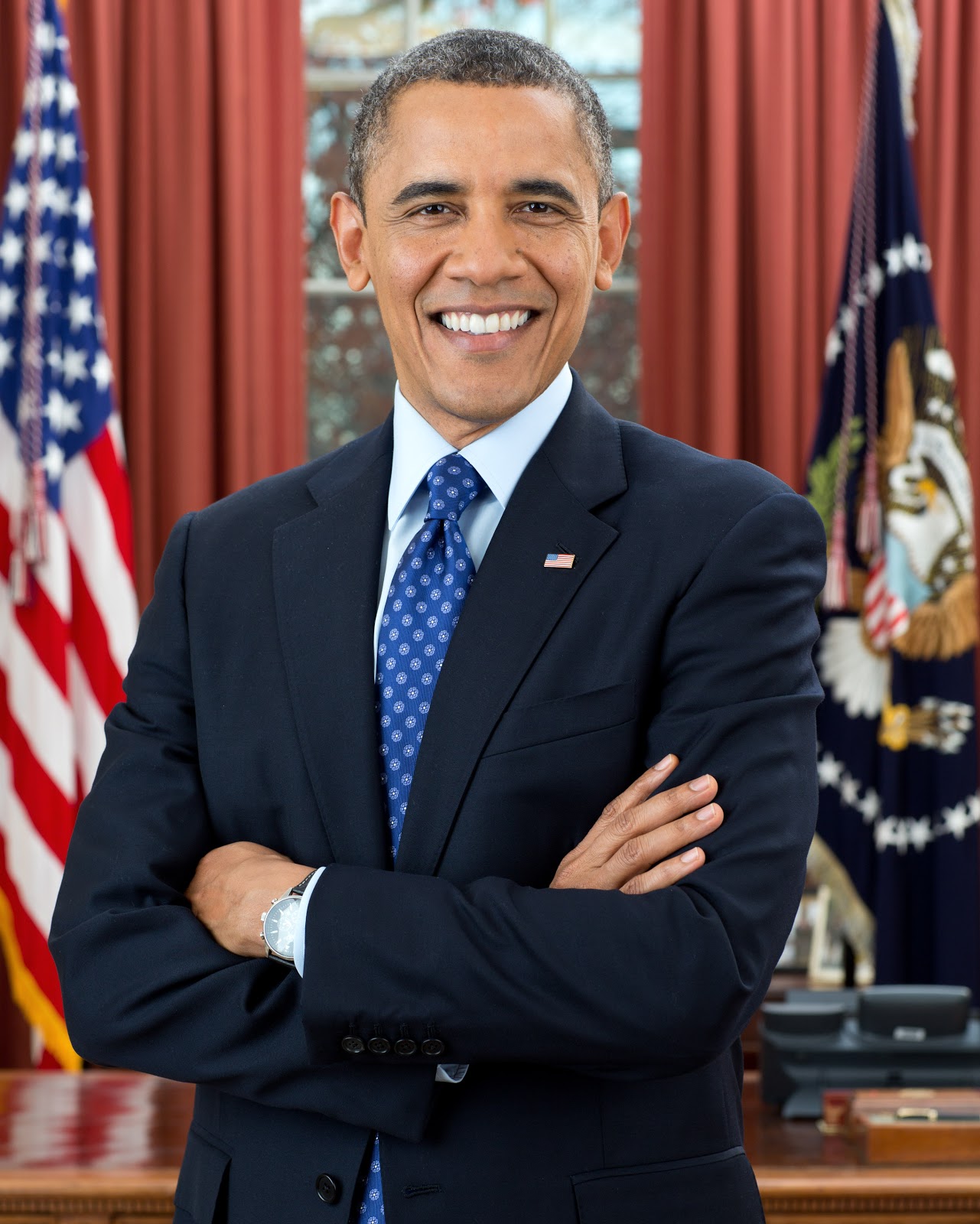
(Barack Obama)
Barack Obama was born on August 4th, 1961 in Honolulu, Hawaii, USA. In 1964 his parents divorced. In 1967 Obama and his mother moved to Indonesia. In 1971 he moved back to Hawaii and lived with his grandparents.
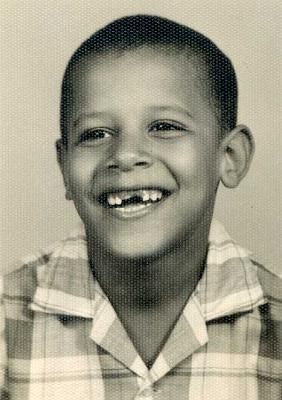
(Obama as a child)
In 1979 he graduated high school.
(Obama in high school)
He then went to attend Occidental college. In 1981 he made his 1st speech which was on the issue of Apartheid in South Africa. He then transferred to Columbia college. In 1982 his father died in a car accident. In 1983 he graduated with a B.A. in political science.
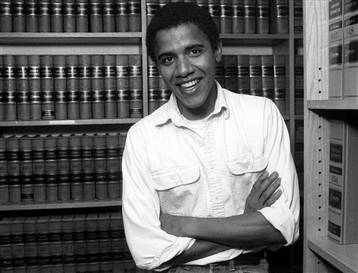
(Obama in 1983)
In 1985 he was among the leaders of May Day efforts to bring attention to the New York City Subway system. He was then hired in Chicago as director of the Developing Communities Project. In 1988 he traveled to Europe and to Kenya. He then attended Harvard Law School. In 1991 he graduated with a JD degree magna cum laude.
(Obama in 1991)
He was the 1st Black president of the Harvard Law Review. He then moved to Chicago. He also accepted a two-year position as Visiting Law and Government Fellow at the University of Chicago Law School to work on his first book. In 1992 he taught at the University of Chicago Law School. Also in 1992 Obama directed Illinois's Project Vote. Also in 1992 he married Michelle Robinson.
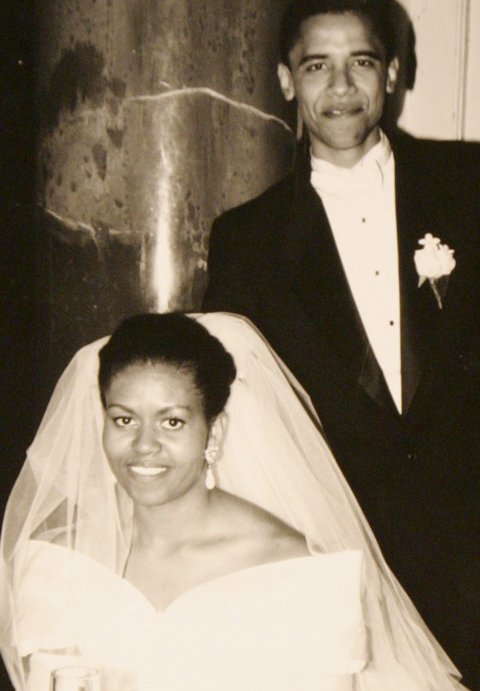
(Obama (Right) and Michelle Robinson (Left))
In 1993 he joined a law firm. In 1995 his mother died of cancer. Also in 1995 he wrote a memoir called Dreams from My Father. Also in the same year he served on the board of directors of the Chicago Annenberg Challenge.
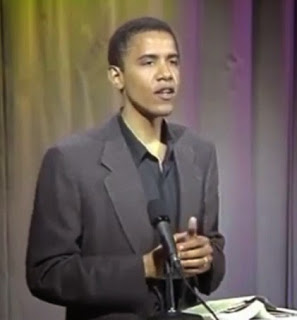
(Obama in 1995)
In 1996 he was elected to the Illinois senate. In 1998 he was reelected to the Illinois senate. Also in 1998 he had his 1st daughter Malia Obama. In 2001 he had his 2nd daughter Natasha Obama. In 2002 he was reelected to the Illinois senate.
(Obama in 2002)
In 2003 Obama became chairman of the Illinois Senate's Health and Human Services Committee. Also in 2003 he openly opposed the Iraq War. In 2004 he was elected into the US senate. In 2005 Obama voted for the Class Action Fairness Act. In 2006 Obama sponsored the Democratic Republic of the Congo Relief, Security, and Democracy Promotion Act. Also in 2006 Obama held assignments on the Senate Committees for Foreign Relations, Environment and Public Works and Veterans' Affairs.
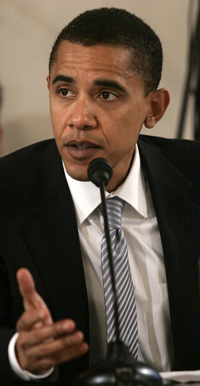
(Obama in 2006)
In 2007 Obama and Senator Feingold introduced a corporate jet provision to the Honest Leadership and Open Government Act. Also in 2007 he introduced the Deceptive Practices and Voter Intimidation Prevention Act and the Iraq War De-Escalation Act. Also in 2007 Obama announced his presidential candidacy. In 2008 he resigned from the US senate. Also in 2008 Obama became the democratic party candidate. Obama won the 2008 presidential election. He became the 1st elected African American president.
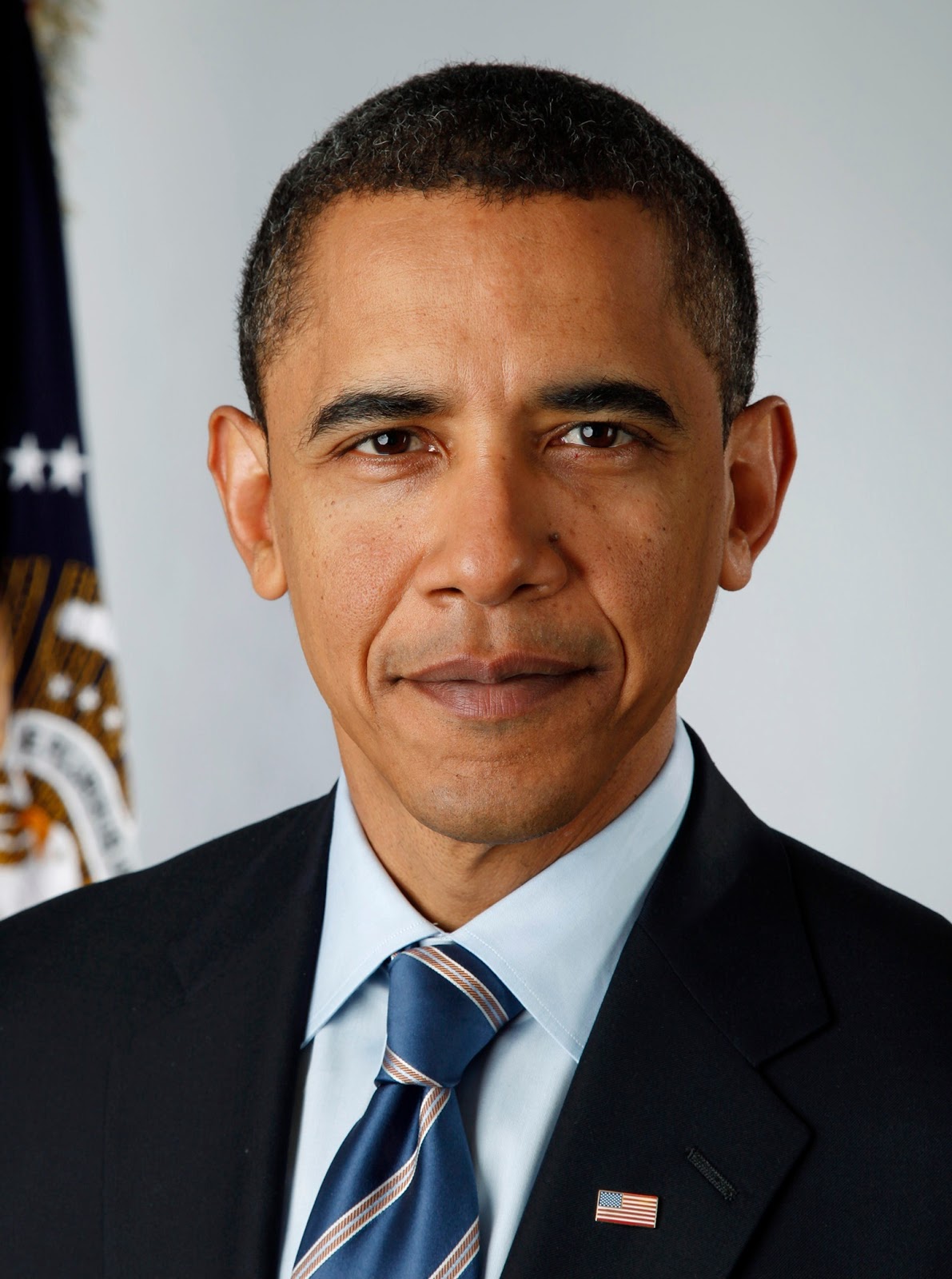
(Obama in 2008)
In 2009 Obama issued executive orders and presidential memoranda directing the U.S. military to develop plans to withdraw troops from Iraq. The first bill signed into law by Obama was the Lilly Ledbetter Fair Pay Act. Also in 2009 Obama signed the American Recovery and Reinvestment Act.
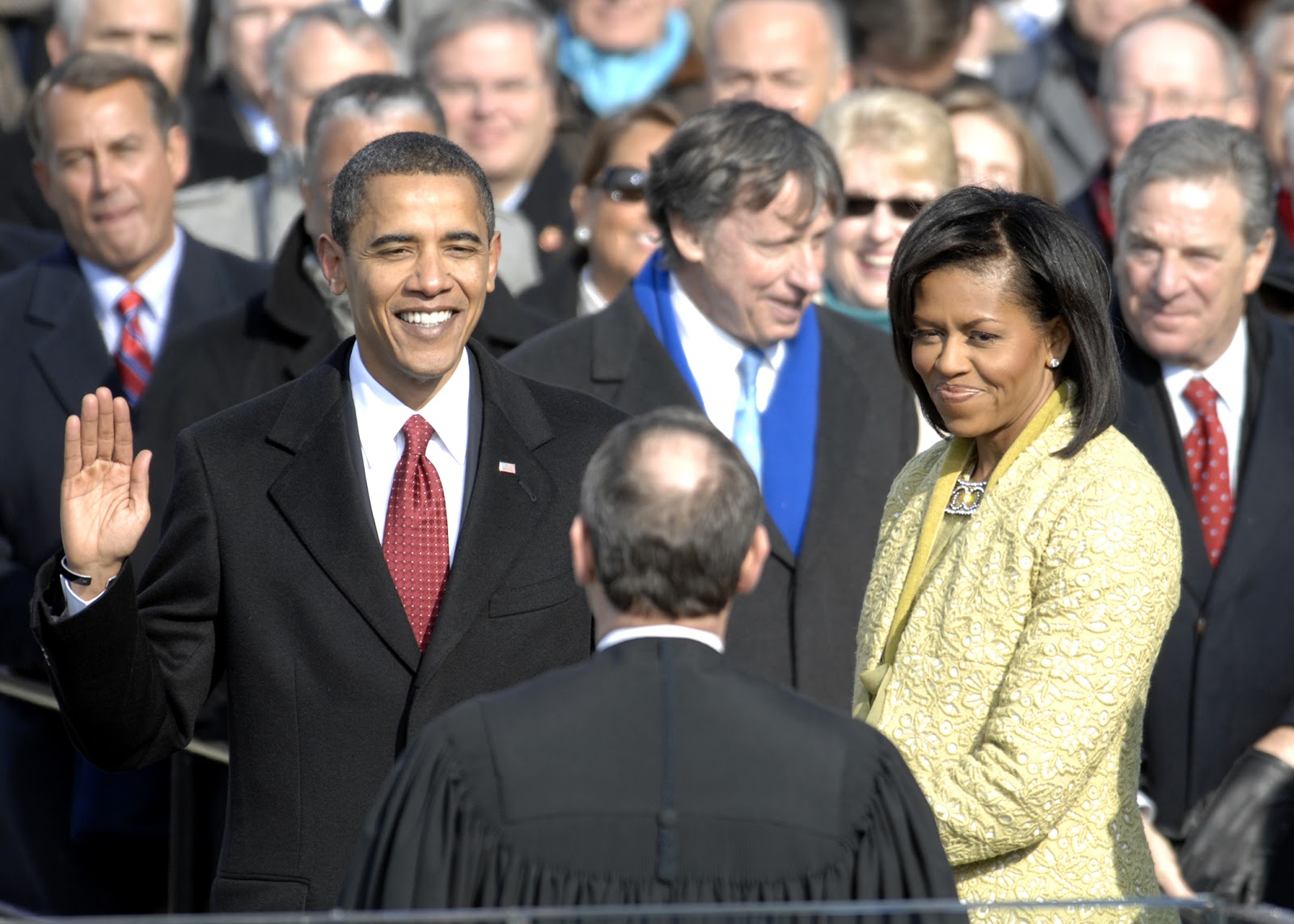
(Obama (Left) with Michelle Obama (Right))
In 2010 Obama signed the Health Care and Education Reconciliation Act. Also in 2010 Obama signed the Don't Ask, Don't Tell Repeal Act of 2010. Also in 2010 the nation’s unemployment rate started to fall. Also in 2010 Obama signed the affordable care act.
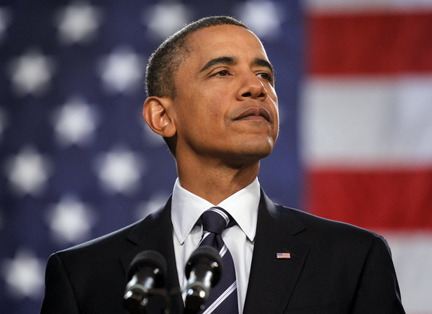
(Obama in 2010)
In 2011 he announced his reelection campaign. Also in 2011 Obama announced that all US troops would leave Iraq. Also in 2011 Obama authorized a raid that ended in the death of Osama Bin Laden.
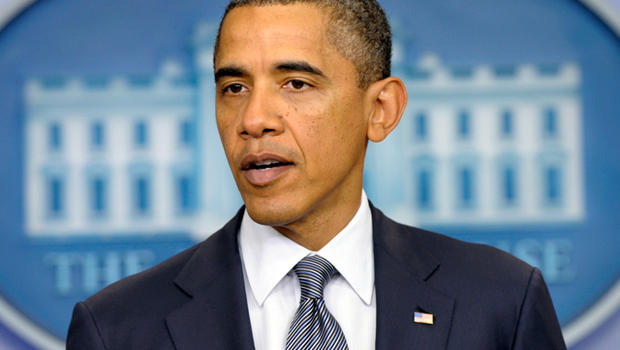
(Obama in 2011)
In 2012 Obama won his 2nd term as president. In 2013 the Obama administration filed briefs urging the Supreme Court to rule in favor of same sex couples. Also in 2013 Obama signed 23 executive orders and outlined a series of sweeping proposals regarding gun control.
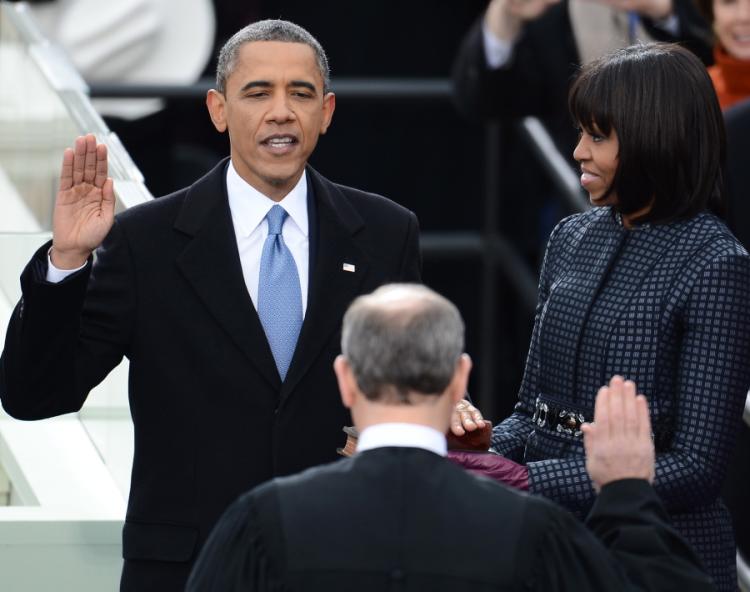
(Obama (Left) and Michelle Obama (Right))
In 2014 Obama announced that he intended to normalize relationships between Cuba and the United States. Also in 2014 Obama authorized an air campaign in Syria. In 2015 Obama was the 1st president to speak in front of the African Union in Addis Ababa, Ethiopia.
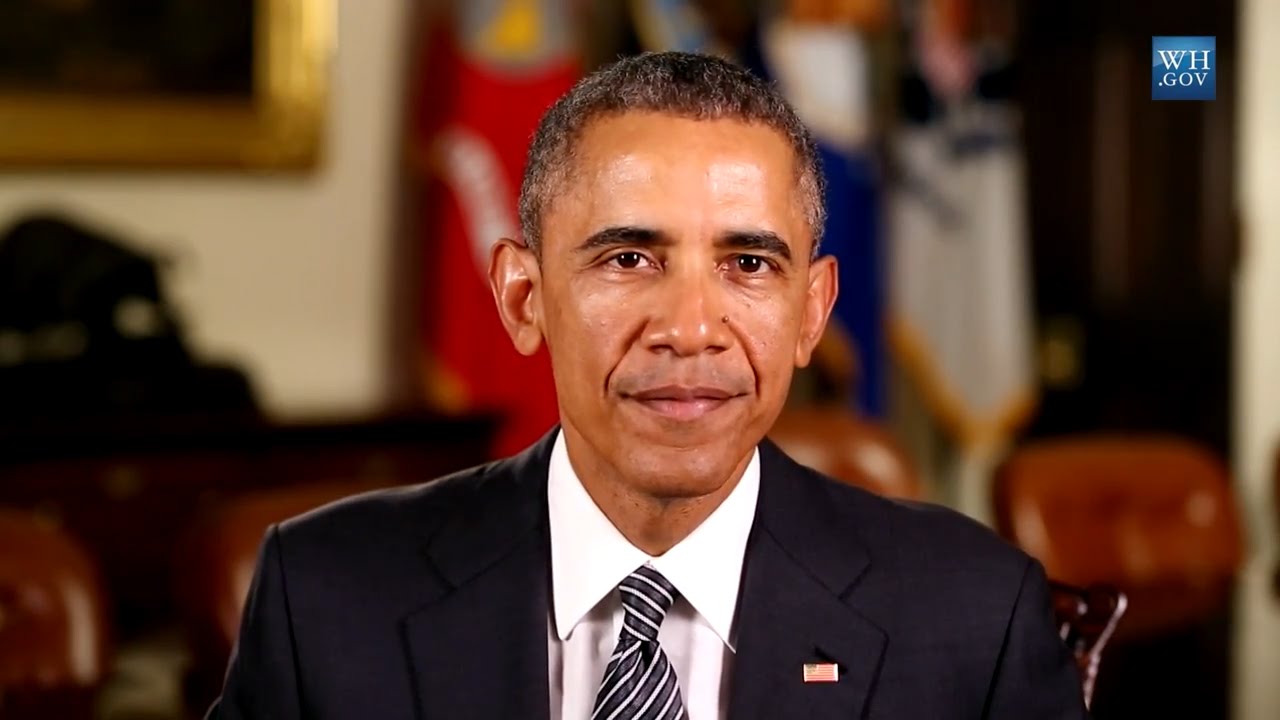
(Obama in 2015)
In 2016 Obama announced new executive actions extending background check requirements to more gun sellers. Also in 2016 Obama was the 1st president since 1928 to visit Cuba.
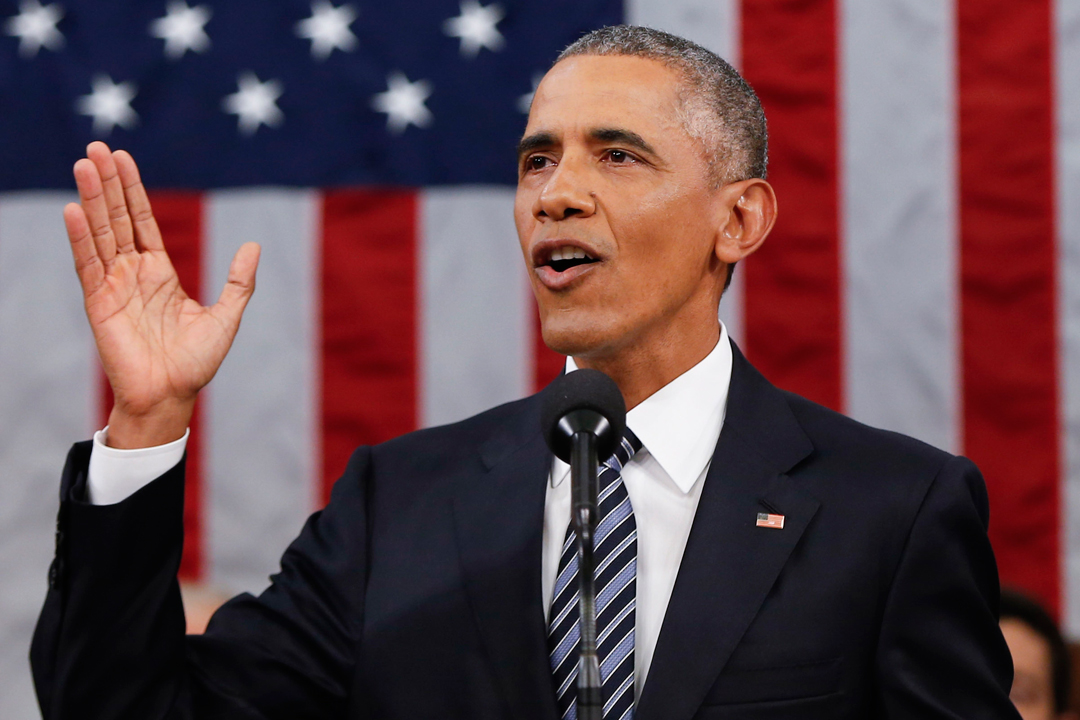
(Obama in 2016)
In 2017 the John F. Kennedy Presidential Library and Museum awarded the annual Profile in Courage Award to Obama.
Related image
Today he turns 56 years old and we would all like to say happy birthday Barack Obama.

Videos of Barack Obama

Tuesday, July 4, 2017

Happy Birthday Patrice Lumumba

“Without dignity there is no liberty, without justice there is no dignity, and without independence there are no free men” - Patrice Lumumba
(Patrice Lumumba)
Patrice Lumumba was born on July 2nd, 1925 Katakokombe, Belgian Congo. Lumumba worked as a postal clerk and as a travelling beer salesman. In 1951 he married Pauline Opangu. In 1955 Lumumba became regional head of the Cercles of Stanleyville and joined the Liberal Party of Belgium, where he worked on editing and distributing party literature. While in Belgium he was arrested in 1955 on charges of embezzlement. He was released in 1956. In 1958 he helped found the broad based MNC. Also in 1958 Lumumba and his team represented the MNC at the All-African Peoples' Conference in Accra, Ghana.
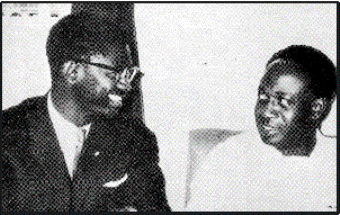
(Lumumba (Left) with Kwame Nkrumah (Right))
In 1959 Lumumba was arrested for inciting an anti colonial riot in Kisangani where thirty people were killed. In 1960 Lumumba became the Democratic Republic of the Congo’s 1st prime minister.
(Lumumba in 1960)
Lumumba made the fateful decision to raise the pay of all government employees except for the army. They then rebelled in protest. The rebellions quickly spread throughout the country, leading to a general breakdown in law and order. UN troops were brought into the country. Lumumba sought Soviet aid in the form of arms, food, medical supplies, trucks, and planes. Lumumba's decisive actions to turn to the Soviet Union alarmed western countries such as the USA. The USA saw Patrice Lumumba as a communist and the CIA began a plot to assassinate him. Lumumba was then dismissed from government by the DRC’s president.
(Lumumba (Middle) with DRC’s President Kasa-Vubu (Left))
Lumumba immediately protested the legality of the President's actions. The country was torn by two political groups claiming legal power over the country. A coup d'état organised by Colonel Joseph Mobutu incapacitated both Lumumba and President Kasa-Vubu. Lumumba was placed under house arrest at the Prime Minister's residence, with UN troops positioned around the house. He escaped to Stanleyville, where his intention apparently was to set up his own government and army. He was caught a few months later and flown to Léopoldville in ropes, not handcuffs.
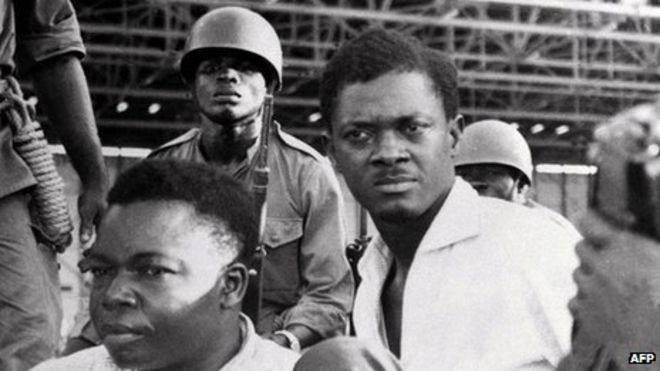
(Lumumba captured)
The USSR demanded for Lumumba to be released. In 1961 Lumumba was sent to Elizabethville where he was conducted under arrest to Brouwez House and was brutally beaten and tortured by Katangan and Belgian officers.
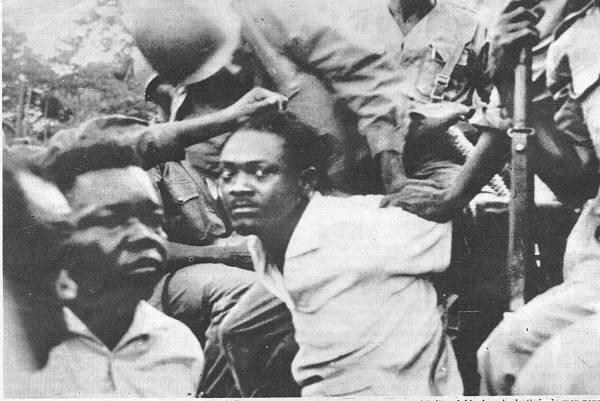
(Lumumba in custody)
Lumumba and two ministers from his newly formed independent government were lined up against a tree. On January 17th, 1961 Patrice Lumumba was killed by a firing squad consisting of Belgian, CIA, and Katangan officers in Lubumbashi, Democratic Republic of the Congo. He was 35 years old.
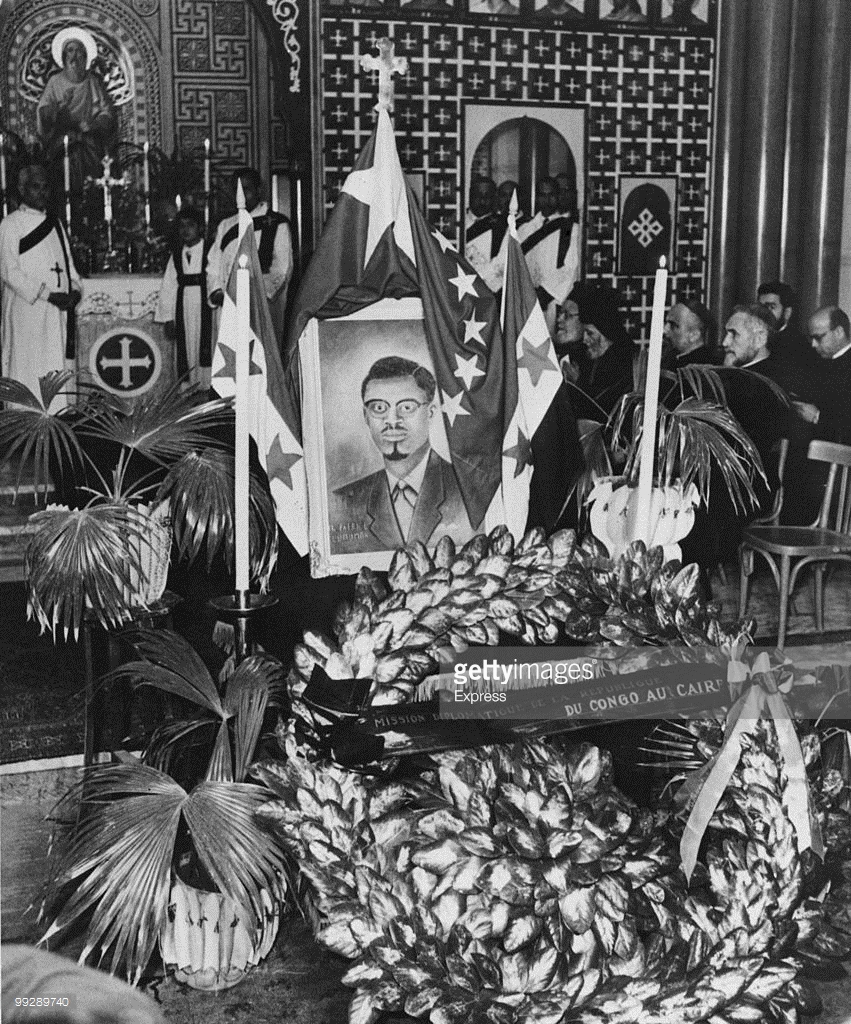
(A requiem mass for Lumumba)
Today is his 92nd birthday and we would all like to say happy birthday and rest in peace Patrice Lumumba.

Videos of Patrice Lumumba

Thursday, April 27, 2017

Happy Independence Day Sierra Leone

“He who upsets something should know how to put it back again” - Sierra Leonean Proverb
(Sierra Leone flag (1961-Present))
Sierra Leone is located in western Africa.
(Map of Sierra Leone)
Its capital is Freetown. Freetown is also its largest city. The official language is English. The country is 27,699 square miles. Sierra Leone is 99% African and 1% European. 71.3% of Sierra Leone practice Islam, 26.8% practice Christianity and 1.9% practice traditional religions. The total population is 7,075,641. The climate is tropical in Sierra Leone. Sierra Leone is a unitary presidential constitutional republic.
(Freetown, Sierra Leone’s capital)
Sierra Leone cuisine consists of rice, potato leaves, cassava leaves, crain crain, okra soup, fried fish and groundnut stew.
(Sierra Leone cuisine)
The arts in Sierra Leone are a mixture of traditional and hybrid African and western styles.
(Head masks from Sierra Leone)
The most popular sport in Sierra Leone is soccer. The national team is the Leone Stars.
(Sierra Leone’s soccer team)
Sierra Leone was first inhabited in 484 BC.
(Ancient artifacts from Sierra Leone)
Iron was starting to be used by the 9th century. In 1000 AD agriculture was being practised by coastal tribes. The dense tropical rainforest and swampy environment of Sierra Leone protected its peoples from conquest by the Mande and other African empires. In 1462 the Portuguese landed in Sierra Leone. The Spanish then named the region “Sierra Leone”. In 1495 the Portuguese built trading posts.
(Portuguese slave trading post)
The Dutch and French also set up trading posts. Each of these nations used Sierra Leone as a trading point for slaves. In 1562 the British initiated the Triangle Trade in Sierra Leone sending 300 enslaved Africans to the Spanish colony of Santo Domingo (The Dominican Republic). In the 18th century Islam was adopted in Sierra Leone. In 1787 the British colonized Sierra Leone and sent 400 of its poor Black population to the country.
(A drawing of Blacks from the Americas returning to Africa through Sierra Leone)
In 1792, 1200 Blacks from Nova Scotia moved to Sierra Leone. In 1799 some of the Black settlers revolted against the British who brought them there. In 1800 the revolt was subdued. In 1808 British crews delivered thousands of formerly enslaved Africans to Freetown, Sierra Leone after liberating them from illegal slave ships. The Blacks coming from the U.S., Jamaica, Liberia, and other caribbean countries created a new ethnic group called the Krio people.
(A Krio girl (Present day))
Sierra Leone developed as the educational centre of British West Africa. In 1827 the British established Fourah Bay College. In 1896 the British took more land of Sierra Leone.
(Sierra Leone flag (1899-1914))
In 1898 the British taxed the homes of the tribes in Sierra Leone and demanded them to pay for the pavements of roads in Sierra Leone. 24 chiefs were opposed this tax. This led to the Hut Tax war. The British attacked 1st. The Northern front was led by Bai Bureh.
(Bai Bureh)
The Southern front entered the conflict later. Both the British and Bureh’s forces suffered hundreds of casualties. In November of 1898 Bureh surrendered. The British hanged 96 of Bureh’s top warriors and exiled Bureh and 2 of his associates to exile in the Gold Coast (Ghana). In 1905 Bureh returned to Sierra Leone. In 1924 the UK government divided Sierra Leone into a Colony and a Protectorate, with separate and different political systems constitutionally defined for each.
Flag of Sierra Leone 1916-1961.gif(Sierra Leone flag (1914-1961))
In 1928 slavery was abolished in Sierra Leone. In 1935 the De Beers company was granted a monopoly on mineral mining. In 1947 a proposal for a single party system was introduced but the Krios led by Isaac Wallace Johnson opposed the idea. In 1951 the Sierra Leone People's Party was founded and was led by Sir Milton Margai.
(Sir Milton Margai)
In November of 1951 Margai oversaw the drafting of a new constitution for Sierra Leone which united the separate Colonial and Protectorate legislatures. In 1953 Sierra Leone was granted local ministerial powers, and Sir Milton Margai, was elected Chief Minister of Sierra Leone. In 1957 Sierra Leone held its first parliamentary election. Margai was re elected as Chief Minister by a landslide. On April 27th, 1961 Sierra Leone was declared independent from Great Britain.
(Sierra Leone flag (1961-Present))
Sir Milton Margai became the country's first Prime Minister.
(Sir Milton Margai as Prime Minister)
In 1962 Sierra Leone held its 1st general election. Sir Milton Margai was re elected as prime minister. In 1964 Margai died and his half-brother, Sir Albert Margai, was appointed as Prime Minister by parliament.
(Sir Albert Margai)
Sir Albert resorted to increasingly authoritarian actions in response to protests and enacted several laws against the opposition All People's Congress (APC). In 1967 riots broke out in Freetown against Sir Albert's policies. Sir Albert was accused of corruption and of a policy of affirmative action in favour of his own Mende ethnic group. In 1967 Siaka Stevens became the prime minister.
(Siaka Stevens)
Within hours after taking office, Stevens was ousted in a bloodless military coup led by Brigadier General David Lansana. A group of military officers in the Sierra Leone Army led by Brigadier General Andrew Juxon Smith, overrode this action by a coup d'état; they seized control of the government, arresting Brigadier Lansana, and suspending the constitution. The group set up the National Reformation Council (NRC). In 1968 a group of senior military officers in the Sierra Leone Army who called themselves the Anti Corruption Revolutionary Movement (ACRM), led by Brigadier General John Amadu Bangura, overthrew the NRC. They reinstated the constitution and returned power to Stevens. Stevens' rule grew more and more authoritarian, and his relationship with some of his ardent supporters deteriorated. Unrest in the provinces led Stevens to declare a state of emergency across the country. In 1971 a group of soldiers loyal to the executed Brigadier Bangura held a mutiny in the capital Freetown. They were arrested for mutiny. The SLPP boycotted the 1973 general election due to intimidation and procedural obstruction by the APC. In 1974 an alleged plot to overthrow president Stevens failed. In 1976 Stevens was elected without opposition for a second five year term as president. In 1977 a nationwide student demonstration against the government disrupted Sierra Leone politics.
(A demonstration in Sierra Leone)
The demonstration was quickly put down by the army and Stevens' own personal Special Security Division (SSD) force. In 1978 the APC dominant parliament approved a new constitution making the country a one party state. In 1985 Stevens retired from politics. Major General Joseph Saidu Momoh was elected President as the only contesting candidate.
(Joseph Saidu Momoh)
In 1987 more than 60 senior government officials were arrested for attempting to overthrow Momoh. In 1989 6 of them were hanged. In 1992 a military coup,sent president Momoh into exile in Guinea and the young soldiers established the National Provisional Ruling Council (NPRC). 25 year old Captain Valentine Strasser was the leader of the NPRC.
(Valentine Strasser)
Dozens of soldiers loyal to the ousted president Momoh were arrested. The NPRC immediately suspended the constitution, banned all political parties, limited freedom of speech and freedom of the press and enacted a rule by decree policy. In 1994 the Revolutionary United Front (RUF) held much of the diamond rich Eastern Province and were at the edge of Freetown. The NPRC hired several hundred mercenaries from the private firm Executive Outcomes. Within a month they had driven RUF fighters back to enclaves along Sierra Leone's borders. In 1996 Strasser was arrested in a palace coup at the Defence Headquarter in Freetown by his fellow NPRC soldiers. Ahmad Tejan Kabbah then became president.
(Ahmed Tejan Kabbah)
In 1997 a military coup sent President Kabbah into exile in Guinea and established the Armed Forces Revolutionary Council (AFRC). Major General Johnny Paul Koroma became head of state and suspended the constitution, banned demonstrations, shut down all private radio stations in the country and invited the RUF to join the new government.
(Johnny Paul Koroma)
The AFRC was overthrown by the Nigerian led ECOMOG forces, and the democratically elected government of president Kabbah was reinstated in 1998. In 1999 the United Nations agreed to send peacekeepers to help restore order and disarm the rebels in Sierra Leone. In 2000 13,000 UN troops were in Sierra Leone.
(UN troops in Sierra Leone)
The British took full military action in Sierra Leone and took action against rebels. In 2001 there was a total of 50,000 people killed in the 10 year civil war. In 2002 the war was declared over. Kabbah was re elected president by a landslide. In 2005 UN forces backed out of Sierra Leone. In 2007 Ernest Bai Koroma was elected president.
(Ernest Bai Koroma)
In 2012 Koroma was re elected president. In 2014 an Ebola virus epidemic in Sierra Leone began. There was 3000 deaths as a result.
(Health workers in Sierra Leone)
Today Marks the 56th anniversary of Sierra Leone’s independence and we would like to say happy independence day Sierra Leone.

Videos of Sierra Leone Independence