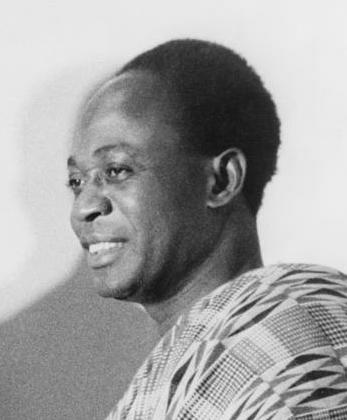
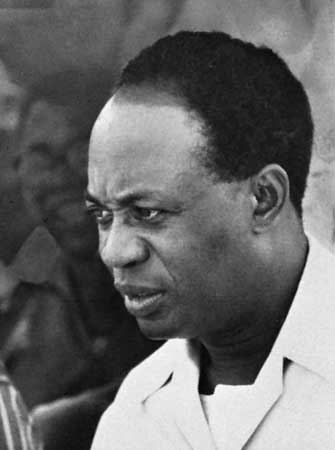
Crate Diggers: Kwame Nkrumah
Showing posts with label Kwame Nkrumah. Show all posts

Tuesday, August 29, 2017

Anniversary of W.E.B. DuBois' Death

“To be a poor man is hard, but to be a poor race in a land of dollars is the very bottom of hardships” - W.E.B. Du Bois
(W.E.B. Du Bois)

W.E.B. Du Bois, was born as William Edward Burghardt Du Bois on February 23rd 1868 in Great Barrington, Massachusetts, USA. Du Bois attended Fisk University in Nashville, TN from 1885 to 1888.
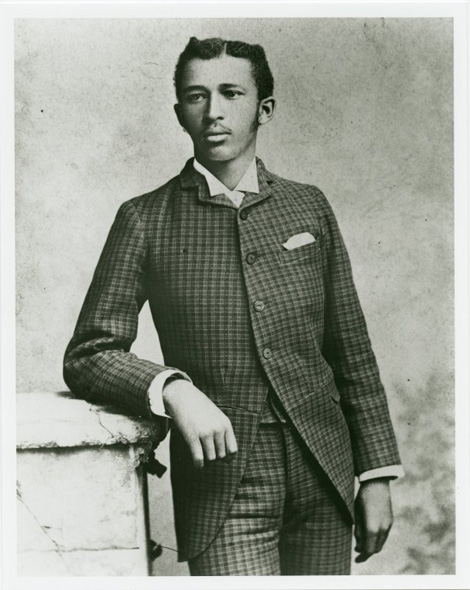
(Du Bois as a young man)
From 1888 to 1890 he attended Harvard University.
(Du Bois (1st to the right bottom row) while in Harvard)
In 1892 Du Bois received a fellowship to attend the University of Berlin. In 1895 he became the 1st African American to receive a Ph.D. from Harvard. In 1896 he performed sociological field research in Philadelphia's African American neighborhoods, which formed the foundation for his landmark study, The Philadelphia Negro (1899). In 1897 Du Bois expanded upon his thesis that African Americans should embrace their African heritage while contributing to American society. Also during this year he took a professorship in history and economics at Atlanta University in Georgia. Du Bois received grants from the U.S. government to prepare reports about the African American workforce and culture. In 1900 Du Bois attended the First Pan-African Conference held in London, England.
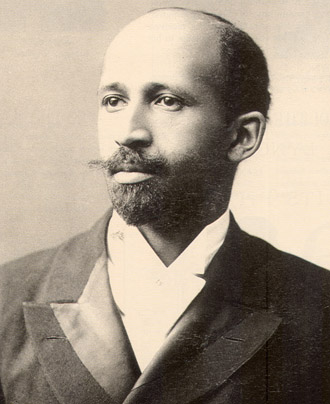
(Du Bois in 1900)
During the early 1900’s Du Bois opposed many ideas of a fellow leader in the Black community, Booker T. Washington. In 1901, Du Bois wrote a review critical of Washington's book Up from Slavery (1901). In 1903 Du Bois wrote a collection of 14 essays and published them as a book called The Souls of Black Folk. The book's effect on African Americans was comparable to that of Uncle Tom's Cabin (1852). In 1905 Du Bois and several other civil rights activists met in Canada near Niagara Falls. They wrote a declaration of principles opposing the Atlanta Compromise, and incorporated as the Niagara Movement in 1906.
(Du Bois (Middle row, 2nd from the right) at the Niagara Movement)
After multiple violent events against Blacks in 1906 Du Bois urged blacks to withdraw their support from the Republican Party, because Republicans Roosevelt and William Howard Taft did not sufficiently support blacks. In 1909 he wrote a biography of abolitionist John Brown. Also in 1909 Du Bois was the first African American invited by the American Historical Association (AHA) to present a paper at their annual conference. In 1910, at the second National Negro Conference, the attendees created the National Association for the Advancement of Colored People (NAACP).
(The NAACP)
Du Bois suggested using the word colored to involve other colored races to help with the organization. NAACP leaders offered Du Bois the position of Director of Publicity and Research and he accepted. In 1911 he attended the First Universal Races Congress in London, England. In 1915 Du Bois wrote that the scramble for Africa was at the root of World War I. Du Bois led to fight against the release of the movie The Birth of a Nation (1915) because of its racist portrayal of blacks as brutish and lustful. Du Bois traveled to Europe in 1919 to attend the first Pan-African Congress and to interview African American soldiers for a planned book on their experiences in World War I. After returning from Europe, Du Bois was more determined than ever to gain equal rights for African Americans. In 1920, Du Bois published Darkwater: Voices From Within the Veil. Between 1922 and 1924 Du Bois wrote in the NAACP’s magazine, The Crisis, about how Marcus Garvey was the “most dangerous enemy of the Negro race in America and the world”. A rivalry emerged in 1931 between the NAACP and the Communist Party, when the Communists responded quickly and effectively to support the Scottsboro Boys, which were 9 African American youth arrested in 1931 in Alabama for the rape of 2 white women. Du Bois and the NAACP felt that the case would not be beneficial to their cause. In 1934 Du Bois resigned from the NAACP. Du Bois took a trip around the world in 1936, which included visits to Nazi Germany, China and Japan. In 1941 Du Bois opposed the U.S. intervention in World War II, particularly in the Pacific, because he believed that China and Japan were emerging from the clutches of white imperialists. In 1942 the FBI began to compile a file on Du Bois. In 1943 Du Bois was fired from his position at Atlanta University which caused outrage by other scholars. Turning down job offers from Fisk and Howard, Du Bois re joined the NAACP as director of the Department of Special Research.
(Du Bois in 1943)
In 1945, Du Bois attended the final, Pan-African Congress, in Manchester, England. There Du Bois met Kwame Nkrumah, the future 1st president of Ghana who would later invite Du Bois to Africa. During the 1950s, the U.S. government's anti communist McCarthyism campaign targeted Du Bois because of his socialist leanings. In 1950 Du Bois ran for US Senator from New York on the American Labor Party ticket. In 1953 when Joseph Stalin died Du Bois wrote a eulogy of him. In 1958 Du Bois visited China.
(Mao Tse Tung (Left) and Du Bois (Right))
In 1963 Du Bois visited Ghana and met with Kwame Nkrumah.
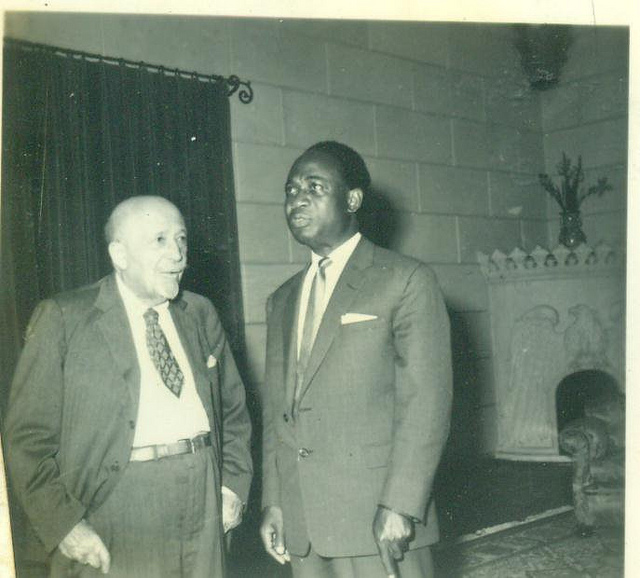
(Du Bois (Left) and Kwame Nkrumah (Right))
On August 27th 1963 Du Bois died in Accra, Ghana. He was 95 years old.
(Du Bois’ funeral in Ghana)
Today is the 54th anniversary of his death. Take time to remember this great leader today.

Books by W.E.B. Du Bois
  • The Study of the Negro Problem (1898)
  • The Philadelphia Negro (1899)
  • The Negro in Business (1899)
  • The Souls of Black Folk (1903)
  • The Talented Tenth (1903)
  • Voice of the Negro II (1905)
  • John Brown: A Biography (1909)
  • Efforts for Social Betterment Among Negro Americans (1909)
  • Atlanta University’s Studies of the Negro Problem (1910)
  • The Negro (1915)
  • The Gift of Black Folk (1924)
  • Africa, Its Geography, People and Products (1930)
  • Africa: Its Place in Modern History (1930)
  • Black Reconstruction in America (1935)
  • What the Negro Has Done for the United States and Texas (1936)
  • Black Folk, Then and Now (1939)
  • Color and Democracy: Colonies and Peace (1945)
  • The Encyclopedia of the Negro (1946)
  • The World and Africa (1946)
  • The World and Africa, an Inquiry into the Part Which Africa Has Played in World History (1947)
  • Peace is Dangerous (1951)
  • I Take My Stand for Peace (1951)
  • In Battle for Peace (1952)
  • Africa in Battle Against Colonialism, Racialism, Imperialism (1960)

Tuesday, July 4, 2017

Happy Birthday Patrice Lumumba

“Without dignity there is no liberty, without justice there is no dignity, and without independence there are no free men” - Patrice Lumumba
(Patrice Lumumba)
Patrice Lumumba was born on July 2nd, 1925 Katakokombe, Belgian Congo. Lumumba worked as a postal clerk and as a travelling beer salesman. In 1951 he married Pauline Opangu. In 1955 Lumumba became regional head of the Cercles of Stanleyville and joined the Liberal Party of Belgium, where he worked on editing and distributing party literature. While in Belgium he was arrested in 1955 on charges of embezzlement. He was released in 1956. In 1958 he helped found the broad based MNC. Also in 1958 Lumumba and his team represented the MNC at the All-African Peoples' Conference in Accra, Ghana.
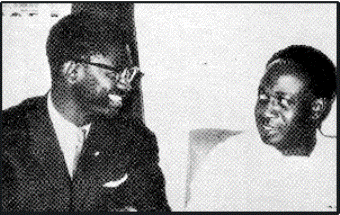
(Lumumba (Left) with Kwame Nkrumah (Right))
In 1959 Lumumba was arrested for inciting an anti colonial riot in Kisangani where thirty people were killed. In 1960 Lumumba became the Democratic Republic of the Congo’s 1st prime minister.
(Lumumba in 1960)
Lumumba made the fateful decision to raise the pay of all government employees except for the army. They then rebelled in protest. The rebellions quickly spread throughout the country, leading to a general breakdown in law and order. UN troops were brought into the country. Lumumba sought Soviet aid in the form of arms, food, medical supplies, trucks, and planes. Lumumba's decisive actions to turn to the Soviet Union alarmed western countries such as the USA. The USA saw Patrice Lumumba as a communist and the CIA began a plot to assassinate him. Lumumba was then dismissed from government by the DRC’s president.
(Lumumba (Middle) with DRC’s President Kasa-Vubu (Left))
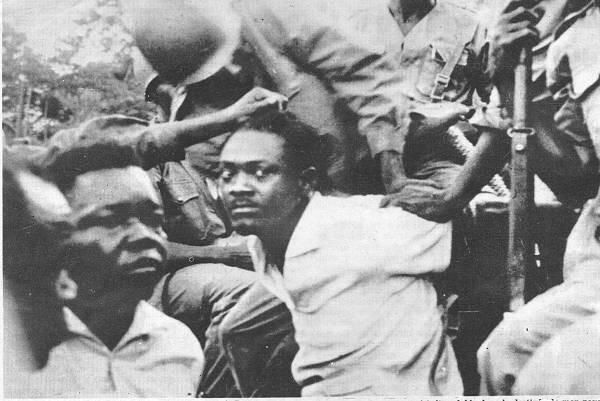
Lumumba immediately protested the legality of the President's actions. The country was torn by two political groups claiming legal power over the country. A coup d'état organised by Colonel Joseph Mobutu incapacitated both Lumumba and President Kasa-Vubu. Lumumba was placed under house arrest at the Prime Minister's residence, with UN troops positioned around the house. He escaped to Stanleyville, where his intention apparently was to set up his own government and army. He was caught a few months later and flown to Léopoldville in ropes, not handcuffs.
(Lumumba captured)
The USSR demanded for Lumumba to be released. In 1961 Lumumba was sent to Elizabethville where he was conducted under arrest to Brouwez House and was brutally beaten and tortured by Katangan and Belgian officers.
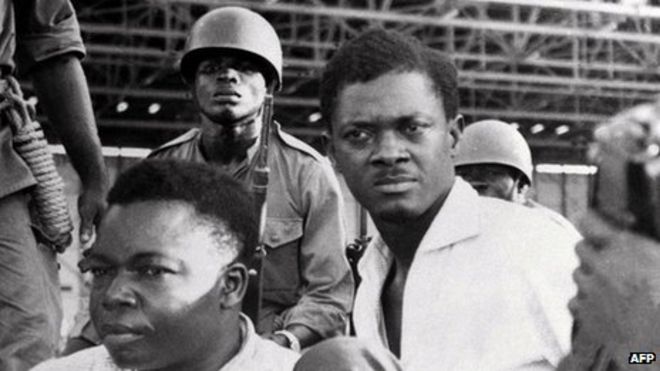
(Lumumba in custody)
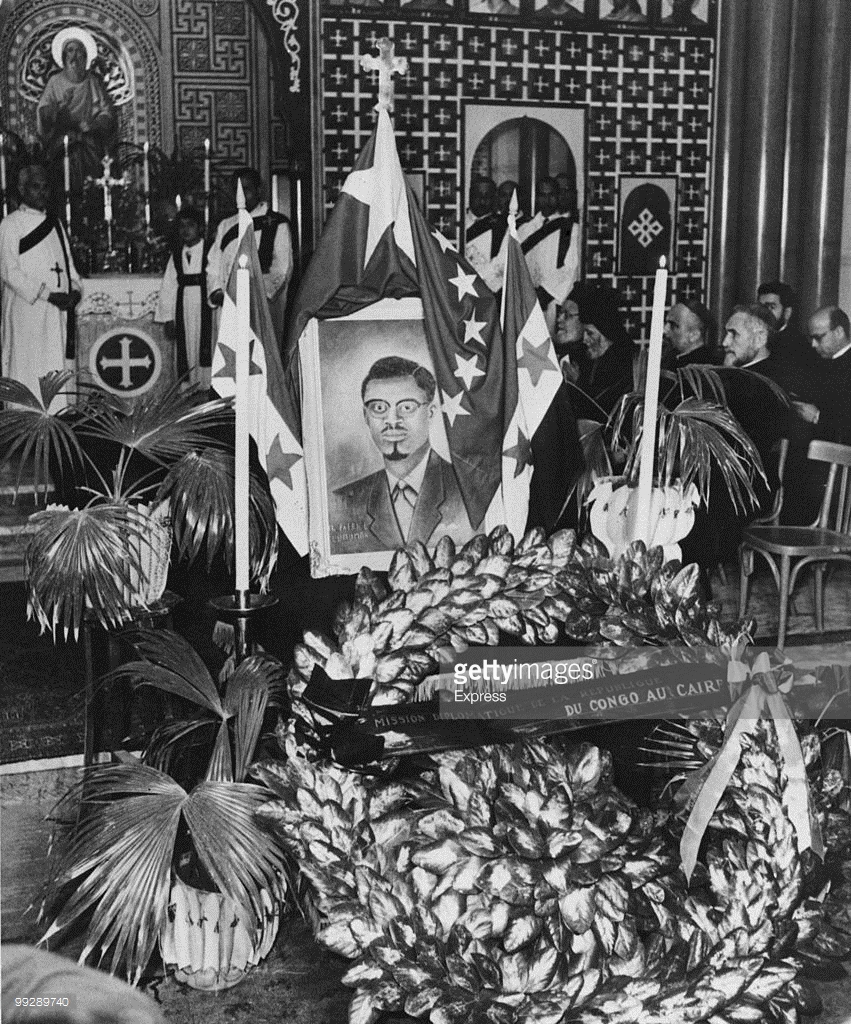
Lumumba and two ministers from his newly formed independent government were lined up against a tree. On January 17th, 1961 Patrice Lumumba was killed by a firing squad consisting of Belgian, CIA, and Katangan officers in Lubumbashi, Democratic Republic of the Congo. He was 35 years old.
(A requiem mass for Lumumba)
Today is his 92nd birthday and we would all like to say happy birthday and rest in peace Patrice Lumumba.

Videos of Patrice Lumumba

Sunday, July 2, 2017

Happy Birthday Stokely Carmichael

“Our grandfathers had to run, run, run. My generation's out of breath. We ain't running no more” - Stokely Carmichael
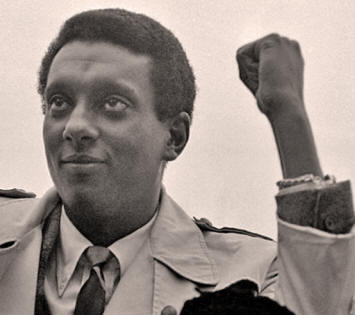
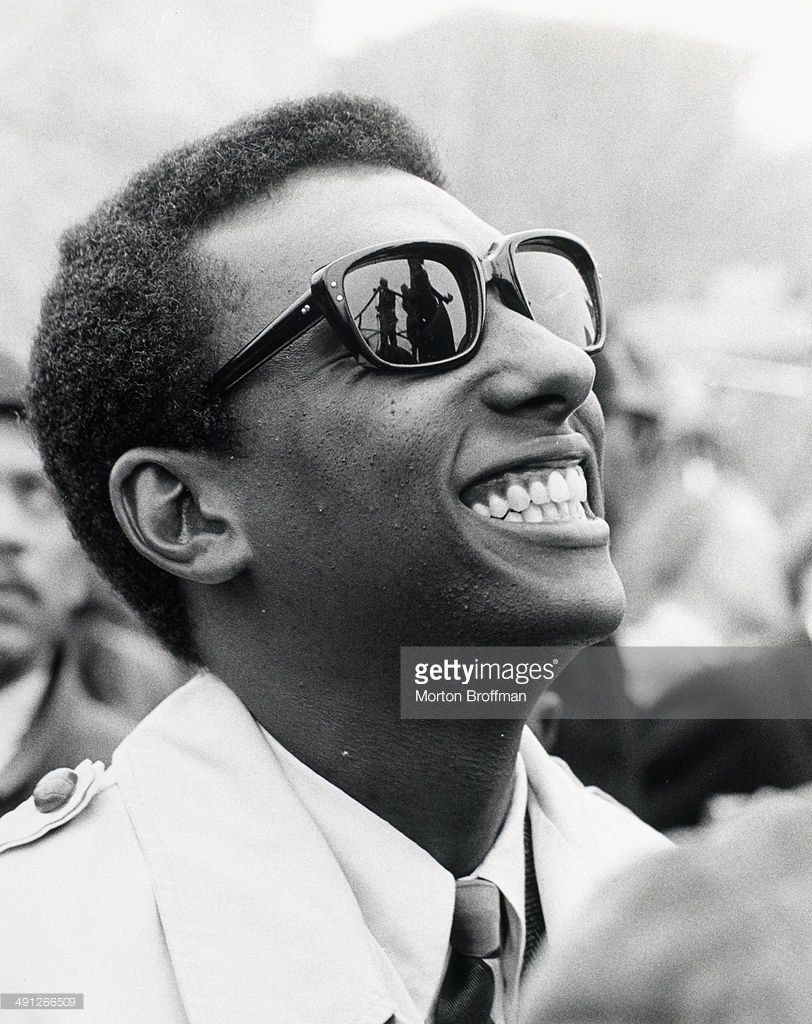
(Stokely Carmichael)
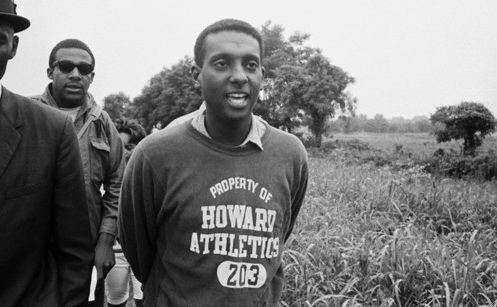
Stokely Carmichael was born on June 29th, 1941 in Port of Spain, Trinidad and Tobago. In 1952 he moved to Harlem, NY, USA. He then moved to the East Bronx. He attended Bronx High School of Science. In 1960 he attended Howard university.
(Carmichael in 1960)
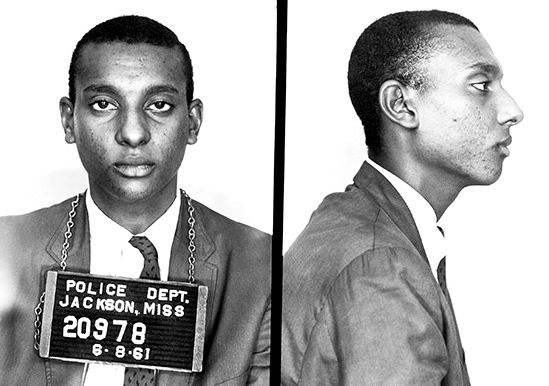
While at Howard he joined Nonviolent Action Group (NAG). In 1961 he participated in the Freedom Rides of the Congress of Racial Equality (CORE). With 8 other activists Carmichael traveled by train from New Orleans, Louisiana, to Jackson, Mississippi, to integrate the formerly "white" section on the train. they encountered white protestors blocking the way. The activists were charged with disturbing the peace, arrested and taken to jail. He served 49 days with other activists at the Parchman State Prison Farm.
(Carmichael's mugshot)
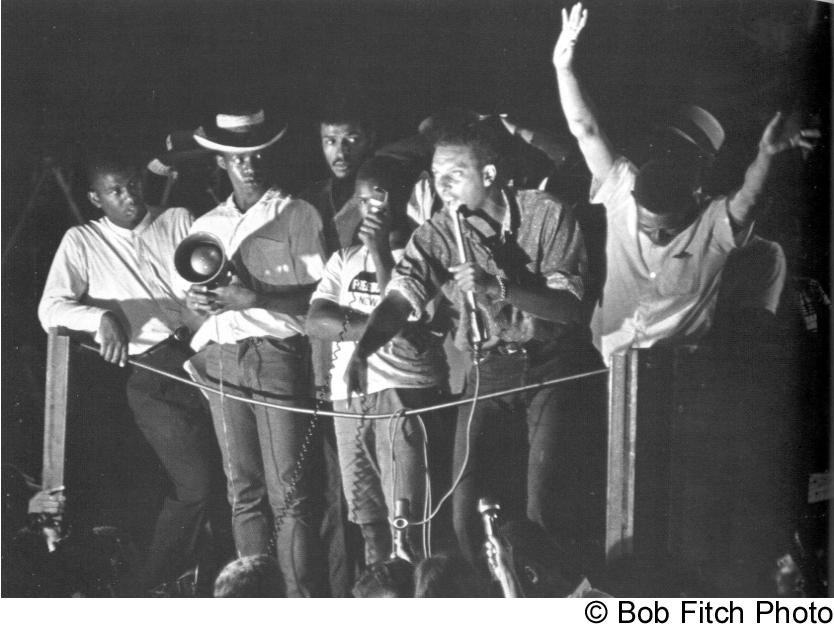
In 1964 he graduated with a philosophy degree. He also joined SNCC. Throughout Freedom Summer, he worked with grassroots African American activists, including Fannie Lou Hamer. During a protest in Maryland Carmichael was hit directly in a chemical gas attack by the National Guard and had to be hospitalized.
(Carmichael in 1964)
In 1965 he participated in the Selma to Montgomery marches. Also in 1965 working as a SNCC activist in the black majority Lowndes County, Carmichael helped to increase the number of registered black voters from 70 to 2,600.
(Carmichael in 1965)
In 1966 Carmichael became chairman of SNCC. Carmichael joined Dr. Martin Luther King, Jr., Floyd McKissick, Cleveland Sellers and others to continue James Meredith's march.
(Carmichael (Right) with Dr. King (Left))
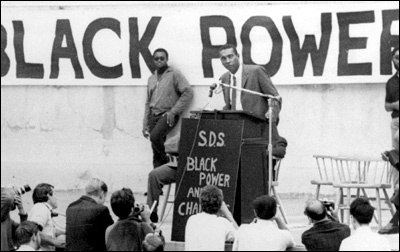
After the march Carmichael made a speech using the slogan “Black Power”.
(Carmichael making his “Black Power” speech)
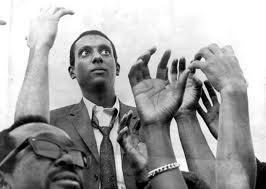
Under Carmichael's term, SNCC continued to maintain a coalition with several white radical organizations, most notably Students for a Democratic Society (SDS). SNCC conducted its first actions against the military draft and the Vietnam War under Carmichael's leadership. Carmichael popularized the oft-repeated anti draft slogan, "Hell no-We won't go!".
(Carmichael making a speech)
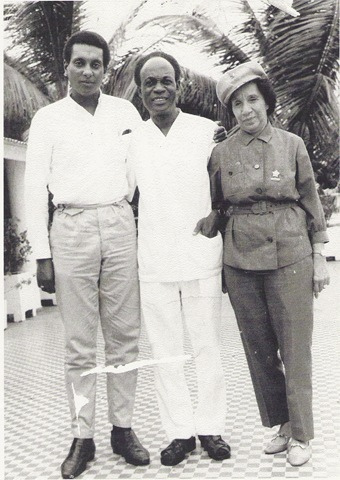
In 1967 Carmichael left SNCC. Also in 1967 he wrote the book Black Power. He also visited Guinea, North Vietnam, China, Cuba and the UK in 1967.
(Carmichael (Left) with Kwame Nkrumah (Center) and Shirley Dubois (Right))
In 1968 Carmichael was targeted by FBI COINTELPRO. Also in 1968 after Dr. King’s assassination Carmichael led a group through the streets of Washington D.C., demanding that businesses close out of respect.
(Carmichael in 1968)
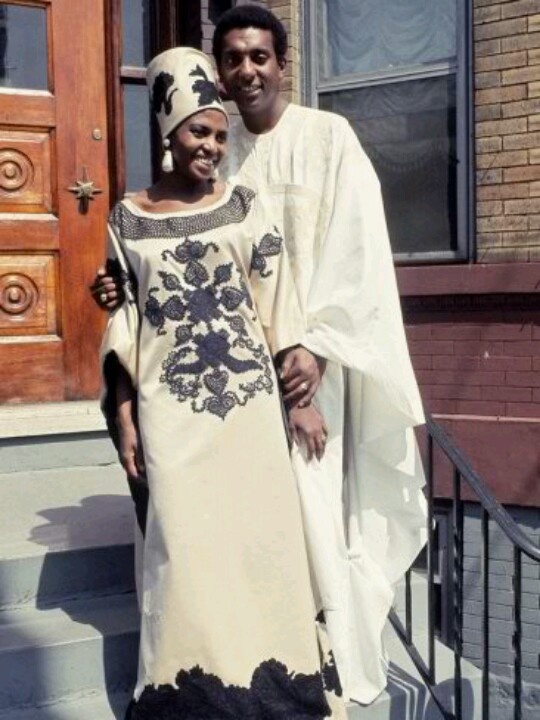
Also in 1968 he married Miriam Makeba. In 1969 they moved to Guinea.
(Carmichael (Right) with his wife Miriam Makeba (Left))
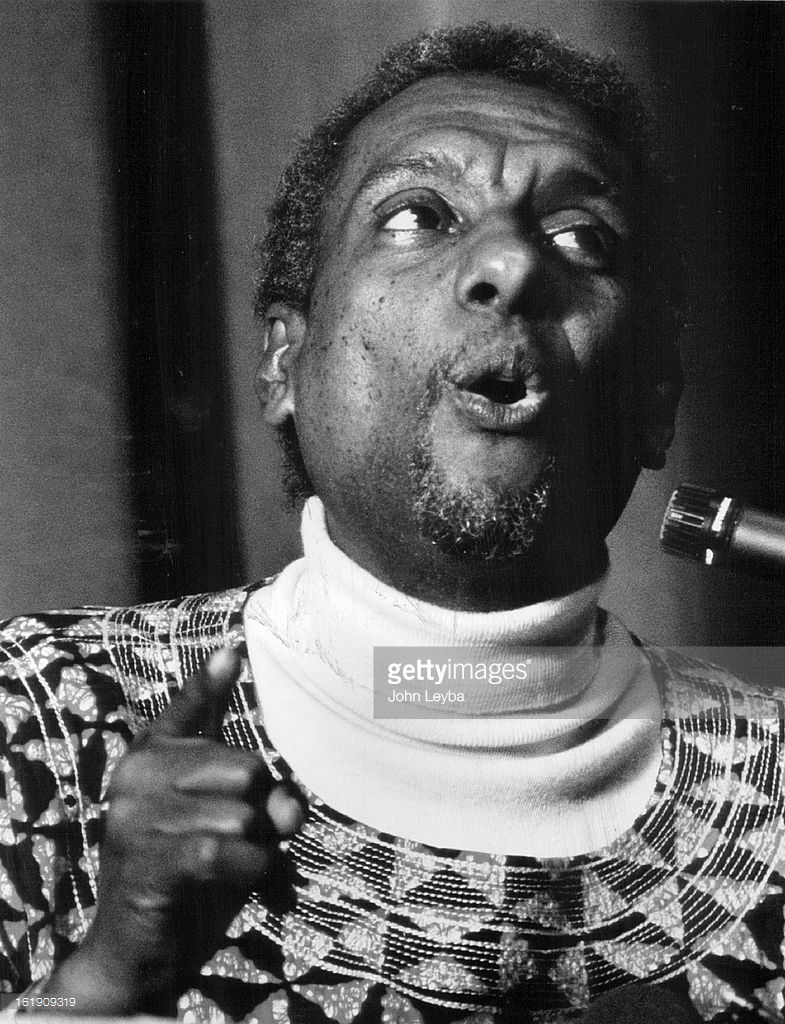
He then changed his name to Kwame Ture. In 1971 he published his collected essays in a second book, Stokely Speaks: Black Power Back to Pan-Africanism.
(Carmichael in 1971)
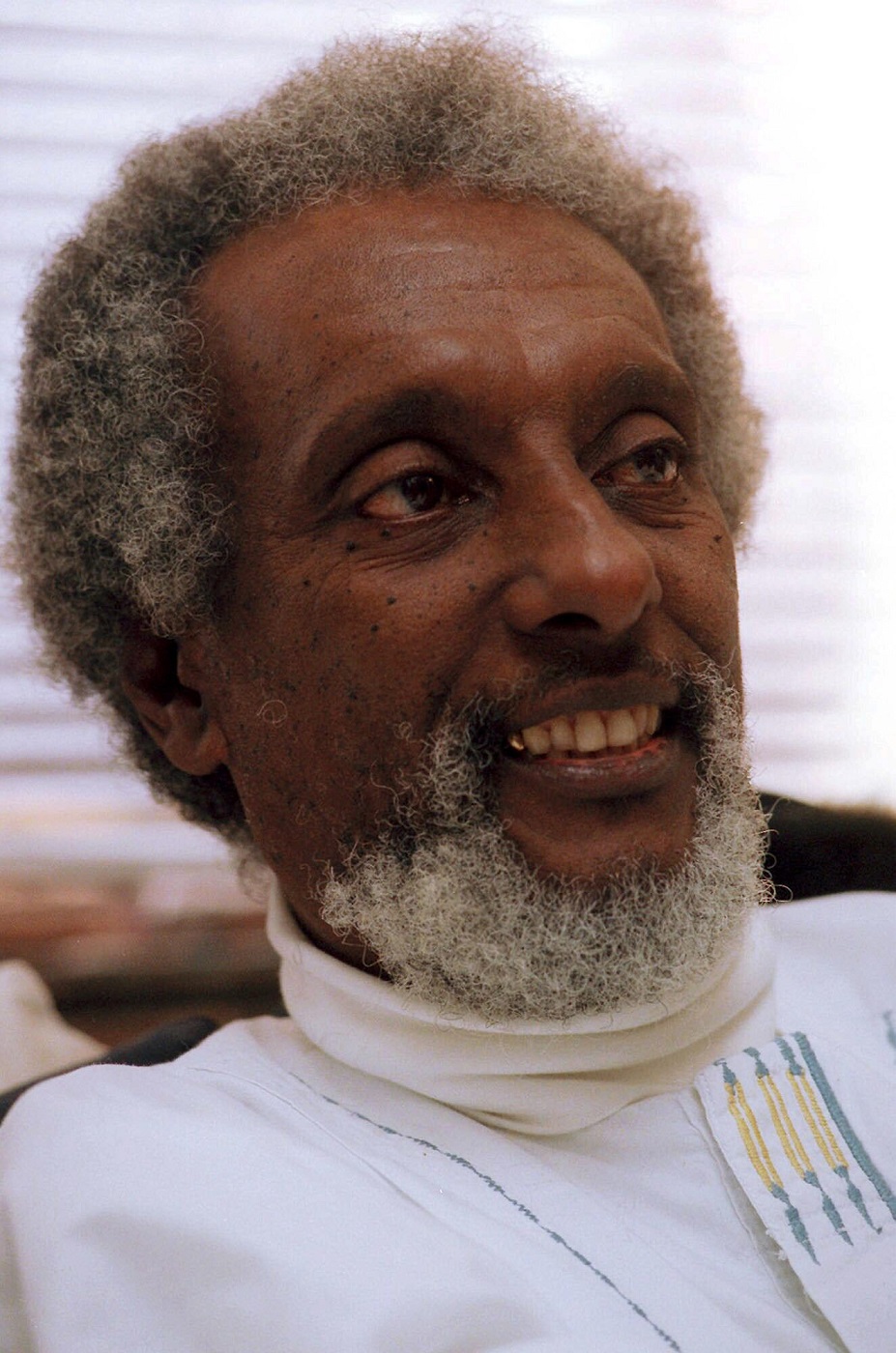
In 1986 Ture was arrested for his past association with Ahmed Touré, and jailed him for three days on suspicion of attempting to overthrow the government. Ture worked with the All-African People's Revolutionary Party (A-APRP) for the rest of his life. He spoke on its behalf on several continents at innumerable college campuses, in community centers and other venues. Great Britain and Trinidad & Tobago banned Ture from speaking there for fear that he would arouse African descended people in those countries. In 1996 Ture was diagnosed with prostate cancer. Ture was treated for a period in Cuba, while receiving some support from the Nation of Islam.
(Ture in 1996)
Benefit concerts for Ture were held in Denver, New York City, Atlanta, and Washington, D.C.,to help defray his medical expenses. On November 15th, 1998 Kwame Ture died of Prostate Cancer in Conakry, Guinea. He was 57 years old.
(Ture in 1998)
Today is his 76th birthday and we would all like to say happy birthday and rest in peace Kwame Ture.

Videos of Kwame Ture

Thursday, April 27, 2017

Anniversary of Kwame Nkrumah's Death

“Freedom is not something that one people can bestow on another as a gift. Thy claim it as their own and none can keep it from them” - Kwame Nkrumah
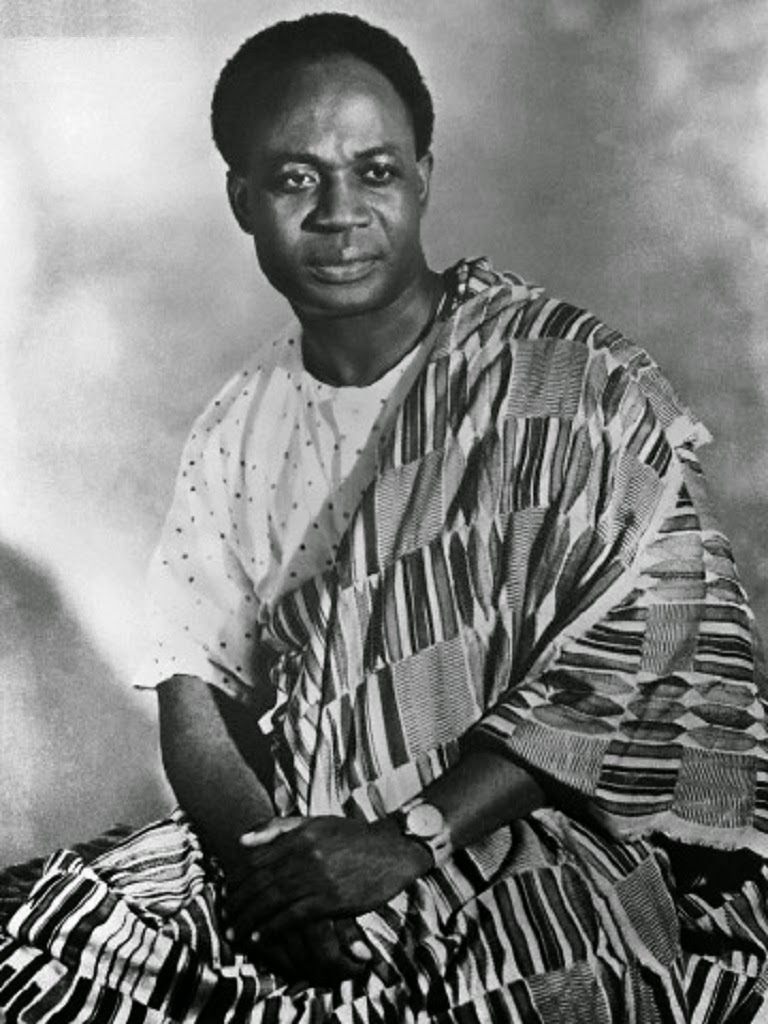
(Kwame Nkrumah)
Kwame Nkrumah was born on September 18, 1909 in Nkroful, Gold Coast (Ghana). Nkrumah was raised by his mother and extended family. Nkrumah went to a Catholic mission school for elementary school and finished the 10 year program in 8 years. In 1925 he became a teacher at the school. The headmaster of the school taught Nkrumah of the teachings and works of Marcus Garvey and W.E.B. DuBois. After graduating from Achimota in 1930 Nkrumah was given a teaching post at the Catholic primary school in Elmina, and after 1 year there, was made headmaster of the school at Axim. In 1933, he was appointed as a teacher at the Catholic seminary at Amissa. Nkrumah went to the US in 1935.
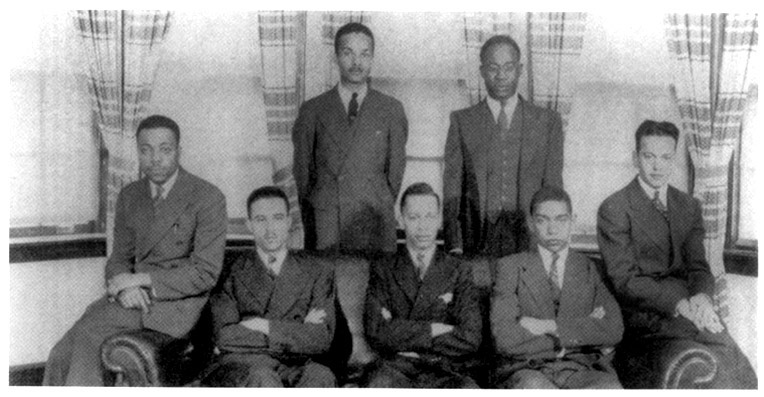
(Nkrumah (Top Right) in 1935)
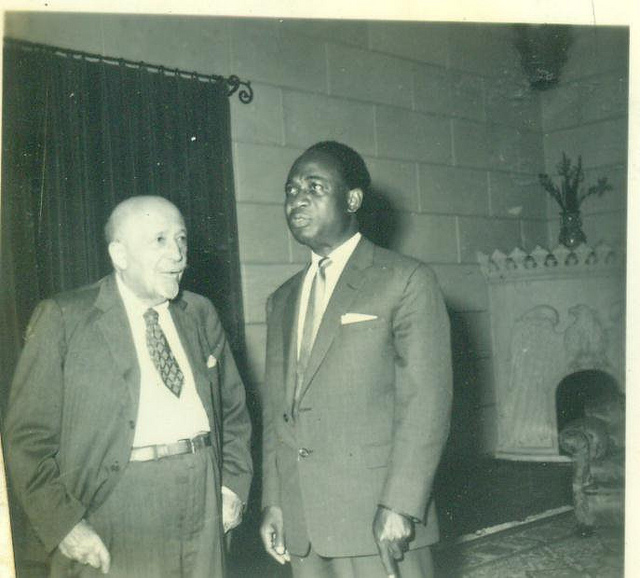
Nkrumah then enrolled into Lincoln College in Pennsylvania. To pay for his college he worked in menial jobs. In 1939 Nkrumah received his BA in economics and sociology. He was then appointed as an assistant lecturer in philosophy, and he began to receive invitations to be a guest preacher in Presbyterian churches in both Philadelphia and New York City. Also in 1939 Nkrumah enrolled both at Lincoln's seminary and at the Ivy League University of Pennsylvania in Philadelphia. In 1942 he gained a Bachelor of Theology degree from Lincoln. In 1943 Nkrumah earned a Master of Arts degree in philosophy and a Master of Science in education from the University of Pennsylvania. Nkrumah spent his summers in Harlem. Nkrumah organized a group of expatriate African students in Pennsylvania and built it into the African Students Association of America and Canada, and became its president. Also in 1943 Nkrumah met Trinidadian Marxist C. L. R. James, Russian expatriate Raya Dunayevskaya, and Chinese American Grace Lee Boggs. In 1944 Nkrumah played a major role in the Pan African conference held in New York City. In 1945 the FBI started surveillance on Nkrumah. Nkrumah then moved to London, England the same year and enrolled at the London School of Economics as a PhD candidate in anthropology. He withdrew after one term and in 1946 enrolled at University College. Nkrumah was the principal organizer of the Fifth Pan-African Congress in Manchester. The congress agreed to pursue a federal United States of Africa, with interlocking regional organizations, governing through separate states of limited sovereignty. They planned to pursue a new African culture without tribalism, democratic within a socialist or communist system, synthesizing traditional aspects with modern thinking, and for this to be achieved by nonviolent means if possible. W.E.B. DuBois, Hastings Banda, and Jomo Kenyatta attended the congress.
(W.E.B. DuBois (Left) with Nkrumah)
The congress sought to establish ongoing African activism in Great Britain in conjunction with the West African National Secretariat (WANS) to work towards the decolonization of Africa. Nkrumah became the secretary of WANS. Both the U.S. State Department and MI5 watched Nkrumah and the WANS, focusing on their links with Communism. In 1947 Nkrumah ran the United Gold Coast Convention. Nkrumah quickly submitted plans for branches of the UGCC to be established colony wide, and for strikes if necessary to gain political ends. In 1948 Nkrumah organized a march for Ex Servicemen to march to the governor to address their grievances.The march was fired upon by the British which prompted the 1948 Accra riots. In 1948 Nkrumah was arrested in Accra, Ghana for planning to create a Union of African Socialist Republic and for inciting the Accra riots, 5 other leaders of the UGCC were arrested. After they were released Nkrumah using his own funds, began the Ghana National College. Nkrumah became the honorary treasurer. Nkrumah then founded the Accra evening news. In 1949 he announced the formation of the Convention People's Party (CPP). CPP operatives drove red white and green vans across the country, playing music and rallying public support for the party and especially for Nkrumah. In 1950  Nkrumah demanded a constituent assembly to write a constitution and since the governor wouldn't commit to it Nkrumah called for Positive Action, with the unions beginning a general strike. The strike quickly led to violence, and Nkrumah and other CPP leaders were arrested. Nkrumah was sentenced to a total of three years in prison. Nkrumah did not serve the 3 year sentence.
(Nkrumah (Middle Left) in the US)
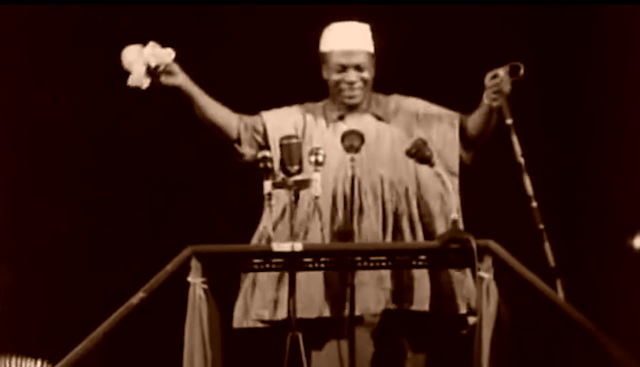
In the February 1951 legislative election, the first general election to be held under universal franchise in colonial Africa, the CPP was elected in a landslide. Nkrumah was elected for his Accra constituency. Nkrumah faced multiple challenges as he assumed office. The colony was in good financial shape, with reserves from years of cocoa profit held in London, and Nkrumah was able to spend freely. In 1951 Nkrumah earned an honorary degree from Lincoln College. In 1952, the governor withdrew from the cabinet, leaving Nkrumah as his prime minister. In 1953 Nkrumah announced that though Africans would be given preference, the country would be relying on expatriate European civil servants for several years. In June of 1953 the new constitutional proposals were accepted both by the assembly and by the British. In 1956 an assembly voted for independence under the name of Nkrumah. In 1957 the British prime minister, Harold Macmillan, announced that Ghana would be a full member of the Commonwealth of Nations. On March 6th, 1957 Ghana became independent. Nkrumah spoke at the first session of the Ghana Parliament that Independence Day.
(Nkrumah on Ghana’s independence day)
Nkrumah was hailed as the “Osagyefo” which means "redeemer". Ghanaian independence became one of the most internationally reported news events in modern African history. Nkrumah designed the new national flag of Ghana.  Nkrumah opened Black Star Square near Osu Castle in the coastal district of Osu, Accra. This square would be used for national symbolism and mass patriotic rallies. Under Nkrumah's leadership, Ghana adopted some socialist policies and practices.  Nkrumah created a welfare system, started various community programs, and established schools. Nkrumah's response to riots within the country was to repress local movements by the Avoidance of Discrimination Act, which banned regional or tribally based political parties. Another strike at tribalism fell in Ashanti, where Nkrumah and the CPP got most local chiefs who were not party supporters de stooled. These repressive actions concerned the opposition parties, who came together to form the United Party under Kofi Abrefa Busia. In 1958 an opposition MP was arrested on charges of trying to obtain arms abroad for a planned infiltration of the Ghana Army. Nkrumah was convinced there had been an assassination plot against him, and his response was to have the parliament pass the Preventive Detention Act, allowing for incarceration for up to five years without charge or trial, with only Nkrumah empowered to release prisoners early.  Nkrumah intended to bypass the British trained judiciary, which he saw as opposing his plans when they subjected them to constitutional scrutiny. In 1959 Nkrumah used his majority in the parliament to push through the Constitutional Amendment Act, which abolished the assemblies and allowed the parliament to amend the constitution with a simple majority. In 1960 Nkrumah announced plans for a new constitution which would make Ghana a republic, headed by a president with broad executive and legislative powers.
(Nkrumah in 1960)
Nkrumah was then elected the president of Ghana. Nkrumah also sought to eliminate "tribalism", a source of loyalties held more deeply than those to the nation state. Nkrumah succeeded in reducing the political importance of the local chieftaincy. In 1960 Nkrumah negotiated the creation of a Union of African States, a political alliance between Ghana, Guinea, and Mali. In 1961 Nkrumah laid the first stones in the foundation of the Kwame Nkrumah Ideological Institute created to train Ghanaian civil servants as well as promote Pan Africanism. Also in 1961 Nkrumah visited the USSR and China.
(Nkrumah (Left) with Mao Zedong)
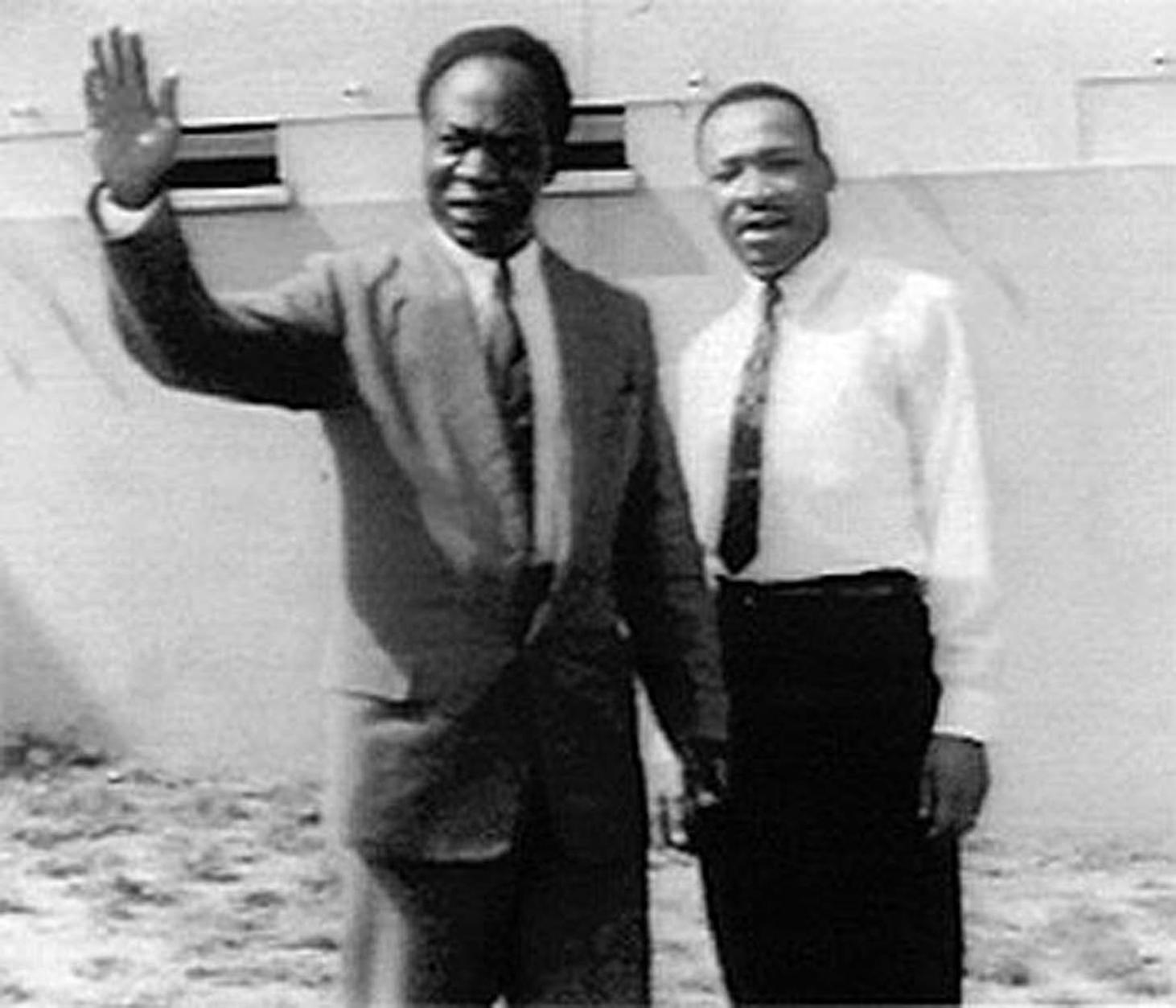
Nkrumah initiated the Ghana Nuclear Reactor Project in 1961 also. In 1962 Nkrumah opened the Institute of African Studies. Nkrumah was instrumental in the creation of the Organisation of African Unity in Addis Ababa in 1963. Nkrumah opposed entry of African states into the Common Market of the European Economic Community. Nkrumah also became a symbol for black liberation in the United States.
(Nkrumah (Left) and Dr. Martin Luther King Jr. (Right))
Also in 1963 Nkrumah was awarded the Lenin Peace Prize by the USSR. In 1964 he proposed a constitutional amendment which would make the CPP the only legal party and himself president for life of both nation and party. The amendment passed with 99.91% of the vote. The amendment transformed Nkrumah's presidency into a de facto legal dictatorship. Also in 1964 Nkrumah brought forth the Seven Year Development Plan for National Reconstruction and Development, which identified education as a key source of development and called for the expansion of secondary technical schools. In 1966 the country was $1 Billion in debt. Also in 1966 while Nkrumah was visiting Asia his government was overthrown in a military coup.
(Nkrumah in 1966)
President Nkrumah alluded to possible US complicity in the coup. Following the coup, Ghana also realigned itself internationally, cutting its close ties to Guinea and accepting a new friendship with Western countries. Ghana lost a good deal of its stature in the eyes of African nationalists. Nkrumah never returned to Ghana, but he continued to push for his vision of African unity. He was exiled to Conakry, Guinea. He became honorary co president of Guinea. Nkrumah then moved to Romania due to his failing health.
(Nkrumah in 1972)
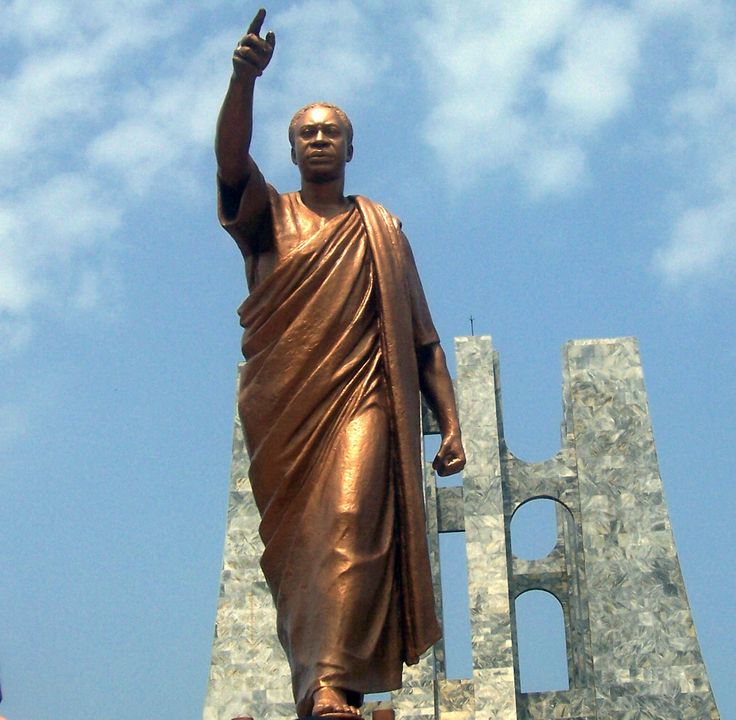
On April 27th, 1972 Kwame Nkrumah died of prostate cancer in Bucharest, Romania. He was 62 years old.
(Statue of Nkrumah)
Today is the 45th anniversary of his death. Take time to remember this great leader today.   

Books by Kwame Nkrumah
  • Negro History: European Government in Africa (1938)
  • Ghana: The Autobiography of Kwame Nkrumah (1957)
  • Africa Must Unite (1963)
  • African Personality (1963)
  • Neo-Colonialism: the Last Stage of Imperialism (1965)
  • Axioms of Kwame Nkrumah (1967)
  • African Socialism Revisited (1967)
  • Voice From Conakry (1967)
  • Dark Days in Ghana (1968)
  • Handbook of Revolutionary Warfare (1968)
  • Consciencism: Philosophy and Ideology for Decolonisation (1970)
  • Class Struggle in Africa (1970)
  • The Struggle Continues (1973)
  • I Speak of Freedom (1973)
  • Revolutionary Path (1973)  

Videos of Kwame Nkrumah