Crate Diggers: Illinois
Showing posts with label Illinois. Show all posts

Wednesday, August 23, 2017

Anniversary of George Jackson's Death

“Patience has its limits. Take it too far, and it's cowardice” - George Jackson
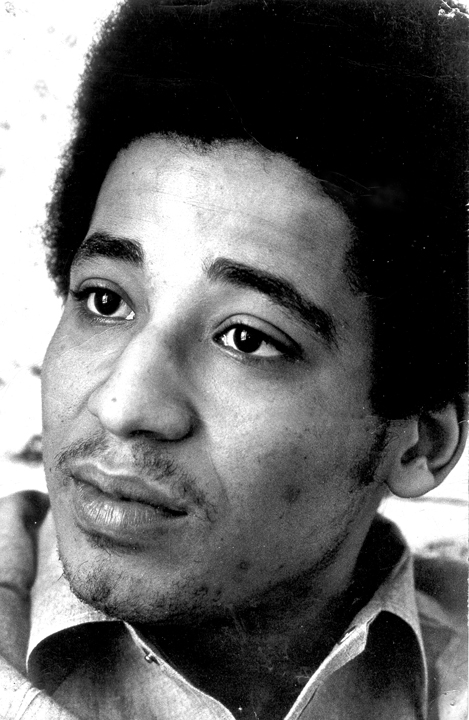
Image result for george jackson(George Jackson)
George Jackson was born on September 23rd, 1941 in Chicago, Illinois, USA. As an adolescent he spent time in the California Youth Authority Corrections facility. In 1961 he was convicted of armed robbery and sentenced to 1 year to life in prison. While in prison he became involved in revolutionary activity. In 1966 he started to learn about Marxist and Maoist ideology.
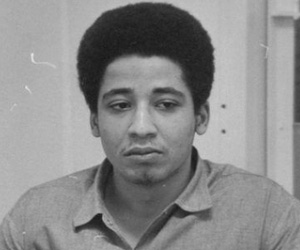
Image result for george jackson 1966(Jackson in 1966)
Also in 1966 he and W.L. Nolen founded the “Black Guerilla Family”. He also joined the Black Panther Party after meeting Huey P. Newton in prison. In 1970 Jackson was convicted of murdering a corrections officer.
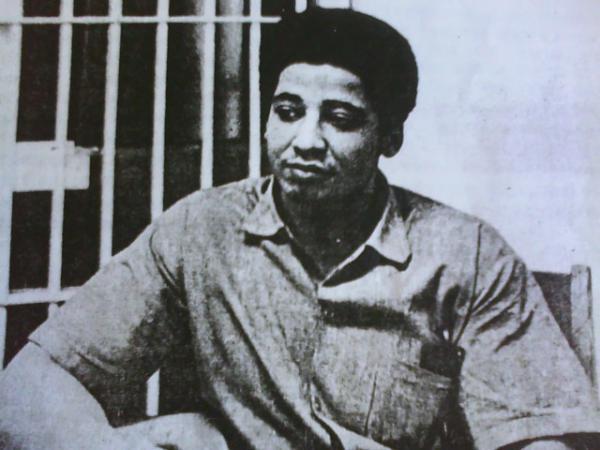
Image result for george jackson 1970(Jackson in 1970)
While being tried in the courtroom Jackson’s younger brother burst into a Marin County courtroom with an automatic weapon, freed prisoners James McClain, William A. Christmas and Ruchell Magee, and took Judge Harold Haley, Deputy District Attorney Gary Thomas, and three jurors hostage to demand the release of his brother among others. In 1971 Jackson met with an attorney on a civil lawsuit Jackson had filed against the California Department of Corrections. After the meeting while being escorted back to his cell a C.O. notices something in his hair and realizes it's a wig and then out of his wig Jackson pulls out a pistol and ordered the C.O. to open the other cells. Other inmates took the guards and 2 inmates hostage.
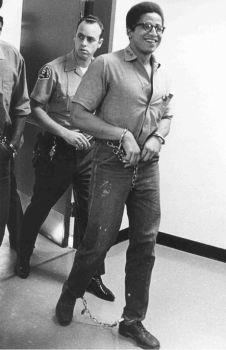
Image result for george jackson 1971(Jackson in 1971)
On August 21st, 1971 while trying to escape the prison George Jackson was shot and killed by guards. He was 29 years old.
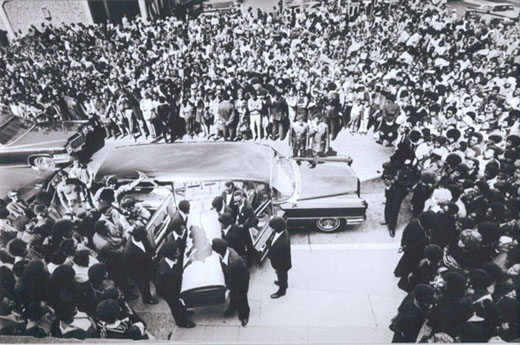
Image result for george jackson funeral(Jackson’s Funeral)
Today is the 46th anniversary of his death. Take time to remember this great revolutionary today.

Books by George Jackson
  • Soledad Brother: The Prison Letters of George Jackson (1994)
  • Blood in My Eye (1996)

Videos of George Jackson

Saturday, July 22, 2017

Anniversary of Noble Drew Ali's Death

“Moors, study yourself” - Noble Drew Ali
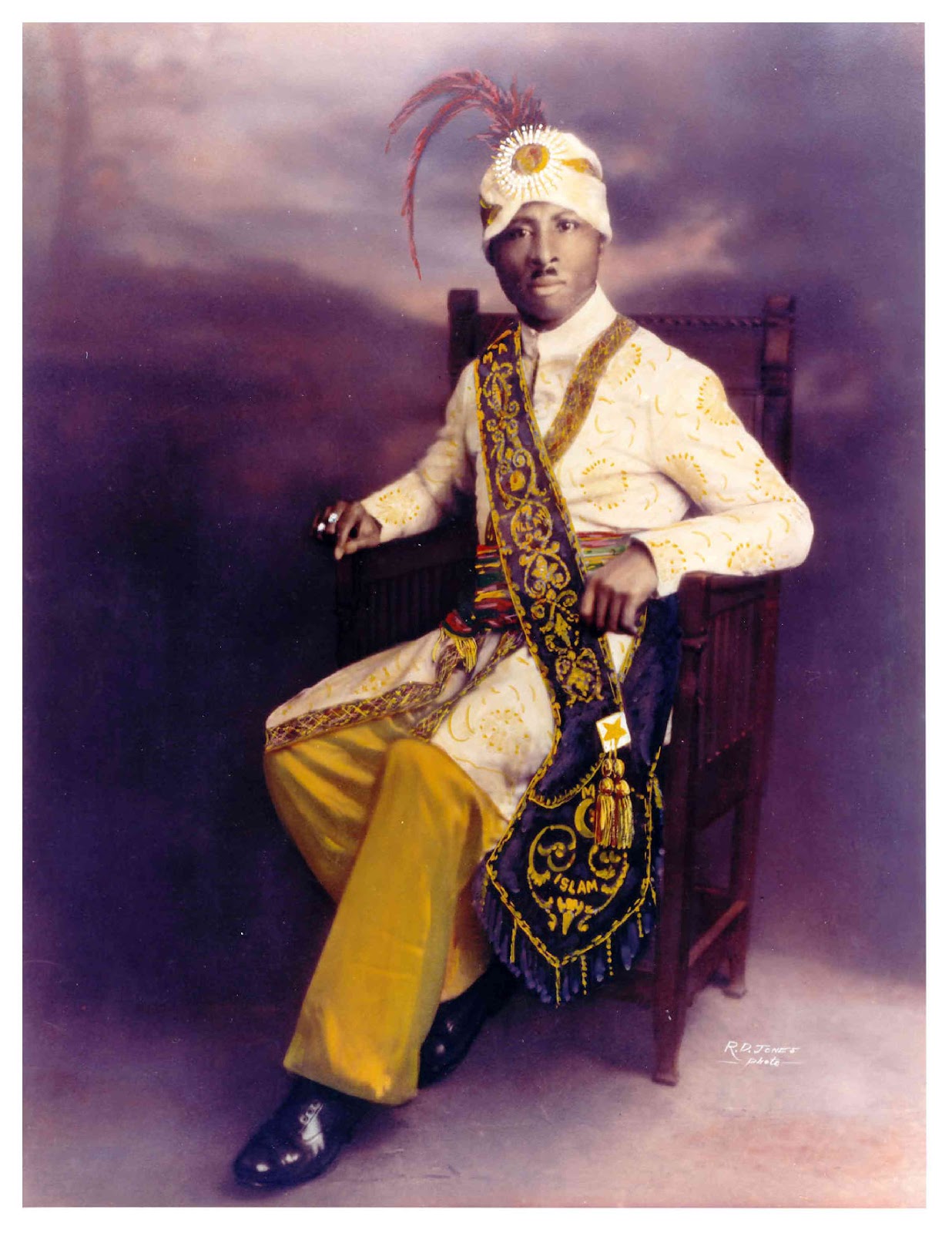
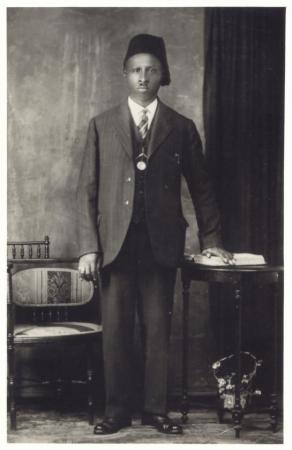
(Noble Drew Ali)
Noble Drew Ali was born as Timothy Drew on January 8th, 1886 in North Carolina, USA. In 1913 Noble Drew Ali founded the Canaanite Temple in Newark, New Jersey.
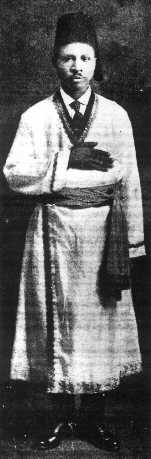
(Ali in 1913)
The Moor Movement spread across the country during the 1920's as the Moorish Holy Temple of Science, as Noble Drew Ali pioneered in attempts to instill racial pride. In 1925 Noble Drew Ali appeared on the streets of Chicago, proclaiming to the people of the colored race that they were not Negroes. He stated that the fallen sons and daughters of the Asiatic Nation of North America need to learn to love instead of hate, and know of their higher self.
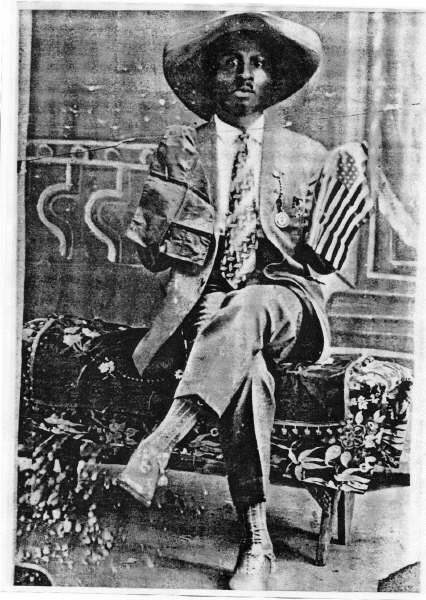
(Ali in 1925)
In 1926 he established Temple No. 9. In 1928 The Moorish Science Temple of America, Inc was officially founded by Ali. The Moorish Science Temple had 35,000 members in 17 temples in cities across the Midwest and upper South. The temples were studied and watched by the police.
(Ali in 1928)
In 1929 Ali attended the inauguration of the Illinois governor. Also in 1929 there were disputes over money which lead many members to leave. Ali was arrested along with other members of the community on suspicion of having instigated the killing of Claude Green-Bey a former member of the Moorish Science Temple. While in police custody Ali was beaten by the officers.
(Ali in 1929)
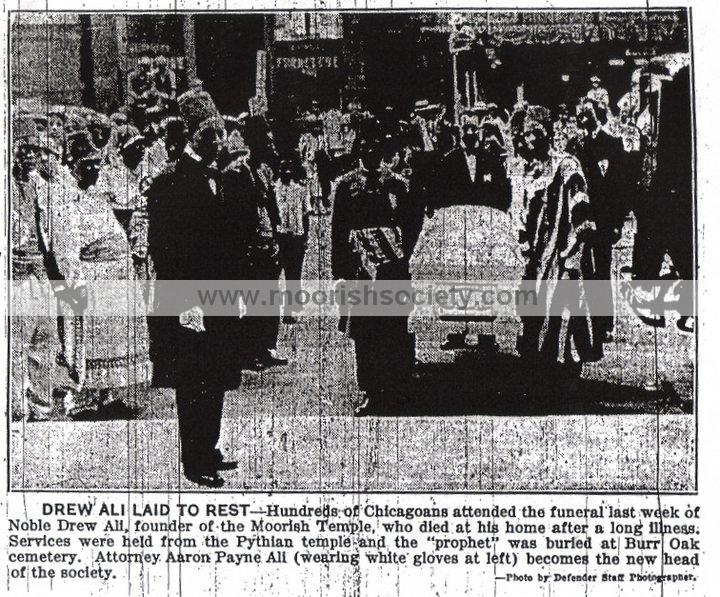
On July 20th, 1929 Noble Drew Ali died from the injuries of the officers in Chicago, Illinois, USA. He was 43 years old.
(Ali’s funeral)

Today is the 88th anniversary of his death. Take time to remember this great religious leader today.

Sunday, July 16, 2017

Happy Birthday Ida B. Wells

“The only times an Afro-American who was assaulted got away has been when he had a gun and used it in self defense” - Ida B. Wells
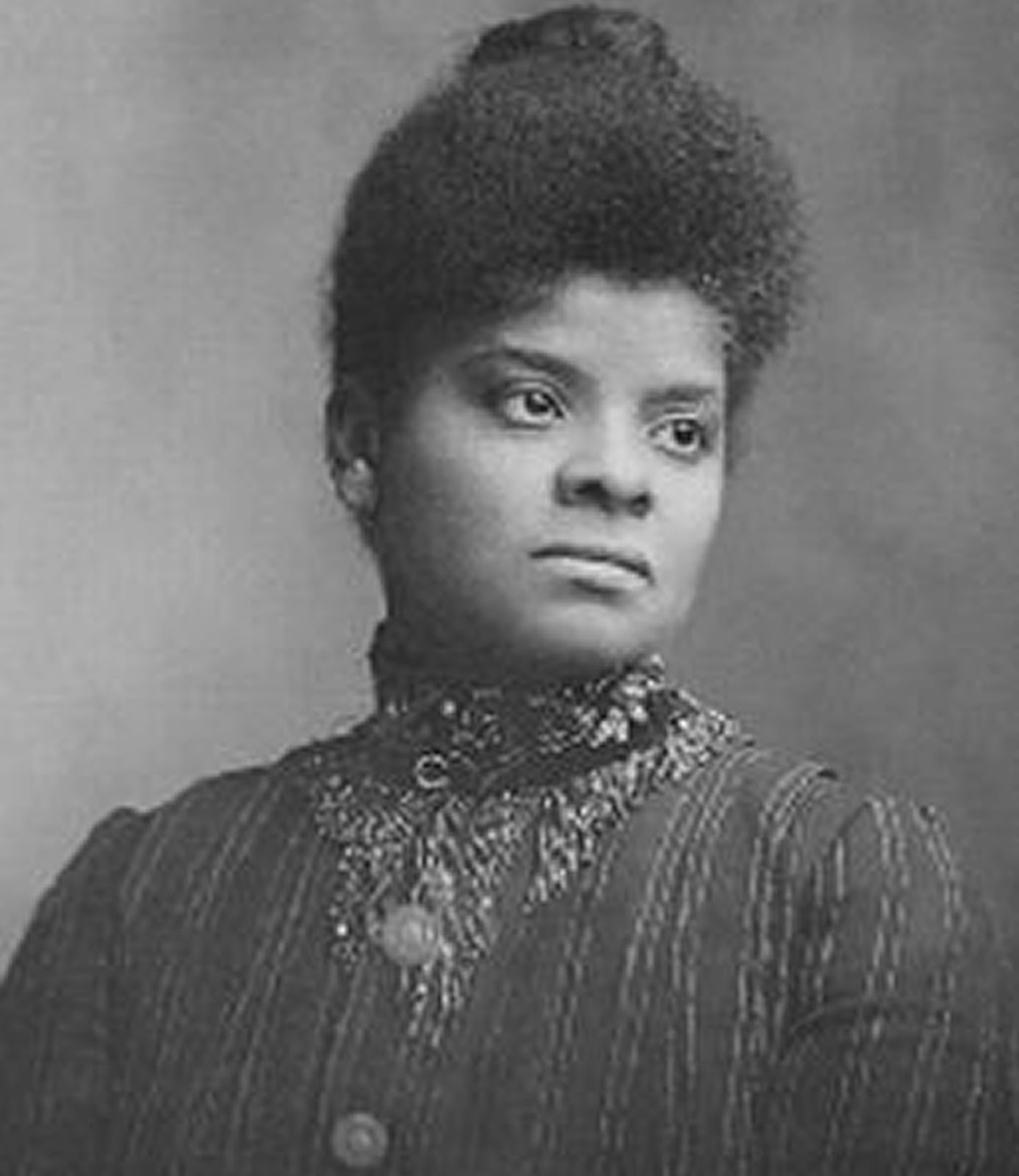
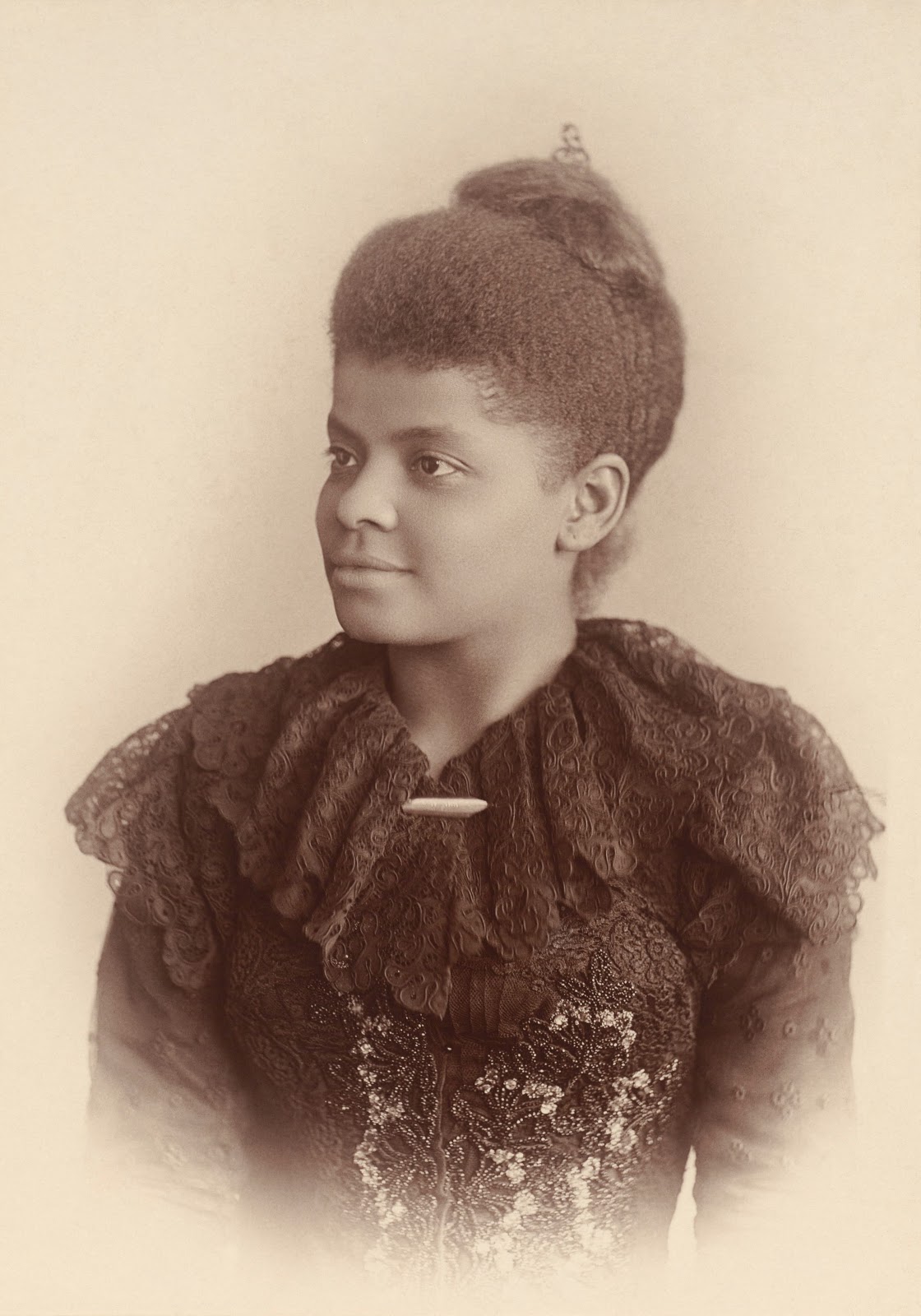
(Ida B. Wells)
Ida B. Wells was born on July 16th, 1862 in Holly Springs, Mississippi, USA. She was born into slavery. Wells attended Shaw University but she was expelled for rebellious behavior after confronting the college president. In 1878 her parents and her infant brother died due to yellow fever. She found work as a teacher in a black elementary school in order to keep her younger siblings together as a family. Her paternal grandmother, Peggy Wells, along with other friends and relatives, stayed with her siblings and cared for them during the week while Wells was away teaching. Wells resented that in the segregated school system, white teachers were paid $80 a month and she was paid only $30 a month. This discrimination made her more interested in the politics of race and improving the education of blacks. In 1883 Wells took three of her younger siblings to Memphis, TN to live with her aunt. During her summer vacations she attended summer sessions at Fisk University. She held strong political opinions and provoked many people with her views on women's rights. In 1884 a train conductor with the Memphis and Charleston Railroad ordered Wells to give up her seat in the first class ladies car and move to the smoking car, which was already crowded with other passengers. Wells refused to give up her seat. The conductor and 2 men dragged Wells out of the car. Wells then hired an African American attorney to sue the railroad. She won the case and was awarded $500. In 1887 The railroad company appealed to the Tennessee Supreme Court, which reversed the lower court's ruling.
(Wells in 1887)
In 1889 she became co owner and editor of “Free Speech and Headlight”, an anti segregation newspaper. In 1891 Wells was dismissed from her teaching post by the Memphis Board of Education due to the various articles she had written which critiqued the conditions in the colored schools of the region. In 1889 after 3 of her friends were lynched she wrote in “Free Speech and Headlight”, urging blacks to leave Memphis, TN altogether.
(Wells in 1890)
More than 6,000 blacks did leave Memphis. Others organized boycotts of white owned businesses. After being threatened with violence, she bought a pistol. She then began investigative journalism. This officially started her anti lynching campaign. Wells found that Blacks were lynched for such social control reasons as failing to pay debts, not appearing to give way to whites, competing with whites economically, and being drunk in public. She found little basis for the frequent claim that Blacks were lynched because they had sexually abused or attacked white women, which was the alibi that partly accounted for White America's collective acceptance or silence on lynching. In 1892 while she was away in Philadelphia, PA a mob destroyed the offices of the “Free Speech and Headlight” in retaliation for her controversial articles. Wells left Memphis, TN and moved to Chicago, IL due to threats on her life. Also in 1892 Wells published a pamphlet titled “Southern Horrors: Lynch Law in All Its Phases”. Wells recommended that blacks use arms to defend against lynching.
(Wells in 1892)
In 1893 together with Frederick Douglass and other black leaders, she organized a black boycott of the World's Columbian Exposition in Chicago, IL for having no exhibits to represent African American life. In 1894 Wells took a tour to Europe in her campaign for justice. Also in 1894 Wells helped form a Republican Women's Club in Illinois in response to women being granted the right to vote for a state elective office. In 1895 Wells married her attorney Ferdinand Barnett. In 1896 Wells founded the National Association of Colored Women's Clubs and the National Afro American Council. On March 25, 1931 Ida B. Wells died of kidney failure in Chicago, Illinois, USA. She was 68 years old.
(Wells in 1931)
Today is her 155th birthday and we would all like to say happy birthday and rest in peace Ida B. Wells.

Sunday, May 28, 2017

Anniversary of Gil Scott-Heron's Death

“The way you get to know yourself is by the expression on other people's faces” - Gill Scott-Heron
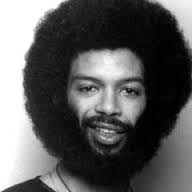
Image result for gil scott heron famous pics(Gil Scott-Heron)
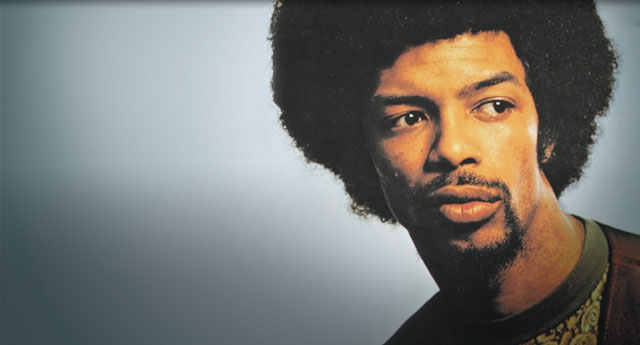
Gil Scott-Heron was born as Gilbert Scott-Heron on April 1st, 1949 in Chicago, Illinois. When Scott-Heron was 12 he moved with his mother to The Bronx, NY. Scott-Heron then attended Lincoln University in Pennsylvania. Scott-Heron started writing music in 1970.
(Scott-Heron in 1970)
Bob Thiele of Flying Dutchman Records produced Scott-Heron’s 1st  album titled “Small Talk at 125th and Lenox” in 1970. In 1971 Scott-Heron released “Pieces of a man”.
(Gil Scott-Heron in 1971)
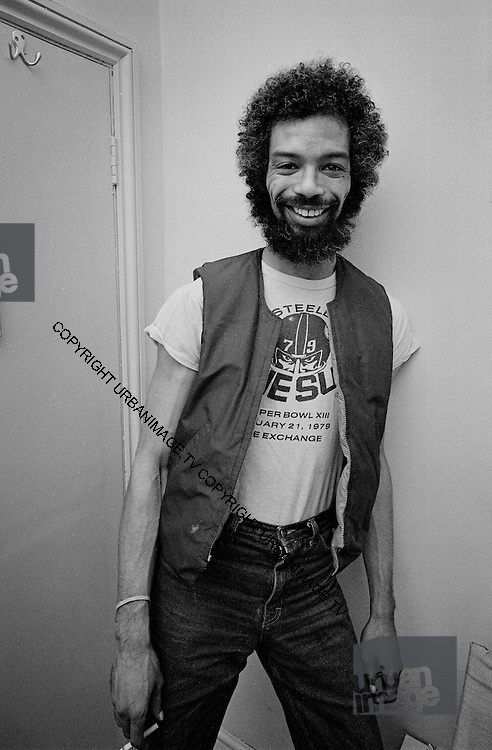
In 1972 he released his 3rd album “Free Will”. From 1974 to 1976 Scott-Heron released the albums “Winter In America” (1974), “Midnight Band: The First Minute of a New Day” (1975), and the live album “It's Your World” (1976). In 1975 he released the song “Johannesburg” which addressed the issue of apartheid in South Africa.
(Scott-Heron performing in 1975)
In 1978 his song “Angel Dust” reached No.15 on the R&B charts. Scott-Heron recorded and released four albums during the 1980s: “1980” (1980), “Real Eyes” (1980), “Reflections” (1981) and “Moving Target” (1982). In 1985 he stopped recording but continued to tour.
(Scott-Heron in 1985)
In 1993 Scott-Heron signed to TVT Records and released “Spirits” (1993). In 2001 Scott-Heron was sentenced one to three years in a New York state prison for possession of cocaine. He was released from jail in 2002 and released from parole in 2003. In October of 2003 during the editing of his film Gil Scott-Heron: The Revolution Will Not Be Televised he was arrested for the possession of a crack pipe and was sentenced 6 months in prison.
(Scott-Heron in 2003)
He was given parole on May 23, 2007 for leaving a drug rehabilitation center. He began to perform live again after being released from parole. On February, 9, 2010 Scott-Heron released “I'm New Here” under XL recordings.
(Scott-Heron performing in 2010)
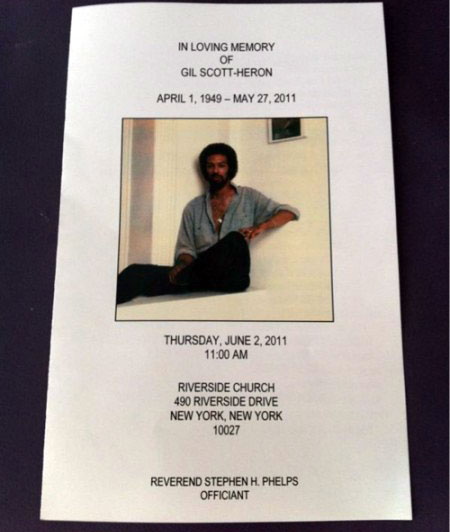
On May 27th, 2011 Gil Scott-Heron died from HIV in New York City. He was 62 years old.
(Scott-Heron’s obituary)
Today is the 6th anniversary of his death. Take time to remember this great musical artist today.

Albums by Gil Scott-Heron
  • “Small Talk at 125th and Lenox” (1970)
  • “Pieces of a Man” (1971)
  • “Free Will” (1972)
  • “Winter in America” (1974)
  • “The First Minute of a New Day” (1975)
  • “From South Africa to South Carolina” (1976)
  • “It’s Your World” (1976)
  • “Bridges” (1977)
  • “Secrets” (1978)
  • “1980” (1980)
  • “Real Eyes” (1980)
  • “Reflections” (1981)
  • “Moving Target” (1982)
  • “Spirits” (1994)
  • “I’m New Here” (2010)
  • “We’re New Here” (2011)
  • “Nothing New” (2014)

Videos of Gil Scott-Heron

Friday, May 26, 2017

Happy Birthday Miles Davis

“Don't play what's there, play what's not there” - Miles Davis
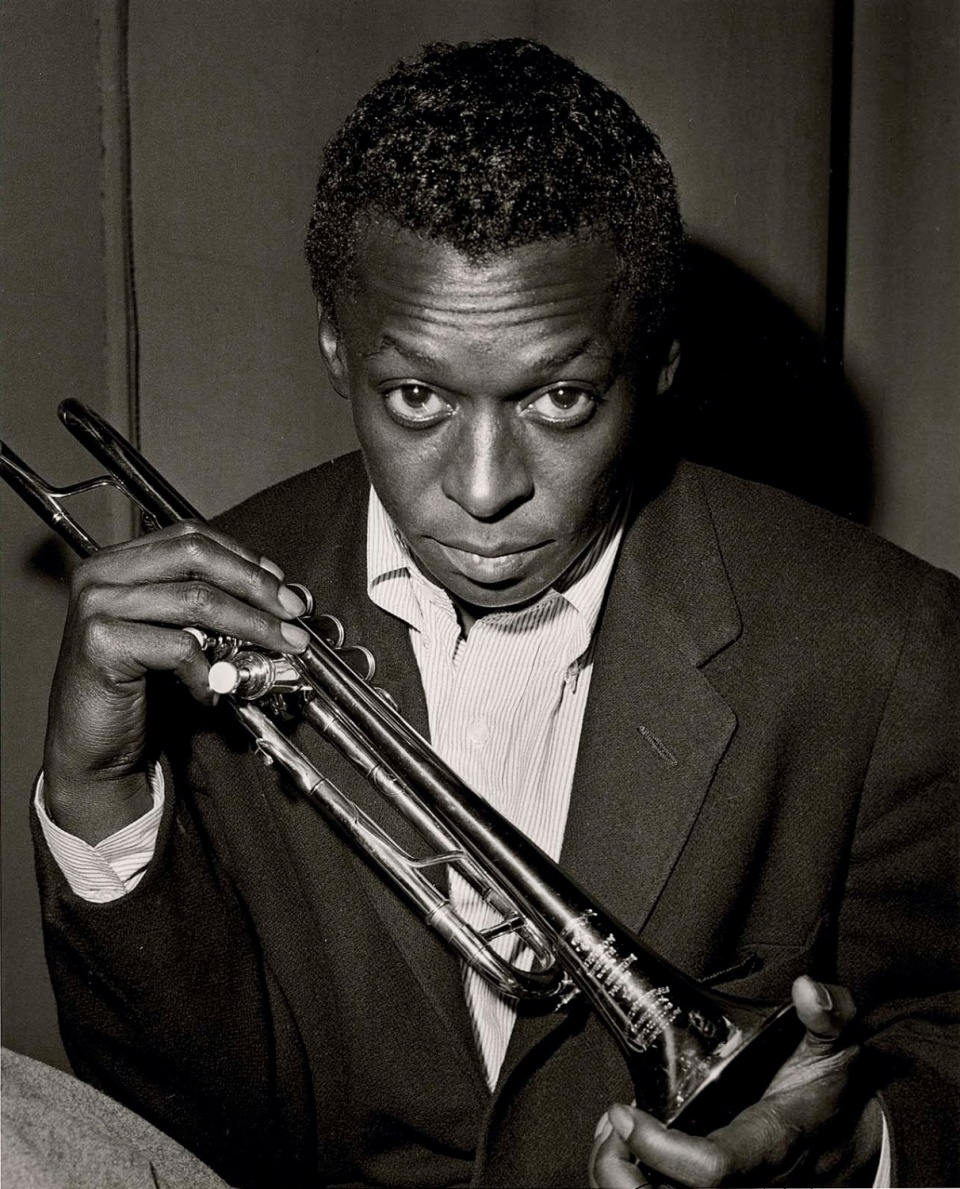
(Miles Davis)
Miles Davis was born on May 26th, 1926 in Alton, Illinois, USA. In 1927 Davis’ family moved to East St. Louis, Illinois. When he was 13 he started playing trumpet.
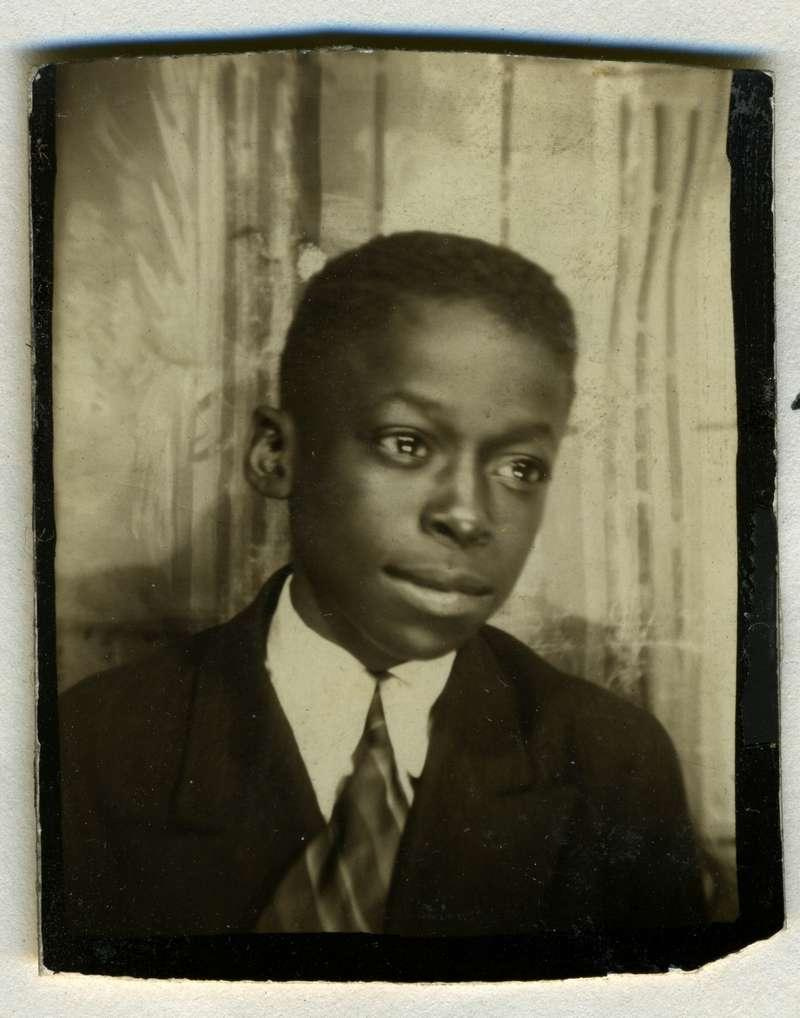
(Davis as a child)
At 16 Davis was a member of the music society and, when not at school, playing professionally first at the local Elks Club. At 17 he spent a year playing in Eddie Randle's band, the Blue Devils. In 1944 Davis graduated high school. Dizzy Gillespie and Charlie Parker invited Davis to play third trumpet for a couple of weeks for their band. Also in 1944 Davis moved to New York City, NY to study at the Juilliard School of Music. Davis then dropped out of school due to the Juilliard classes for centering too much on the classical European and white repertoire. Davis began playing professionally, performing in several 52nd Street clubs with Coleman Hawkins and Eddie "Lockjaw" Davis. In 1945 he entered a recording studio for the first time, as a member of Herbie Fields's group.
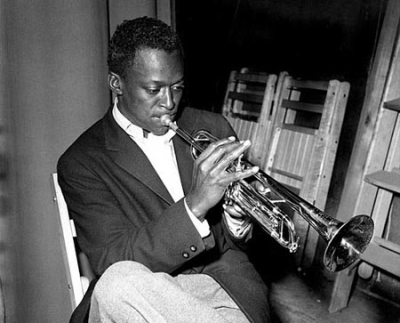
(Davis in 1945)
In 1946 he finally got the chance to record as a leader. In 1948 Davis was not being paid while in the band. Davis then left Charlie Parker’s band.
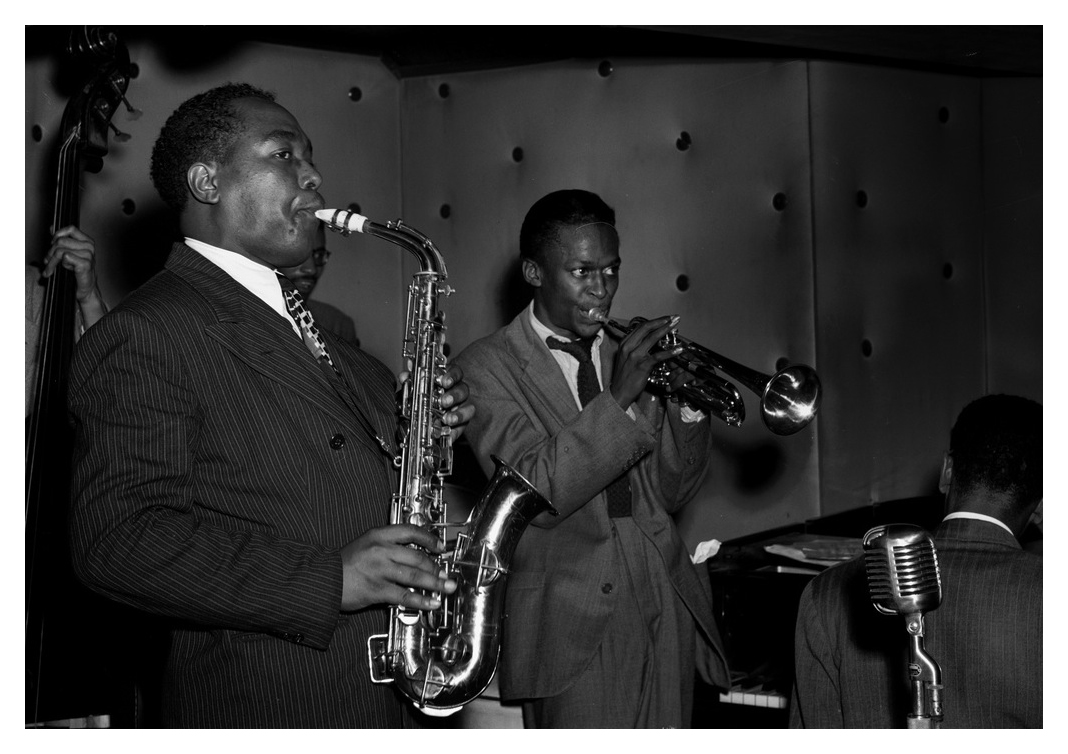
(Charlie Parker (Left) and Davis (Right))
In 1949 Davis got a record contract with Capitol Records. Also in 1949 while in Paris, France Davis began a relationship with French actress and singer Juliette Gréco. In 1950 Davis started doing heroin. In 1951 Davis signed to Prestige Records.
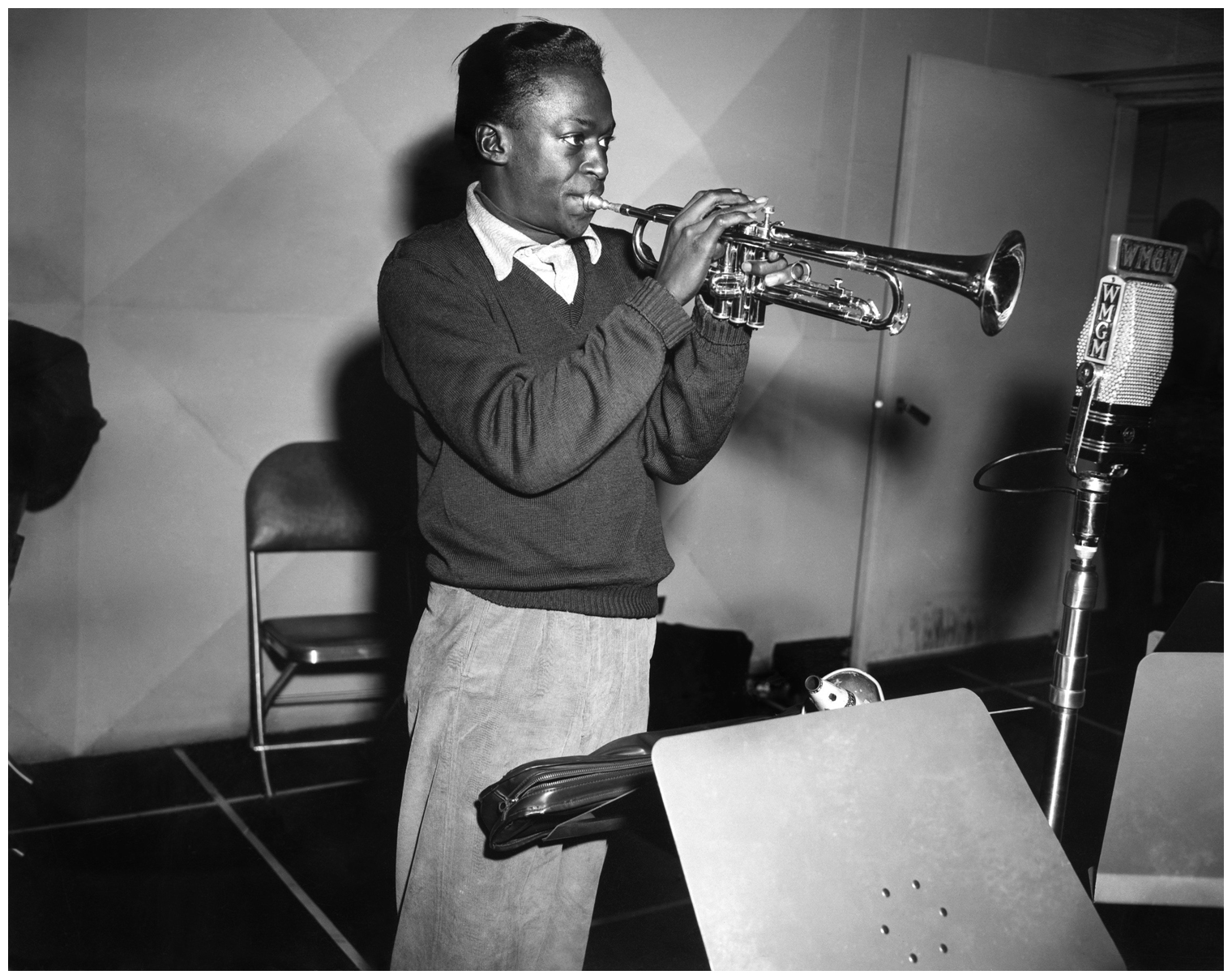
(Davis in 1951)
In 1953 his drug addiction began to impair his playing ability. While in Los Angeles, CA he had been arrested for drug possession. In 1954 he beat his drug addiction. He then started to play in Detroit, MI. In 1955 Davis had an operation to remove polyps from his larynx. Even though he was not supposed to speak at all, he had an argument with somebody and raised his voice. This outburst damaged his vocal cords forever. Also in 1955 Davis attended the Newport Jazz Festival At the same time, Davis recruited the players for a formation that became known as his "first great quintet": John Coltrane on tenor saxophone, Red Garland on piano, Paul Chambers on bass, and Philly Joe Jones on drums. Davis then signed with Columbia Records.
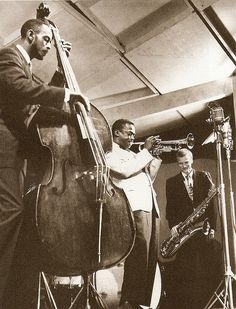
(Davis (Center) performing at the Newport Jazz Festival in 1955)
In 1957 the band disbanded. In 1958 Davis returned to New York City, NY. The band then came back together. Also in 1958 he married his 1st wife. In 1959 Davis released “Kind of Blue”. While performing at a nightclub in New York City, NY Davis stepped out in between sets and while he was outside he escorted a White woman to her taxi and a police officer told Davis to move along and after Davis told him that he worked as a performer at the nightclub the officer attacked Davis. Davis was then arrested. Davis was acquitted of disorderly conduct charges and he tried sue the NYPD but he eventually dropped the charges.
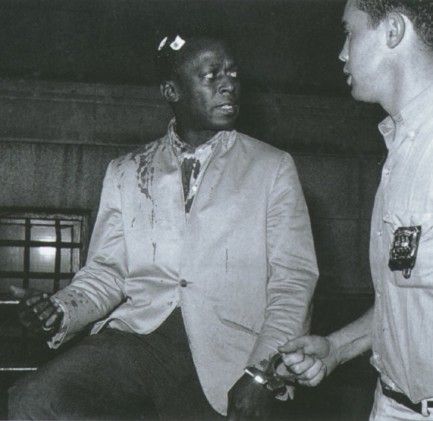
(Davis after the incident in New York City)
In 1963 Davis formed a new group. Herbie Hancock was one of the members to Davis’ new band. In 1966 he released “Miles Smiles”. Davis’ sound began to change with the inclusion of electric bass, electric piano, and electric guitar. In 1968 Davis remarried.
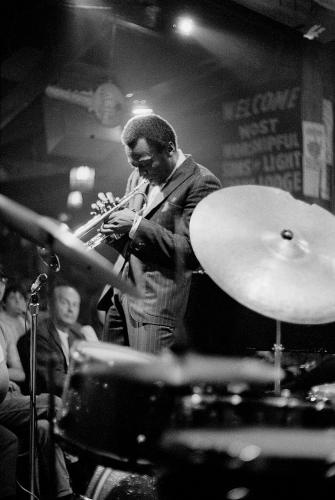
(Davis performing in 1968)
In 1970 Davis released “Bitches Brew”. Davis then started to use effects on his trumpet to alter the sound. Davis did the soundtrack to the documentary of boxer Jack Johnson. In 1972 Davis released “On the Corner”.
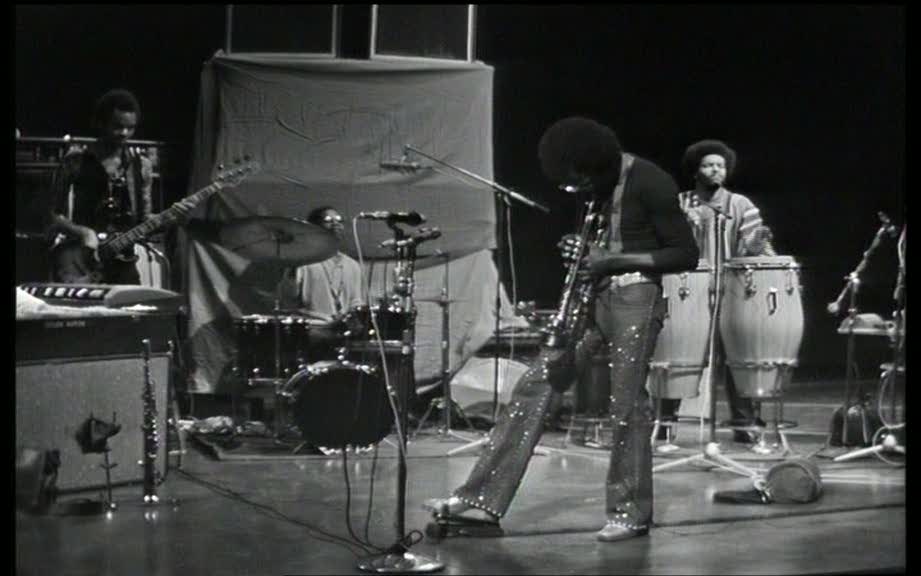
(Davis performing in 1972)
Davis then formed a new group. In 1974 Davis released “Big Fun”. In 1975 Davis was hospitalized. In 1976 Davis had a hip replacement. Davis then became addicted to alcohol and cocaine. Davis began to open for former band member Herbie Hancock. In 1979 Davis overcame his cocaine addiction.
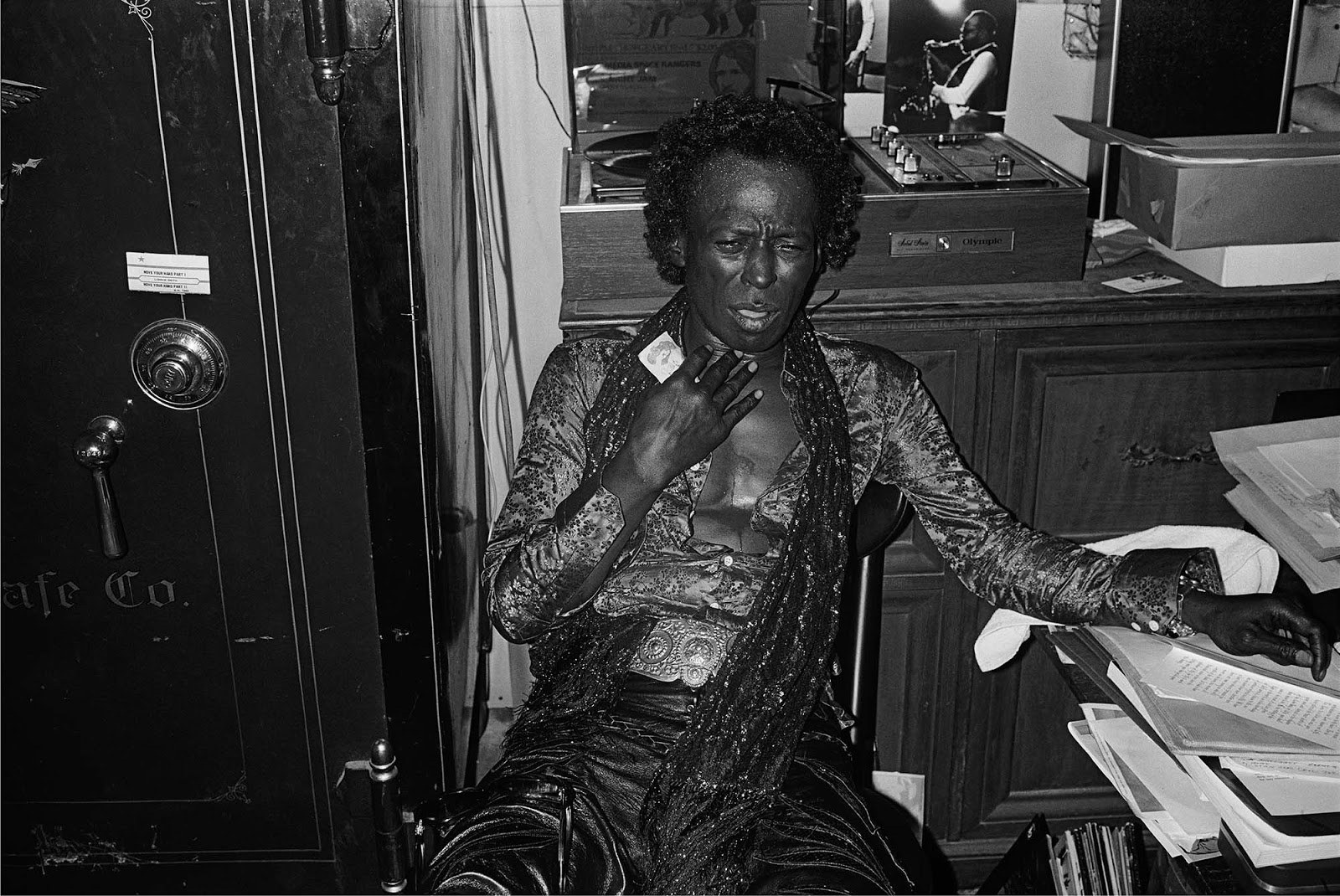
(Davis in 1976)
Davis then brought together another band with Marcus Miller as the bass player. In 1981 Davis married Cicely Tyson.
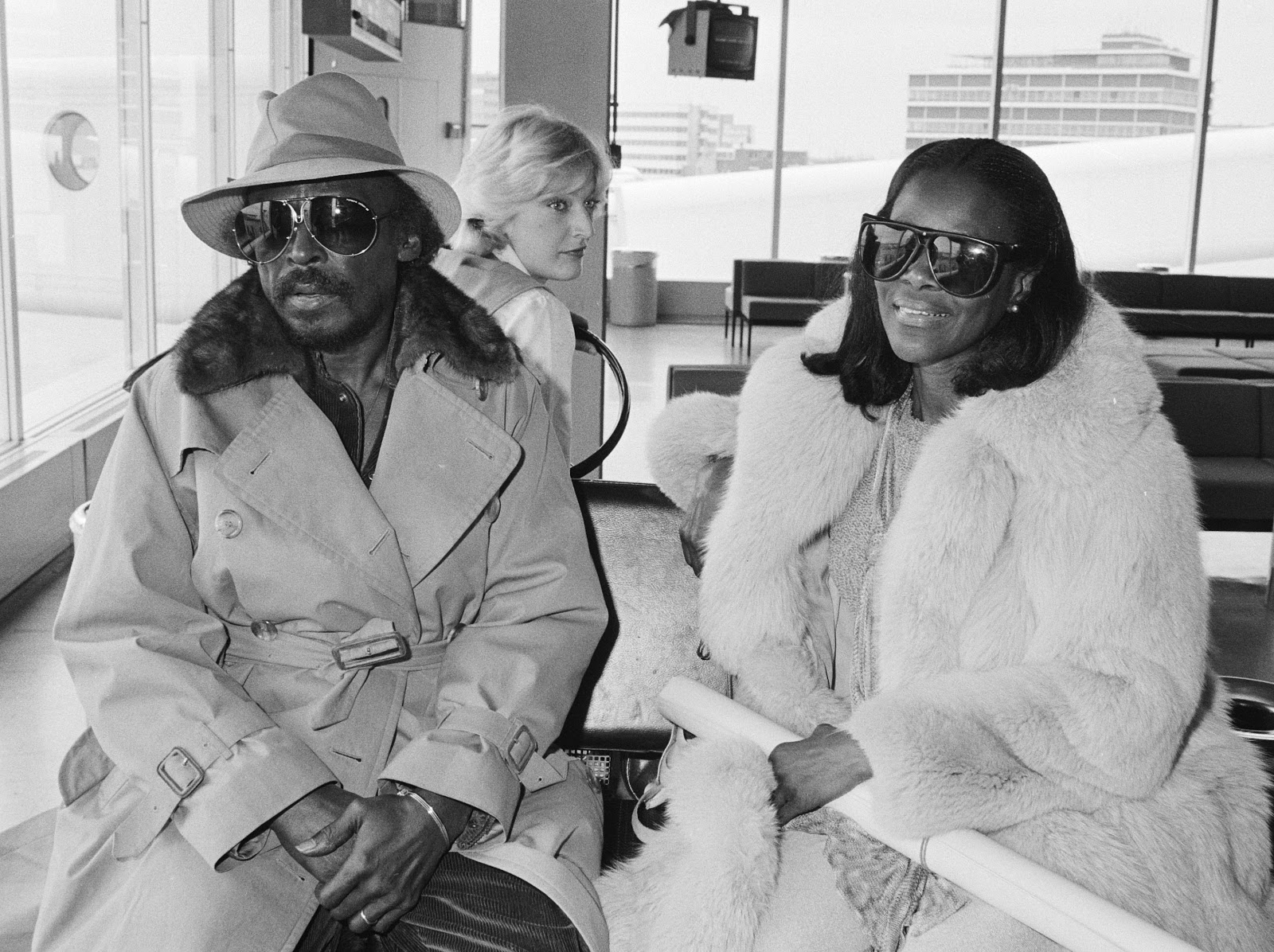
(Davis (Left) with Cicely Tyson (Right))
In 1985 Davis released “You’re Under Arrest”. Davis also guest starred on “Miami Vice”.
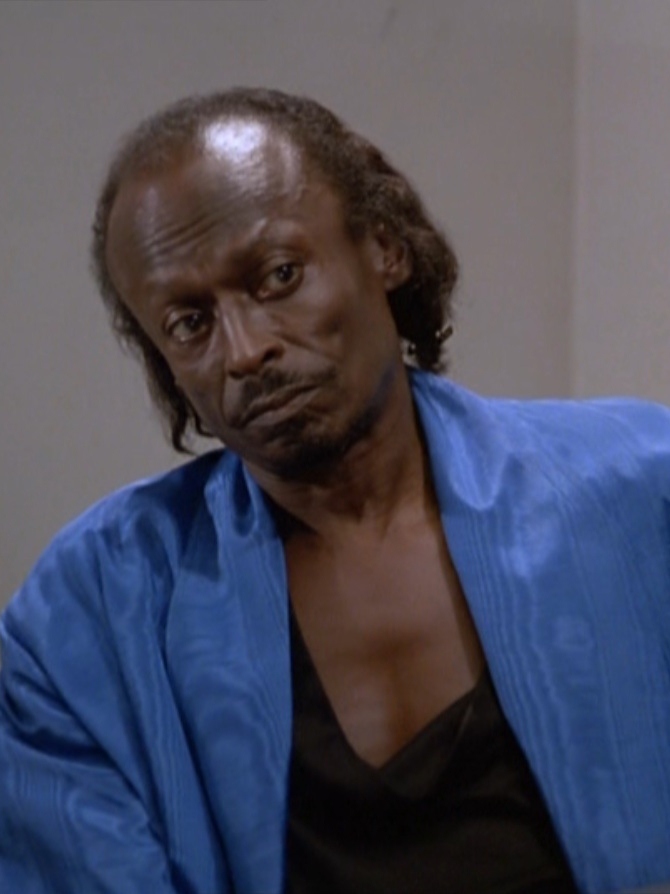
(Davis in “Miami Vice”)
In 1986 Davis signed with Warner Records. Davis also participated in the “Artists United Against Apartheid” recording. Also in 1986 Davis released “Tutu”. In 1987 Davis won a Grammy for “Sketches in Spain”.
(Davis in 1987)
In 1990 Davis received a Grammy lifetime achievement award.
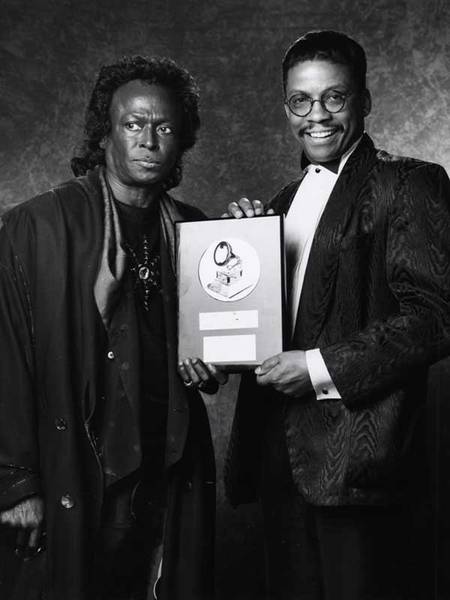
(Davis (Left) with Herbie Hancock (Right) receiving the Grammy Lifetime achievement award)
In 1991 Davis starred in the movie Dingo. On September 28th, 1991 Miles Davis died of a stroke, pneumonia and respiratory failure in Santa Monica, California, USA. He was 65 years old.
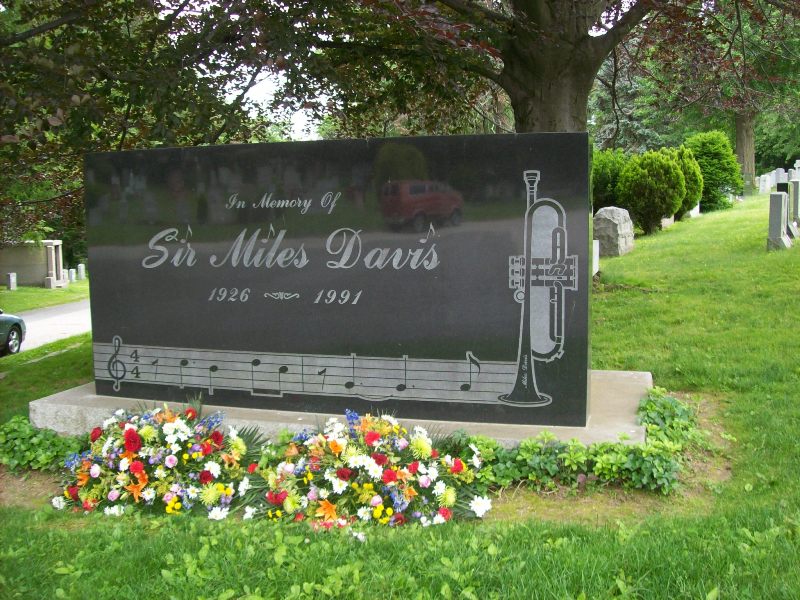
(Davis’ grave)
Today is his 91st birthday and we would all like to say happy birthday and rest in peace Miles Davis.

Albums by Miles Davis
  • “The New Sounds” (1951)
  • “Young Man with a Horn” (1952)
  • “Blue Period” (1953)
  • “The Compositions of Al Cohn” (1953)  
  • “Miles Davis Volume 2” (1953)
  • “Miles Davis Volume 3” (1954)
  • “Miles Davis Quartet” (1954)
  • “Miles Davis All Star Sextet” (1954)
  • “Miles Davis Quintet” (1954)
  • “Miles Davis with Sonny Rollins” (1954)
  • “Miles Davis All Stars Volume 1” (1955)
  • “Miles Davis All Stars Volume 2” (1955)
  • “Musings of Miles” (1955)
  • “Blue Moods” (1955)
  • “Dig” (1956)
  • “Miles: The New Miles Davis Quintet” (1956)
  • “Miles Davis and Horns” (1956)
  • “Quintet/Sextet” (1956)
  • “Collectors’ Items” (1956)
  • “Blue Haze” (1956)
  • “Walkin’” (1957)
  • “Cookin’” (1957)
  • “Bags’ Groove” (1957)
  • “‘Round About Midnight” (1957)
  • “Miles Ahead” (1957)
  • “Relaxin’” (1958)
  • “Milesstones” (1958)
  • “Jazz Track” (1958)
  • “Miles Davis and the Modern Jazz Giants” (1959)
  • “Workin’” (1959)
  • “Porgy and Bess” (1959)
  • “Kind of Blue” (1959)
  • “Sketches of Spain” (1960)
  • “Steamin’” (1961)
  • “Someday My Prince Will Come” (1961)
  • “Seven Steps to Heaven” (1963)
  • “Quiet Nights” (1964)
  • “E.S.P.” (1965)
  • “Miles Smiles” (1967)
  • “Sorcerer” (1967)
  • “Nefertiti” (1967)
  • “Miles in the Sky” (1968)
  • “Filles de Kilimanjaro” (1968)
  • “In a Silent Way” (1969)
  • “Bitches Brew” (1970)
  • “Jack Johnson” (1971)
  • “Live-Evil” (1971)
  • “On the Corner” (1972)
  • “Big Fun” (1974)
  • “Get Up with it” (1974)
  • “Water Babies” (1976)
  • “The Man with the Horn” (1981)
  • “Star People” (1983)
  • “Decoy” (1984)
  • “You’re Under Arrest” (1985)
  • “Tutu” (1986)
  • “Amandla” (1989)
  • “Aura” (1989)
  • “Doo-Bop” (1992)

Videos of Miles Davis