Crate Diggers: Educator
Showing posts with label Educator. Show all posts

Sunday, July 16, 2017

Happy Birthday Ida B. Wells

“The only times an Afro-American who was assaulted got away has been when he had a gun and used it in self defense” - Ida B. Wells
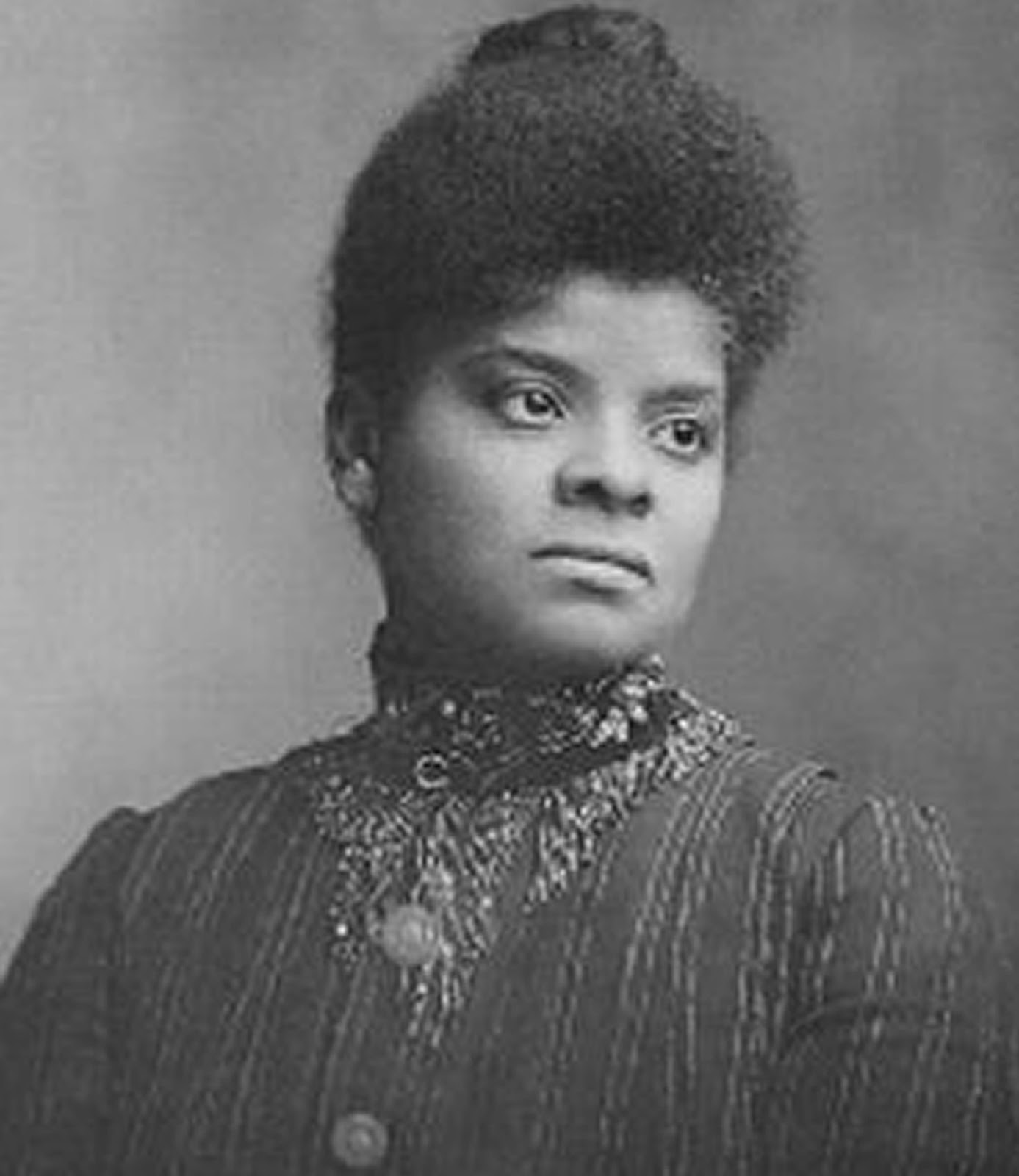
(Ida B. Wells)
Ida B. Wells was born on July 16th, 1862 in Holly Springs, Mississippi, USA. She was born into slavery. Wells attended Shaw University but she was expelled for rebellious behavior after confronting the college president. In 1878 her parents and her infant brother died due to yellow fever. She found work as a teacher in a black elementary school in order to keep her younger siblings together as a family. Her paternal grandmother, Peggy Wells, along with other friends and relatives, stayed with her siblings and cared for them during the week while Wells was away teaching. Wells resented that in the segregated school system, white teachers were paid $80 a month and she was paid only $30 a month. This discrimination made her more interested in the politics of race and improving the education of blacks. In 1883 Wells took three of her younger siblings to Memphis, TN to live with her aunt. During her summer vacations she attended summer sessions at Fisk University. She held strong political opinions and provoked many people with her views on women's rights. In 1884 a train conductor with the Memphis and Charleston Railroad ordered Wells to give up her seat in the first class ladies car and move to the smoking car, which was already crowded with other passengers. Wells refused to give up her seat. The conductor and 2 men dragged Wells out of the car. Wells then hired an African American attorney to sue the railroad. She won the case and was awarded $500. In 1887 The railroad company appealed to the Tennessee Supreme Court, which reversed the lower court's ruling.
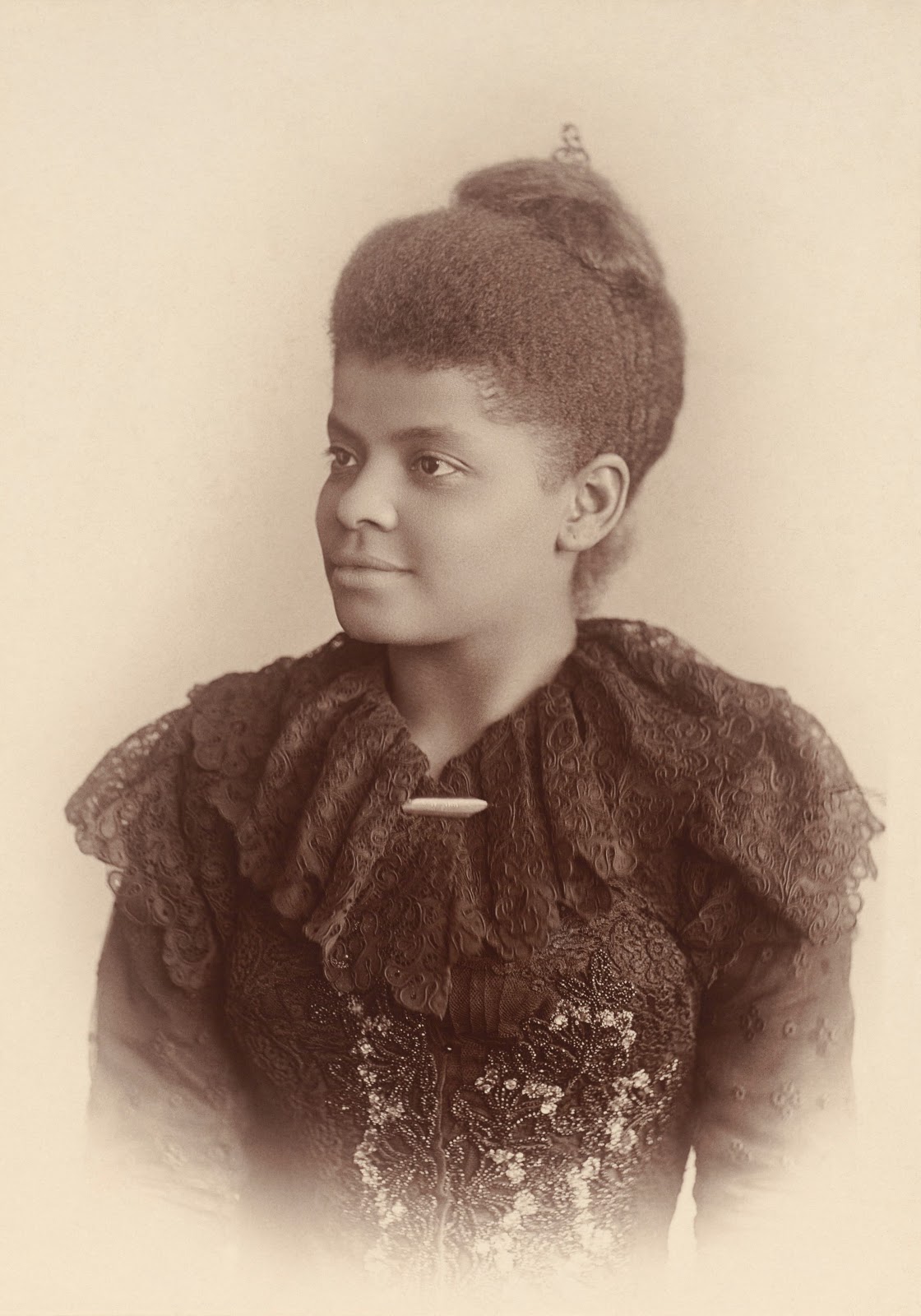
(Wells in 1887)
In 1889 she became co owner and editor of “Free Speech and Headlight”, an anti segregation newspaper. In 1891 Wells was dismissed from her teaching post by the Memphis Board of Education due to the various articles she had written which critiqued the conditions in the colored schools of the region. In 1889 after 3 of her friends were lynched she wrote in “Free Speech and Headlight”, urging blacks to leave Memphis, TN altogether.
(Wells in 1890)
More than 6,000 blacks did leave Memphis. Others organized boycotts of white owned businesses. After being threatened with violence, she bought a pistol. She then began investigative journalism. This officially started her anti lynching campaign. Wells found that Blacks were lynched for such social control reasons as failing to pay debts, not appearing to give way to whites, competing with whites economically, and being drunk in public. She found little basis for the frequent claim that Blacks were lynched because they had sexually abused or attacked white women, which was the alibi that partly accounted for White America's collective acceptance or silence on lynching. In 1892 while she was away in Philadelphia, PA a mob destroyed the offices of the “Free Speech and Headlight” in retaliation for her controversial articles. Wells left Memphis, TN and moved to Chicago, IL due to threats on her life. Also in 1892 Wells published a pamphlet titled “Southern Horrors: Lynch Law in All Its Phases”. Wells recommended that blacks use arms to defend against lynching.
(Wells in 1892)
In 1893 together with Frederick Douglass and other black leaders, she organized a black boycott of the World's Columbian Exposition in Chicago, IL for having no exhibits to represent African American life. In 1894 Wells took a tour to Europe in her campaign for justice. Also in 1894 Wells helped form a Republican Women's Club in Illinois in response to women being granted the right to vote for a state elective office. In 1895 Wells married her attorney Ferdinand Barnett. In 1896 Wells founded the National Association of Colored Women's Clubs and the National Afro American Council. On March 25, 1931 Ida B. Wells died of kidney failure in Chicago, Illinois, USA. She was 68 years old.
(Wells in 1931)
Today is her 155th birthday and we would all like to say happy birthday and rest in peace Ida B. Wells.

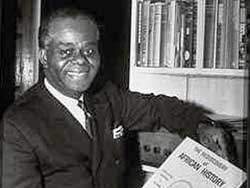
Anniversary of Dr. John Henrik Clarke's Death

“A good teacher, like a good entertainer first must hold his audience's attention, then he can teach his lesson” - John Henrik Clarke
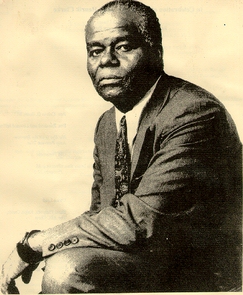
(John Henrik Clarke)
John Henrik Clark was born as John Henry Clarke on January 1st, 1915 in Union Springs, Alabama, USA. His family moved to Columbus, GA. In 1933 he moved to Harlem, NY. He then renamed himself “John Henrik Clarke”. Clarke developed as a writer and lecturer during the Great Depression years. He studied intermittently at New York University, Columbia University, Hunter College, the New School of Social Research and the League for Professional Writers. In 1941 Clarke served as a non commissioned officer in the United States Army Air Forces.
(Clarke in 1941)
In 1949 Clarke was co founder of the “Harlem Quarterly”. In 1956 Clarke taught at the New School for Social Research. In 1958 he traveled to West Africa and met Kwame Nkrumah. He also lectured at the University of Ghana and elsewhere in Africa, including in Nigeria at the University of Ibadan.Clarke’s writing included six scholarly books and many scholarly articles. In 1968 he founded the African Heritage Studies Association and the Black Caucus of the African Studies Association.
(Clarke in 1968)
In 1969 Clarke became a professor of Black and Puerto Rican Studies at Hunter College of the City University of New York. He also was the Carter G. Woodson Distinguished Visiting Professor of African History at Cornell University’s Africana Studies and Research Center. In 1994 Clarke earned a doctorate from the non accredited Pacific Western University.
(Dr. Clarke in 1996)
On July 12th, 1998 Dr. John Henrik Clarke died of a heart attack in New York City, New York, USA. He was 83 years old. Today is the 19th anniversary of his death. Take time to remember this great educator today.

Books by John Henrik Clarke
  • A New Approach to African History (1967)   
  • The Boy Who Painted Jesus Black (1975)
  • African World Revolution:Africans At The Crossroads (1991)
  • Who Betrayed the African World Revolution?: And Other Speeches(1993)
  • African People in World History (1993)
  • My Life in Search of Africa (1994)

Videos of John Henrik Clarke

Wednesday, April 5, 2017

Happy Birthday Booker T. Washington

“Success is to be measured not so much by the position that one has reached in life as by the obstacles which he has overcome” - Booker T. Washington
(Booker T. Washington)
Booker T. Washington was born on April 5th, 1856 in Hale’s Ford, Virginia, USA. He was born into slavery. In 1865 his family moved to West Virginia. As a young man, Washington worked his way through Hampton Normal and Agricultural Institute.
(Washington as a young man)
He attended college at Wayland Seminary in Washington D.C. in 1878. In 1881 Washington was recommended to be the 1st leader of Tuskegee Institute in Alabama. In July of 1881 the school was opened. Washington believed that by providing needed skills to society, African Americans would play their part, leading to acceptance by Whites.
(Washington (Center Right) with financial backers of the Tuskegee Institute)
In 1882 Washington got married Fannie N. Smith. In 1884 his wife died. In 1885 Washington married Olivia A. Davidson. In 1889 Davidson died.
(Washington’s family)
Washington was seen as a dominant figure within the Black community starting in 1890. In 1893 Washington married Margaret James Murray. Washington’s Atlanta Address of 1895 received national attention. Washington was a supporter of education for freedmen and their descendants in the post-Reconstruction, Jim Crow era South. Washington was criticized by W.E.B. DuBois due to their conflicting interests on how Blacks should get their civil rights. Washington's work on education problems helped him enlist both the moral and substantial financial support of many major white philanthropists. In 1901 Washington published his book Up From Slavery. In 1905 Washington met President Theodore Roosevelt.
(Teddy Roosevelt (Left) and Washington (Right))
In 1906 Washington gave a lecture at Carnegie Hall in New York called the Tuskegee Institute Silver Anniversary Lecture in which he spoke along with great orators of the day including Mark Twain, Joseph Hodges Choate, and Robert Curtis Ogden.
(Washington speaking in 1906)
Washington enlisted his philanthropic network to create matching funds programs to stimulate construction of numerous rural public schools for black children in the South. On November 14th, 1915 Washington died of poor health in Tuskegee, Alabama, USA. He was 59 years old.
(Washington’s funeral)
Today is his 161st birthday and we would all like to say happy birthday and rest in peace Booker T. Washington.

Books by Booker T. Washington

  • The Story of My Life and Work (1900)
  • Up From Slavery (1901)
  • The Story of the Negro: The Rise of the Race from Slavery Vol. 2(1909)
  • My Larger Education (1911)
  • The Man Farthest Down (1912)

Thursday, January 5, 2017

Happy Birthday Dr. John Henrik Clarke

“A good teacher, like a good entertainer first must hold his audience's attention, then he can teach his lesson” - John Henrik Clarke
(John Henrik Clarke)
John Henrik Clark was born as John Henry Clarke on January 1st, 1915 in Union Springs, Alabama, USA. His family moved to Columbus, GA. In 1933 he moved to Harlem, NY. He then renamed himself “John Henrik Clarke”. Clarke developed as a writer and lecturer during the Great Depression years. He studied intermittently at New York University, Columbia University, Hunter College, the New School of Social Research and the League for Professional Writers. In 1941 Clarke served as a non commissioned officer in the United States Army Air Forces.
(Clarke in 1941)
In 1949 Clarke was co founder of the “Harlem Quarterly”. In 1956 Clarke taught at the New School for Social Research. In 1958 he traveled to West Africa and met Kwame Nkrumah. He also lectured at the University of Ghana and elsewhere in Africa, including in Nigeria at the University of Ibadan.Clarke’s writing included six scholarly books and many scholarly articles. In 1968 he founded the African Heritage Studies Association and the Black Caucus of the African Studies Association.
(Clarke in 1968)
In 1969 Clarke became a professor of Black and Puerto Rican Studies at Hunter College of the City University of New York. He also was the Carter G. Woodson Distinguished Visiting Professor of African History at Cornell University’s Africana Studies and Research Center. In 1994 Clarke earned a doctorate from the non accredited Pacific Western University.
(Dr. Clarke in 1996)
On July 12th, 1998 Dr. John Henrik Clarke died of a heart attack in New York City, New York, USA. He was 83 years old. Today is his 102nd birthday and we would all like to say happy birthday and rest in peace Dr. John Henrik Clarke.

Books by John Henrik Clarke
  • A New Approach to African History (1967)   
  • The Boy Who Painted Jesus Black (1975)
  • African World Revolution:Africans At The Crossroads (1991)
  • Who Betrayed the African World Revolution?: And Other Speeches(1993)
  • African People in World History (1993)
  • My Life in Search of Africa (1994)

Videos of John Henrik Clarke


(P.S. sorry for the late post)

Thursday, December 15, 2016

Anniversary of Booker T. Washington's Death

“Success is to be measured not so much by the position that one has reached in life as by the obstacles which he has overcome” - Booker T. Washington
(Booker T. Washington)
Booker T. Washington was born on April 5th, 1856 in Hale’s Ford, Virginia, USA. He was born into slavery. In 1865 his family moved to West Virginia. As a young man, Washington worked his way through Hampton Normal and Agricultural Institute.
(Washington as a young man)
He attended college at Wayland Seminary in Washington D.C. in 1878. In 1881 Washington was recommended to be the 1st leader of Tuskegee Institute in Alabama. In July of 1881 the school was opened. Washington believed that by providing needed skills to society, African Americans would play their part, leading to acceptance by Whites.
(Washington (Center Right) with financial backers of the Tuskegee Institute)
In 1882 Washington got married Fannie N. Smith. In 1884 his wife died. In 1885 Washington married Olivia A. Davidson. In 1889 Davidson died.
(Washington’s family)
Washington was seen as a dominant figure within the Black community starting in 1890. In 1893 Washington married Margaret James Murray. Washington’s Atlanta Address of 1895 received national attention. Washington was a supporter of education for freedmen and their descendants in the post-Reconstruction, Jim Crow era South. Washington was criticized by W.E.B. DuBois due to their conflicting interests on how Blacks should get their civil rights. Washington's work on education problems helped him enlist both the moral and substantial financial support of many major white philanthropists. In 1901 Washington published his book Up From Slavery. In 1905 Washington met President Theodore Roosevelt.
(Teddy Roosevelt (Left) and Washington (Right))
In 1906 Washington gave a lecture at Carnegie Hall in New York called the Tuskegee Institute Silver Anniversary Lecture in which he spoke along with great orators of the day including Mark Twain, Joseph Hodges Choate, and Robert Curtis Ogden.
(Washington speaking in 1906)
Washington enlisted his philanthropic network to create matching funds programs to stimulate construction of numerous rural public schools for black children in the South. On November 14th, 1915 Washington died of poor health in Tuskegee, Alabama, USA. He was 59 years old.
(Washington’s funeral)
Today is the 101st anniversary of his death. Take time to remember this great educator today.


Books by Booker T. Washington
  • The Story of My Life and Work (1900)
  • Up From Slavery (1901)
  • The Story of the Negro: The Rise of the Race from Slavery Vol. 2 (1909)
  • My Larger Education (1911)
  • The Man Farthest Down (1912)


(P.S. sorry for the late post)

Saturday, July 30, 2016

Happy Birthday Ida B. Wells

“The only times an Afro-American who was assaulted got away has been when he had a gun and used it in self defense” - Ida B. Wells
(Ida B. Wells)
Ida B. Wells was born on July 16th, 1862 in Holly Springs, Mississippi, USA. She was born into slavery. Wells attended Shaw University but she was expelled for rebellious behavior after confronting the college president. In 1878 her parents and her infant brother died due to yellow fever. She found work as a teacher in a black elementary school in order to keep her younger siblings together as a family. Her paternal grandmother, Peggy Wells, along with other friends and relatives, stayed with her siblings and cared for them during the week while Wells was away teaching. Wells resented that in the segregated school system, white teachers were paid $80 a month and she was paid only $30 a month. This discrimination made her more interested in the politics of race and improving the education of blacks. In 1883 Wells took three of her younger siblings to Memphis, TN to live with her aunt. During her summer vacations she attended summer sessions at Fisk University. She held strong political opinions and provoked many people with her views on women's rights. In 1884 a train conductor with the Memphis and Charleston Railroad ordered Wells to give up her seat in the first class ladies car and move to the smoking car, which was already crowded with other passengers. Wells refused to give up her seat. The conductor and 2 men dragged Wells out of the car. Wells then hired an African American attorney to sue the railroad. She won the case and was awarded $500. In 1887 The railroad company appealed to the Tennessee Supreme Court, which reversed the lower court's ruling.
(Wells in 1887)
In 1889 she became co owner and editor of “Free Speech and Headlight”, an anti segregation newspaper. In 1891 Wells was dismissed from her teaching post by the Memphis Board of Education due to the various articles she had written which critiqued the conditions in the colored schools of the region. In 1889 after 3 of her friends were lynched she wrote in “Free Speech and Headlight”, urging blacks to leave Memphis, TN altogether.
(Wells in 1890)
More than 6,000 blacks did leave Memphis. Others organized boycotts of white owned businesses. After being threatened with violence, she bought a pistol. She then began investigative journalism. This officially started her anti lynching campaign. Wells found that Blacks were lynched for such social control reasons as failing to pay debts, not appearing to give way to whites, competing with whites economically, and being drunk in public. She found little basis for the frequent claim that Blacks were lynched because they had sexually abused or attacked white women, which was the alibi that partly accounted for White America's collective acceptance or silence on lynching. In 1892 while she was away in Philadelphia, PA a mob destroyed the offices of the “Free Speech and Headlight” in retaliation for her controversial articles. Wells left Memphis, TN and moved to Chicago, IL due to threats on her life. Also in 1892 Wells published a pamphlet titled “Southern Horrors: Lynch Law in All Its Phases”. Wells recommended that blacks use arms to defend against lynching.
(Wells in 1892)
In 1893 together with Frederick Douglass and other black leaders, she organized a black boycott of the World's Columbian Exposition in Chicago, IL for having no exhibits to represent African American life. In 1894 Wells took a tour to Europe in her campaign for justice. Also in 1894 Wells helped form a Republican Women's Club in Illinois in response to women being granted the right to vote for a state elective office. In 1895 Wells married her attorney Ferdinand Barnett. In 1896 Wells founded the National Association of Colored Women's Clubs and the National Afro American Council. On March 25, 1931 Ida B. Wells died of kidney failure in Chicago, Illinois, USA. She was 68 years old.
(Wells in 1931)
Today is her 154th birthday and we would all like to say happy birthday and rest in peace Ida B. Wells.


(P.S. sorry for the late post)

Wednesday, July 27, 2016

Anniversary of Dr. John Henrik Clarke's Death

“A good teacher, like a good entertainer first must hold his audience's attention, then he can teach his lesson” - John Henrik Clarke
(John Henrik Clarke)
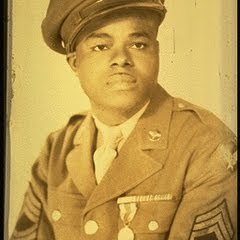
John Henrik Clark was born as John Henry Clarke on January 1st, 1915 in Union Springs, Alabama, USA. His family moved to Columbus, GA. In 1933 he moved to Harlem, NY. He then renamed himself “John Henrik Clarke”. Clarke developed as a writer and lecturer during the Great Depression years. He studied intermittently at New York University, Columbia University, Hunter College, the New School of Social Research and the League for Professional Writers. In 1941 Clarke served as a non commissioned officer in the United States Army Air Forces.
(Clarke in 1941)
In 1949 Clarke was co founder of the “Harlem Quarterly”. In 1956 Clarke taught at the New School for Social Research. In 1958 he traveled to West Africa and met Kwame Nkrumah. He also lectured at the University of Ghana and elsewhere in Africa, including in Nigeria at the University of Ibadan.Clarke’s writing included six scholarly books and many scholarly articles. In 1968 he founded the African Heritage Studies Association and the Black Caucus of the African Studies Association.
(Clarke in 1968)
In 1969 Clarke became a professor of Black and Puerto Rican Studies at Hunter College of the City University of New York. He also was the Carter G. Woodson Distinguished Visiting Professor of African History at Cornell University’s Africana Studies and Research Center. In 1994 Clarke earned a doctorate from the non accredited Pacific Western University.
(Dr. Clarke in 1996)
On July 12th, 1998 Dr. John Henrik Clarke died of a heart attack in New York City, New York, USA. He was 83 years old. Today is the 18th anniversary of his death. Take time to remember this great educator today.

Books by John Henrik Clarke
  • A New Approach to African History (1967)   
  • The Boy Who Painted Jesus Black (1975)
  • African World Revolution:Africans At The Crossroads (1991)
  • Who Betrayed the African World Revolution?: And Other Speeches (1993)
  • African People in World History (1993)
  • My Life in Search of Africa (1994)

Videos of John Henrik Clarke


(P.S. sorry for the late post)