Crate Diggers: NAACP
Showing posts with label NAACP. Show all posts

Tuesday, August 29, 2017

Anniversary of W.E.B. DuBois' Death

“To be a poor man is hard, but to be a poor race in a land of dollars is the very bottom of hardships” - W.E.B. Du Bois
(W.E.B. Du Bois)

W.E.B. Du Bois, was born as William Edward Burghardt Du Bois on February 23rd 1868 in Great Barrington, Massachusetts, USA. Du Bois attended Fisk University in Nashville, TN from 1885 to 1888.
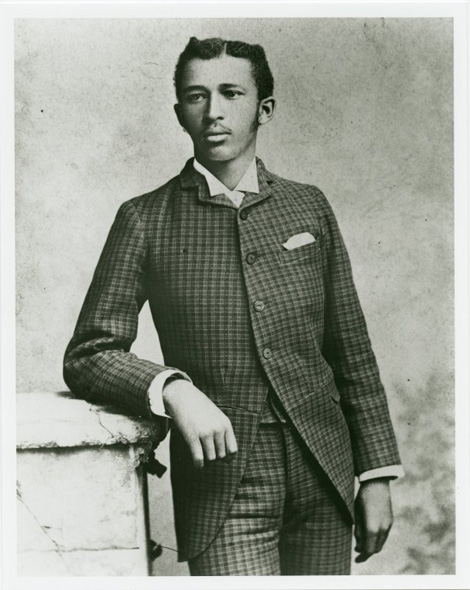
(Du Bois as a young man)
From 1888 to 1890 he attended Harvard University.
(Du Bois (1st to the right bottom row) while in Harvard)
In 1892 Du Bois received a fellowship to attend the University of Berlin. In 1895 he became the 1st African American to receive a Ph.D. from Harvard. In 1896 he performed sociological field research in Philadelphia's African American neighborhoods, which formed the foundation for his landmark study, The Philadelphia Negro (1899). In 1897 Du Bois expanded upon his thesis that African Americans should embrace their African heritage while contributing to American society. Also during this year he took a professorship in history and economics at Atlanta University in Georgia. Du Bois received grants from the U.S. government to prepare reports about the African American workforce and culture. In 1900 Du Bois attended the First Pan-African Conference held in London, England.
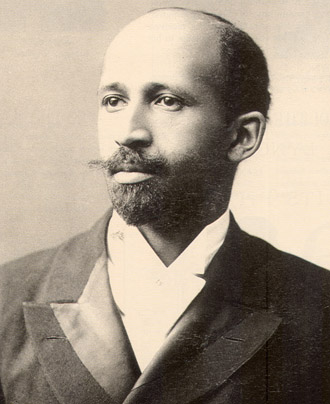
(Du Bois in 1900)
During the early 1900’s Du Bois opposed many ideas of a fellow leader in the Black community, Booker T. Washington. In 1901, Du Bois wrote a review critical of Washington's book Up from Slavery (1901). In 1903 Du Bois wrote a collection of 14 essays and published them as a book called The Souls of Black Folk. The book's effect on African Americans was comparable to that of Uncle Tom's Cabin (1852). In 1905 Du Bois and several other civil rights activists met in Canada near Niagara Falls. They wrote a declaration of principles opposing the Atlanta Compromise, and incorporated as the Niagara Movement in 1906.
(Du Bois (Middle row, 2nd from the right) at the Niagara Movement)
After multiple violent events against Blacks in 1906 Du Bois urged blacks to withdraw their support from the Republican Party, because Republicans Roosevelt and William Howard Taft did not sufficiently support blacks. In 1909 he wrote a biography of abolitionist John Brown. Also in 1909 Du Bois was the first African American invited by the American Historical Association (AHA) to present a paper at their annual conference. In 1910, at the second National Negro Conference, the attendees created the National Association for the Advancement of Colored People (NAACP).
(The NAACP)
Du Bois suggested using the word colored to involve other colored races to help with the organization. NAACP leaders offered Du Bois the position of Director of Publicity and Research and he accepted. In 1911 he attended the First Universal Races Congress in London, England. In 1915 Du Bois wrote that the scramble for Africa was at the root of World War I. Du Bois led to fight against the release of the movie The Birth of a Nation (1915) because of its racist portrayal of blacks as brutish and lustful. Du Bois traveled to Europe in 1919 to attend the first Pan-African Congress and to interview African American soldiers for a planned book on their experiences in World War I. After returning from Europe, Du Bois was more determined than ever to gain equal rights for African Americans. In 1920, Du Bois published Darkwater: Voices From Within the Veil. Between 1922 and 1924 Du Bois wrote in the NAACP’s magazine, The Crisis, about how Marcus Garvey was the “most dangerous enemy of the Negro race in America and the world”. A rivalry emerged in 1931 between the NAACP and the Communist Party, when the Communists responded quickly and effectively to support the Scottsboro Boys, which were 9 African American youth arrested in 1931 in Alabama for the rape of 2 white women. Du Bois and the NAACP felt that the case would not be beneficial to their cause. In 1934 Du Bois resigned from the NAACP. Du Bois took a trip around the world in 1936, which included visits to Nazi Germany, China and Japan. In 1941 Du Bois opposed the U.S. intervention in World War II, particularly in the Pacific, because he believed that China and Japan were emerging from the clutches of white imperialists. In 1942 the FBI began to compile a file on Du Bois. In 1943 Du Bois was fired from his position at Atlanta University which caused outrage by other scholars. Turning down job offers from Fisk and Howard, Du Bois re joined the NAACP as director of the Department of Special Research.
(Du Bois in 1943)
In 1945, Du Bois attended the final, Pan-African Congress, in Manchester, England. There Du Bois met Kwame Nkrumah, the future 1st president of Ghana who would later invite Du Bois to Africa. During the 1950s, the U.S. government's anti communist McCarthyism campaign targeted Du Bois because of his socialist leanings. In 1950 Du Bois ran for US Senator from New York on the American Labor Party ticket. In 1953 when Joseph Stalin died Du Bois wrote a eulogy of him. In 1958 Du Bois visited China.
(Mao Tse Tung (Left) and Du Bois (Right))
In 1963 Du Bois visited Ghana and met with Kwame Nkrumah.
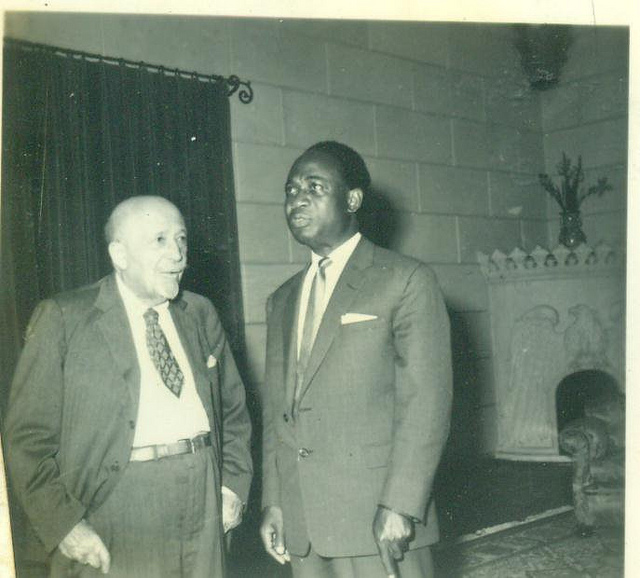
(Du Bois (Left) and Kwame Nkrumah (Right))
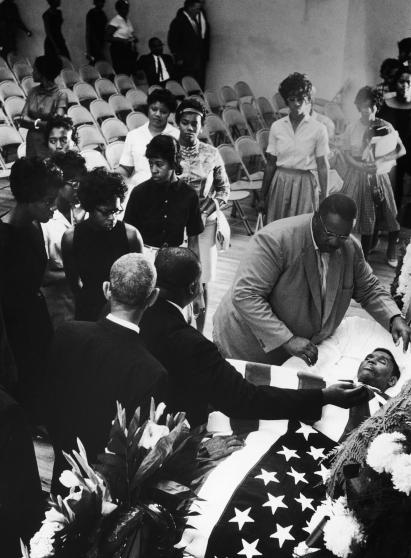
On August 27th 1963 Du Bois died in Accra, Ghana. He was 95 years old.
(Du Bois’ funeral in Ghana)
Today is the 54th anniversary of his death. Take time to remember this great leader today.

Books by W.E.B. Du Bois
  • The Study of the Negro Problem (1898)
  • The Philadelphia Negro (1899)
  • The Negro in Business (1899)
  • The Souls of Black Folk (1903)
  • The Talented Tenth (1903)
  • Voice of the Negro II (1905)
  • John Brown: A Biography (1909)
  • Efforts for Social Betterment Among Negro Americans (1909)
  • Atlanta University’s Studies of the Negro Problem (1910)
  • The Negro (1915)
  • The Gift of Black Folk (1924)
  • Africa, Its Geography, People and Products (1930)
  • Africa: Its Place in Modern History (1930)
  • Black Reconstruction in America (1935)
  • What the Negro Has Done for the United States and Texas (1936)
  • Black Folk, Then and Now (1939)
  • Color and Democracy: Colonies and Peace (1945)
  • The Encyclopedia of the Negro (1946)
  • The World and Africa (1946)
  • The World and Africa, an Inquiry into the Part Which Africa Has Played in World History (1947)
  • Peace is Dangerous (1951)
  • I Take My Stand for Peace (1951)
  • In Battle for Peace (1952)
  • Africa in Battle Against Colonialism, Racialism, Imperialism (1960)

Wednesday, August 23, 2017

Happy Birthday Marcus Garvey

“A people without the knowledge of their past history, origin and culture is like a tree without roots” - Marcus Garvey
(Marcus Garvey)
Marcus Garvey was born on August 17th, 1887 in St. Ann’s Bay, Jamaica. In 1907 he took part in an unsuccessful printer's strike and the experience kindled in him a passion for political activism. In 1910 Garvey left Jamaica and began traveling throughout the Central American region. He lived in Costa Rica for several months and worked as a timekeeper on a banana plantation. In 1911 he began work as editor for a daily newspaper. He then moved to Panama. In 1912 he returned to Jamaica. Garvey combined the economic nationalist ideas of Booker T. Washington and Pan Africanists with the political possibilities and urban style of men and women living outside of plantation and colonial societies. He then moved to London, England. While in London he attended Birkbeck College, taking classes in law and philosophy.
(Garvey in 1912)
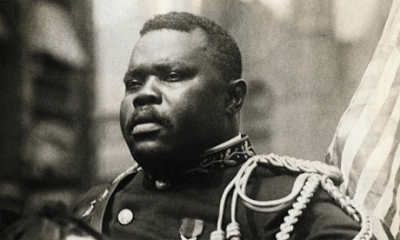
He also worked for the “African Times and Orient Review”, published by Dusé Mohamed Ali. In 1914 Garvey went back to Jamaica where he organized the Universal Negro Improvement Association (UNIA). In 1916 Garvey visited Tuskegee institute. On May 9th 1916, he held his first public lecture in New York City. In 1917 Garvey and thirteen others formed the first UNIA division outside Jamaica. They began advancing ideas to promote social, political, and economic freedom for black people.
(Garvey in 1917)
In 1918 Garvey began publishing the “Negro World” newspaper in New York. In 1919 the UNIA had 2 million members. Also in 1919 the UNIA set up its first business, incorporating the Black Star Line of Delaware, with Garvey as President. During the first year, the Black Star Line's stock sales brought in $600,000. After the establishment of the Black Star Liner Garvey received criticism from W.E.B. DuBois. This caused a big rivalry between Garvey’ UNIA and Dubois’ NAACP. Also in 1919 a man attempted to kill Garvey and Garvey was wounded from 4 gun shots.
(Garvey in 1919)
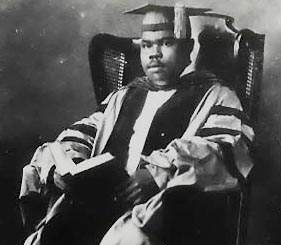
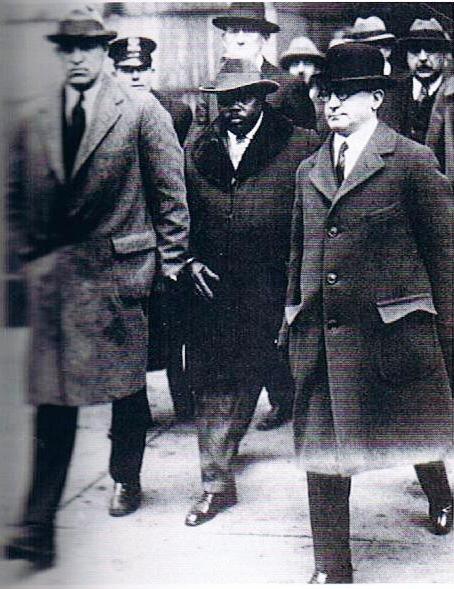
In 1920 the UNIA had 4 million members. Also in 1920 Garvey launched the Liberia program intended to build colleges, industrial plants, and railroads as part of an industrial base from which to operate. Also in 1920 Garvey created the red, black and, green Pan African flag. In 1921 the UNIA held an international convention at New York City's Madison Square Garden. Garvey attracted more than 50,000 people to the event and in his cause. Also in 1921 the BOI (now FBI) set up Garvey and charged him for mail fraud. In 1922 Garvey went to Atlanta for a conference with KKK imperial giant Edward Young Clarke, seeking to advance his organization in the South. In 1923 Garvey was sentenced 5 years in prison for mail fraud.
(Garvey in 1923)
He began serving his sentence in 1925. In 1927 Garvey was released. He was then deported back to Jamaica. In 1928 Garvey travelled to Geneva to present the Petition of the Negro Race. This petition outlined the worldwide abuse of Africans to the League of Nations.
(Garvey in 1928)
In 1929 he founded the People's Political Party. Also in 1929 Garvey was elected councilor for the Allman Town Division of the Kingston and St. Andrew Corporation (KSAC). In 1931 Garvey launched the Edelweiss Amusement Company. He set the company up to help artists earn their livelihood from their craft. In 1935 Garvey left Jamaica for London.
(Garvey in 1935)
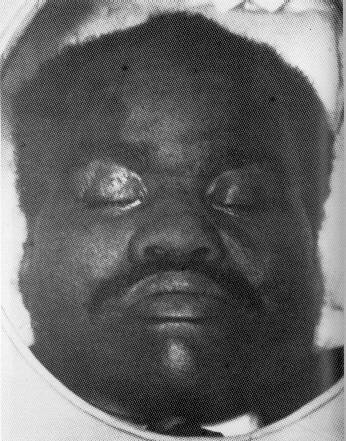
In 1938 he set up the School of African Philosophy in Toronto to train UNIA leaders. On June 10th, 1940 Marcus Garvey died of 2 strokes in London, England. He was 52 years old.
(Garvey’s funeral)
Today is his 130th birthday and we would all like to say happy birthday and rest in peace Marcus Garvey.

Speeches by Marcus Garvey

Wednesday, July 5, 2017

Happy Birthday Thurgood Marshall

“Sometimes history takes things into its own hands” - Thurgood Marshall
(Thurgood Marshall)
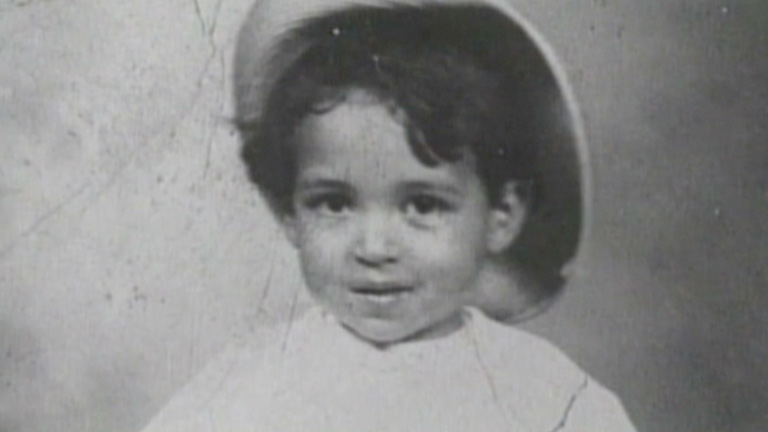
Thurgood Marshall was born as Thoroughgood Marshall on July 2nd, 1908 in Baltimore, Maryland, USA. Marshall changed his 1st name to “Thurgood” while in the 2nd grade because he didn't like the spelling of his original name.
(Marshall as a child)
Marshall attended Frederick Douglass High School. He graduated a year early in 1925. He placed in the top third of the class.
(Marshall as a young man)
He attended Lincoln University. His classmates were poet Langston Hughes and musician Cab Calloway. Marshall was a star on the debate team. In his 2nd year in college he got involved in a sit-in protest against segregation at a local movie theatre. He also was initiated as a member of the first black fraternity, Alpha Phi Alpha.
(Marshall (Middle Row 2nd from the right) as a part of Alpha Phi Alpha)
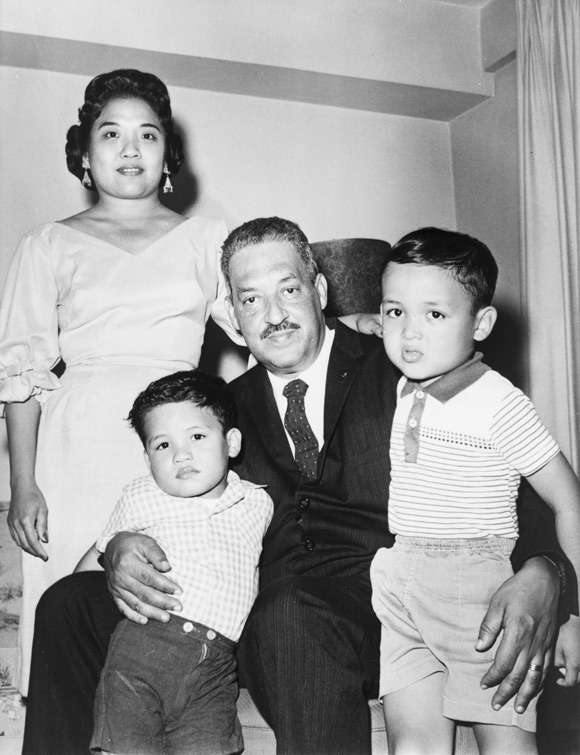
In 1929 he married Vivien Burey.
(Marshall with his family)
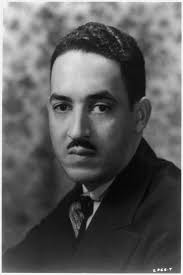
He graduated from Lincoln with honors. He then attended Howard University School of Law. In 1933 he graduated first in his class at Howard. Marshall then started a private law practice in Baltimore, MD. In 1934 he joined the NAACP.
(Marshall in 1934)
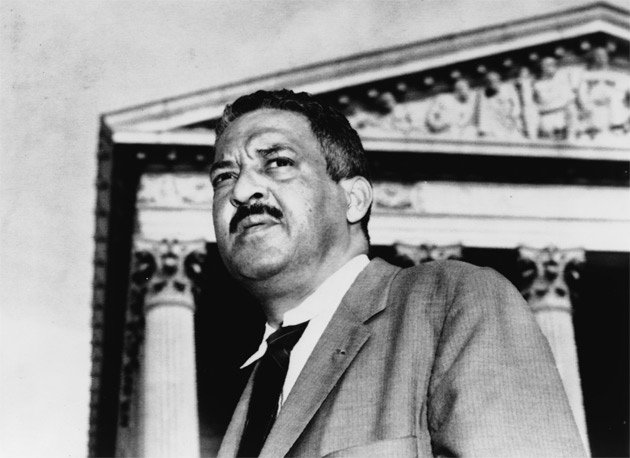
In 1954 Marshall took on the case of “Brown v. Board of Education of Topeka”. The case which the Supreme Court ruled that "separate but equal" public education, as established by “Plessy v. Ferguson”, was not applicable to public education because it could never be truly equal. In total, Marshall won 29 out of the 32 cases he argued before the Supreme Court.
(Marshall in 1954)
In 1967 President Johnson nominated Marshall to the Supreme Court. He became the 1st Black person on the US Supreme Court.
(Marshall in 1967)
His most frequent ally on the Court was Justice William Brennan, who consistently joined him in supporting abortion rights and opposing the death penalty. In 1991 Marshall retired from the Supreme Court.
(Marshall in 1991)
On January 24th, 1993 Thurgood Marshall died of heart failure in Bethesda, Maryland, USA. He was 84 years old.
(Marshall’s funeral)
Today is his 109th birthday and we would all like to say happy birthday and rest in peace Thurgood Marshall.

Videos of Thurgood Marshall

Tuesday, July 4, 2017

Happy Birthday Medgar Evers

“You can kill a man but you can't kill an idea” - Medgar Evers
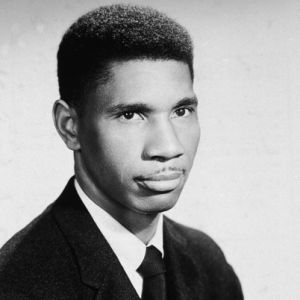
(Medgar Evers)
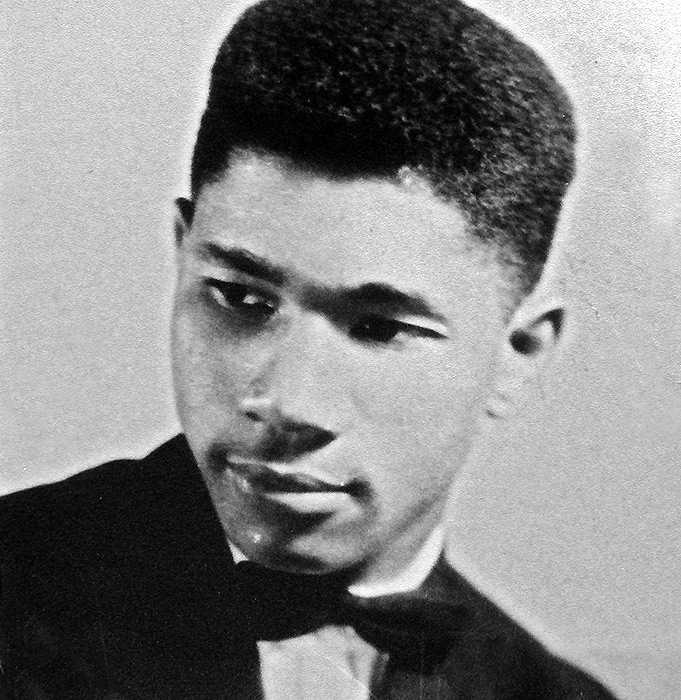
Medgar Evers was born on July 2nd, 1925 in Decatur, Mississippi, USA. Evers had to walk 12 miles to attend the closest colored school.
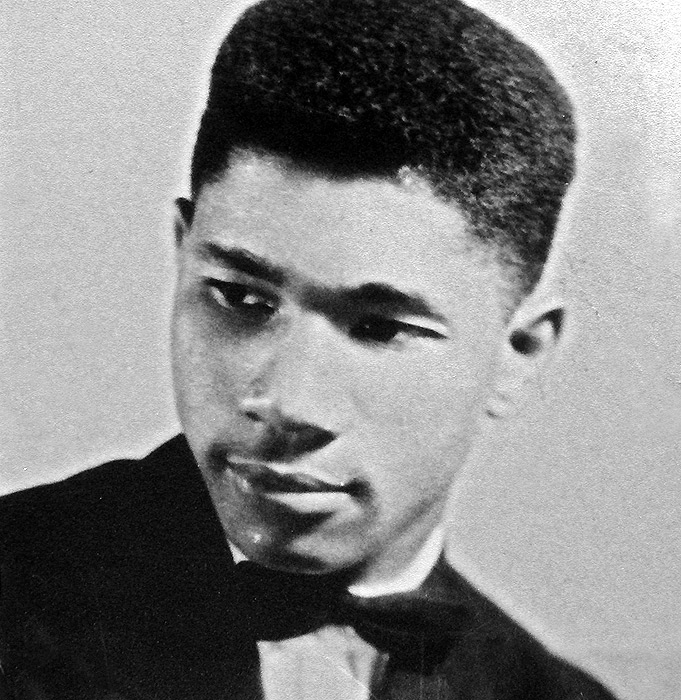
(Evers as a young man)
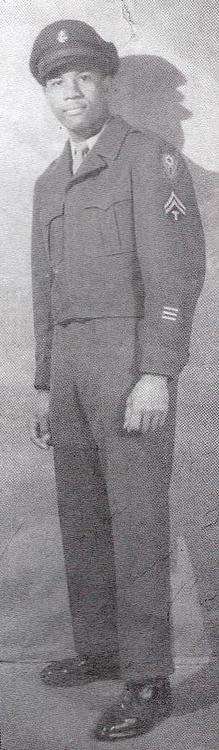
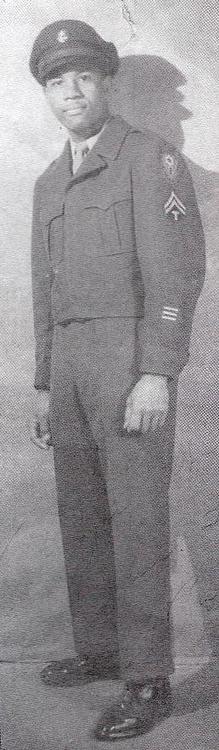
In 1943 Evers entered the Army. He fought in the battle of Normandy. In 1945 Evers was honorably discharged as a sergeant.
(Evers in the Army)
In 1948 Evers enrolled at Alcorn College. In 1951 he married Myrlie Beasley.
(Evers (Left) and his wife Myrlie Beasley (Right))
In 1952 he earned his bachelor's degree. They moved to Mound Bayou, MS. Evers became a salesman for T. R. M. Howard's Magnolia Mutual Life Insurance Company. Evers helped organize the RCNL's boycott of gasoline stations that denied blacks the use of the stations' restrooms.
(Evers during the boycott)
In 1954 Evers applied to the segregated University of Mississippi Law School, but his application was rejected because of his race. Also in 1954 Evers was named the NAACP's first field secretary for Mississippi.
(Evers (Center) as part of the N.A.A.C.P.)
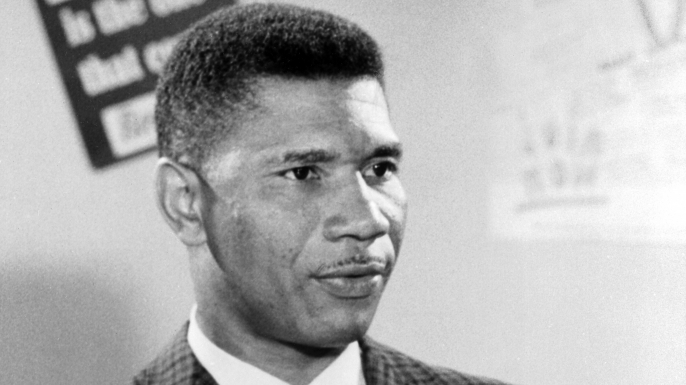
In 1963 White supremacists threw a Molotov cocktail at Evers’ house. Also in 1963 Evers was nearly run down by a car after he emerged from the NAACP office in Jackson, MS.
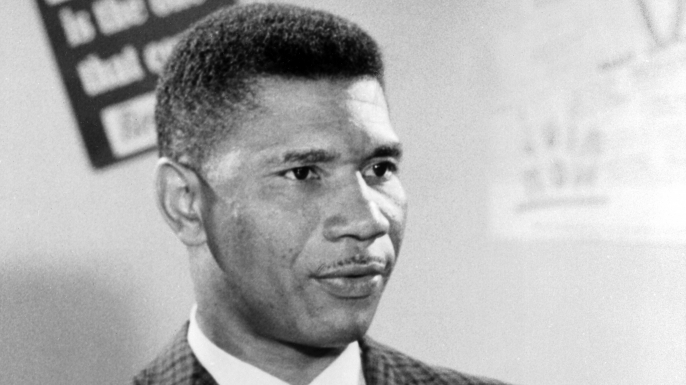
(Evers in 1963)
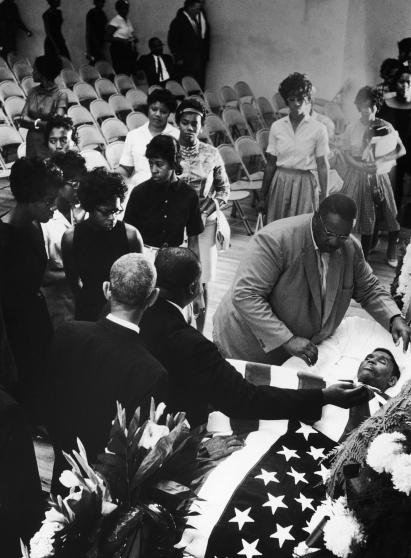
On June 12th, 1963 Medgar Evers died of a bullet in the back from White supremacists in Jackson, Mississippi, USA. He was 37 years old.
(Evers’ funeral)
Today is his 92nd birthday and we would all like to say happy birthday and rest in peace Medgar Evers.

Videos of Medgar Evers


Tuesday, June 13, 2017

Anniversary of Medgar Evers' Death

“You can kill a man but you can't kill an idea” - Medgar Evers
(Medgar Evers)
Medgar Evers was born on July 2nd, 1925 in Decatur, Mississippi, USA. Evers had to walk 12 miles to attend the closest colored school.
(Evers as a young man)
In 1943 Evers entered the Army. He fought in the battle of Normandy. In 1945 Evers was honorably discharged as a sergeant.
(Evers in the Army)
In 1948 Evers enrolled at Alcorn College. In 1951 he married Myrlie Beasley.
(Evers (Left) and his wife Myrlie Beasley (Right))
In 1952 he earned his bachelor's degree. They moved to Mound Bayou, MS. Evers became a salesman for T. R. M. Howard's Magnolia Mutual Life Insurance Company. Evers helped organize the RCNL's boycott of gasoline stations that denied blacks the use of the stations' restrooms.
(Evers during the boycott)
In 1954 Evers applied to the segregated University of Mississippi Law School, but his application was rejected because of his race. Also in 1954 Evers was named the NAACP's first field secretary for Mississippi.
(Evers (Center) as part of the N.A.A.C.P.)
In 1963 White supremacists threw a Molotov cocktail at Evers’ house. Also in 1963 Evers was nearly run down by a car after he emerged from the NAACP office in Jackson, MS.
(Evers in 1963)
On June 12th, 1963 Medgar Evers died of a bullet in the back from White supremacists in Jackson, Mississippi, USA. He was 37 years old.
(Evers’ funeral)
Today is the 54th anniversary of his death. Take time to remember this great activist today.

Videos of Medgar Evers